




In 2009, Rabbi Kalman Topp had two roads in front of him: an opportunity in Jerusalem, and the pulpit of a 750-family modern Orthodox synagogue in Beverly Hills. He chose Beverly Hills. Seventeen years later, he has taken the other road.
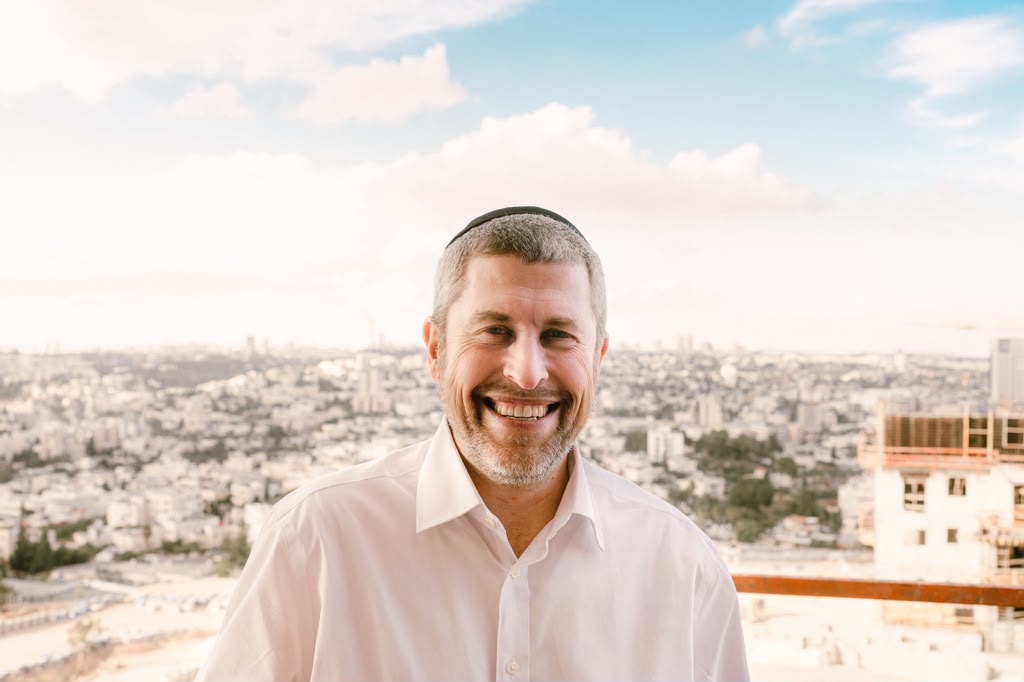
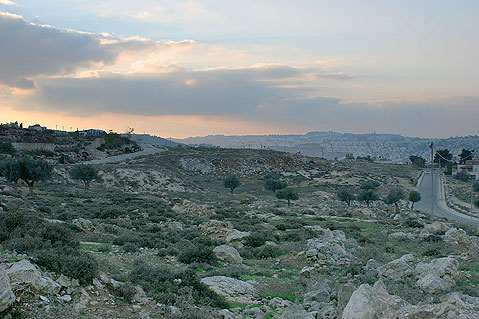
This month Topp left Beth Jacob Congregation, where he served as senior rabbi since 2009, and arrived in Jerusalem to found Kehillat Ahavat Yisrael (the Love of Israel Congregation), a new English-speaking community in Givat HaMatos, a neighborhood on the city’s southern edge that the European Union spent years trying to keep empty of Jews.
Topp, who grew up in Queens and studied for two years at Yeshivat Har Etzion in Gush Etzion, served the Albert Einstein College of Medicine and the Young Israel of Woodmere on Long Island before moving west. He also served as first vice president of the Rabbinical Council of America. He described Beth Jacob as “a very vibrant, large community that’s very Zionistic and modern Orthodox.”
“We didn’t know, should we move to Israel, because there was an opportunity actually in Jerusalem,” he told Israel365 News of the decision in 2009. “But there was also this synagogue, Beth Jacob, which is a beautiful synagogue and a great community, and the position there became available. We felt that we should use our strengths and abilities to strengthen Jewish life in America. We don’t have any regrets.”
The move to Israel had been the plan since the day he and his wife, Dr. Jordana Topp, were married. “Our plan and our hope and our dream was to make aliyah in several years,” Topp said. “When we received wedding presents and appliances, we actually exchanged some of the appliances to be 220 volt so that they’d be adaptable for Israel.”
“It wasn’t just like right now we decided to make aliyah,” he said. “This is how I was raised, the institutions I went to. Zionism and the Land of Israel and the State of Israel are always a big part. The State of Israel is the conduit through which the redemption of the Jewish people is going to happen eventually, and we’re part of the blossoming redemption as we speak.”
“After serving for close to 30 years in American communities, I felt, okay, let me move at a time where I can make a different kind of impact, where I can build a community,” he said. “And Israel, of course, is a big piece of that.”
A community under construction
Topp is careful about how his project is described. He is building something new, and the people joining him come from all over the United States.
“I’m not bringing a community or my community to Israel,” he said. “I’m hoping that some members of my community, but also individuals and families from other communities around the States, will hopefully be part of our community. Please God, I’ll be leading a community which includes already several dozen families, about 70, from different cities around the United States that want to deepen their connection to Israel.”
Some of those families plan to make aliyah when the buildings are finished, and some have already done so. Others are buying in Givat HaMatos as a second home, a first step toward spending more of their lives in Israel. The community has registered an organization in Israel and is seeking approval for a plot of land to build a synagogue.
The name was chosen with care. “Because what do we need more nowadays than love of Israel,” Topp said, “for Jews to love one another, but also for us to do everything we can for people to love Israel.”
He described a community built on hospitality as much as on prayer. “It’s not just a place of prayer, as important as prayer is,” he said. “It’s a place where we make sure that people are hosted for meals, where we welcome new families warmly, where we don’t just see who’s in the synagogue, but we see who’s not there, or maybe who’s sick and needs a visit.” As in Los Angeles, the doors will be open to Jews of every level of observance. “It’ll be a community rooted in Torah and Jewish law, halacha. At the same time it’ll be warm and inclusive and welcoming and non-judgmental.”
The community is going up on one of the most contested hills in Jerusalem. Givat HaMatos, “Airplane Hill,” takes its name from an Israel Air Force jet shot down there by Jordanian anti-aircraft fire on June 6, 1967, the second day of the Six Day War. The pilot, Lt. Dan Givon, was killed. In 1991 the empty hill was covered with some 400 caravans to house Ethiopian Jews airlifted to Israel in Operation Solomon. For years after that, the European Union, the United Nations and the Obama and Biden administrations fought to keep Jewish homes off the hill, claiming they would cut Jerusalem off from the territory planned for a Palestinian state. When Israel opened tenders for 1,257 homes there in November 2020, a delegation of European diplomats came to the site to protest and was chased off by Israelis waving flags and chanting “EU, shame on you!”
Today the cranes are up, and an American rabbi is moving onto the hill the European Union tried to keep empty. Topp said he met with the mayor of Jerusalem the day before the interview. “This area is very important to him and it’s under his jurisdiction,” he said. “It is absolutely part of Jerusalem. It’s the southern edge of Jerusalem.”
He pointed to a detail of Jewish law that settles the matter. Most Jews read the Book of Esther on Purim, the 14th of Adar. Jerusalem, a city walled since the days of Joshua, reads it a day later, on Shushan Purim. “In Jerusalem and in Givat HaMatos, we’re going to read the Megillah on the fifteenth,” Topp said, “because it’s Jerusalem and the areas that are around it. In a certain sense, even according to Jewish law and tradition, it’s part of Jerusalem.”
The prophets promised a Jerusalem that would outgrow its walls.
“Jerusalem shall be inhabited without walls, for the multitude of men and cattle therein.” (Zechariah 2:8)
The Sages took the promise literally. The Talmud (Bava Batra 75b) teaches that in the future Jerusalem will expand until it reaches the gates of Damascus. Before the Six Day War, Israeli Jerusalem covered about 38 square kilometers. Today it covers about 125.
“It’s amazing already what’s going on in Jerusalem,” Topp said. “Life in Jerusalem is bustling, and you drive around and you see the people and the vibrance and all different types of people, and you see tremendous construction. There’s construction going on all over. That’s why to drive around Jerusalem is quite difficult. For good reasons.”
Reuven, Gad and a six-to-four vote
If the Jewish people have come home, what is a Jew still doing in Los Angeles?
Topp answered with the tribes that asked to stay behind. On the eve of the conquest of the Land, the tribes of Reuven and Gad looked at the rich grazing land east of the Jordan and asked Moses to let them settle there. Moses answered them sharply.
“And Moses said unto the children of Gad and to the children of Reuben: ‘Shall your brethren go to the war, and shall ye sit here?'” (Numbers 32:6)
The tribes agreed to cross the Jordan and fight at the front of the army until the Land was conquered, and only then return to their families on the other side. Topp reads the story as a charter for Jewish life outside Israel, and as a contract.
“Diaspora life is legitimate, and for diaspora Jews, we’re the 21st-century equivalents of the tribes of Reuven and Gad,” he said. “The condition of living in the diaspora is if we do all we can to pray for our brethren in Israel, to advocate, to contribute, to visit, to do everything we can to support them. But now we have the opportunity not just to support from a distance, but to be an active participant in the unfolding Jewish story.”
After decades in the American pulpit, Topp refuses to tell anyone they are obligated to move. “There are many factors that go into the decision, and so it’s a complex decision,” he said. “Having said that, we’re blessed, incredibly blessed, to live in a generation when the Jews have finally returned as a people to our homeland. 1.1 million Jews from the former Soviet Union, 90,000 Jews from Ethiopia, even Jews from the United States and the West are returning. This is a fulfillment of the ancient prophecies. It’s an answer to all our prayers over the course of the generations.”
Isaiah described the return of two kinds of exiles.
“And it shall come to pass in that day, that a great horn shall be blown; and they shall come that were lost in the land of Assyria, and they that were dispersed in the land of Egypt; and they shall worship the LORD in the holy mountain at Jerusalem.” (Isaiah 27:13)
The Jew in Egypt, a land of slavery, is nidach, “dispersed”: he knows he wants to leave and is held back. The Jew in Assyria, a land of wealth and comfort, is oved, “lost”: he has forgotten he wanted to leave at all. Topp agreed that American Jews sometimes need the great horn. “They need to be reminded, they need to be woken up,” he said. “That’s what the Rambam says about the shofar, that it is to awaken all Jews wherever they live, Israel or the diaspora. But I believe that every Jew feels a deep connection to the land. And every single Jew has within him or her the pintele Yid,” the Jewish spark, “that really wants to connect to God and to Torah.”
He told a story recorded by Ambassador Yehuda Avner in his memoir The Prime Ministers. The Lubavitcher Rebbe told Avner that his mission was to bring the flame of Torah to every Jew, the way a candle fulfills its purpose only when it is lit. On his way out, Avner asked, “So, Rebbe, did you light my candle?” The Rebbe answered, “No, Yehuda, I just gave you the match.”
“Every Jew has that connection,” Topp said, “but ultimately, it’s up to the Jew to take the initiative, to make the choice to reconnect.”
He does not pretend the choice is simple, and he pointed to the founding of the State itself. In May 1948, the White House and the CIA warned David Ben-Gurion that the Arab armies would attack the moment he declared independence. “When Ben-Gurion called a vote of his inner cabinet, do you know what the vote was? It was six to four to declare statehood,” Topp said. “It wasn’t a slam dunk. It wasn’t black on white. And if we take it to today, everyone has questions. Am I going to make the finances work? What about my family here and there? Those are legitimate questions, and it’s not so easy to do it.”
“Nothing is a perfect situation,” he said. “But the opportunity is there. Take the opportunity. And how thankful we are that the vote was six to four, and Ben-Gurion declared statehood. They went for it, and look what the State of Israel has become.”
The road south
An hour before the interview, Topp was in Efrat, a few kilometers south of Givat HaMatos on the same road. He has a model for what he is attempting. In 1983, Rabbi Shlomo Riskin left the pulpit of Lincoln Square Synagogue in Manhattan to become the founding rabbi of Efrat, and many of his congregants and students followed him. Efrat now has nearly 15,000 residents and anchors Gush Etzion, the bloc that holds the road from Jerusalem to Hebron. Topp called Rabbi Riskin “a long-time mentor of mine,” and said he has supported many of his projects.
He credits the attention his own move has drawn with doing something a sermon cannot. “I have the privilege to help build a community in Yerushalayim in Israel that’s generating buzz, it’s generating conversation,” he said. “It’s getting people in my community in Los Angeles and other places to say, hey, maybe now is the time.”
Topp closed with the name of the city itself. The Midrash teaches that Abraham, after the binding of Isaac on Mount Moriah, called the place Hashem Yireh, “God will be seen.” Malchizedek, king of the city in Abraham’s time, had called it Shalem. God combined the two names into Yerushalayim.
“Jerusalem is a source of Torah and the source of the divine presence, but it spreads throughout the land and it spreads throughout the world,” Topp said. “And Shalem is related to shalom, of love of one for the other, of feeling a sense of responsibility one to the other. Kol Yisrael areivim zeh lazeh, we’re responsible for each other.” He noted that areivim shares a root with arev, sweet, as in the blessing over the Torah, veha’arev na. “Not just to connect with Hashem, but to see the sweetness of the other, the goodness and the kindness of the other. When we respect the other and value the other, that’s when we create a true holy place.”
Seventeen years after he turned down a job in Jerusalem, Rabbi Topp’s community is going up in concrete on Airplane Hill, on the southern edge of a city the prophets said would outgrow its walls. Every family that buys a home there pushes the boundary of Jerusalem a little farther out, the way Zechariah said it would happen.


