

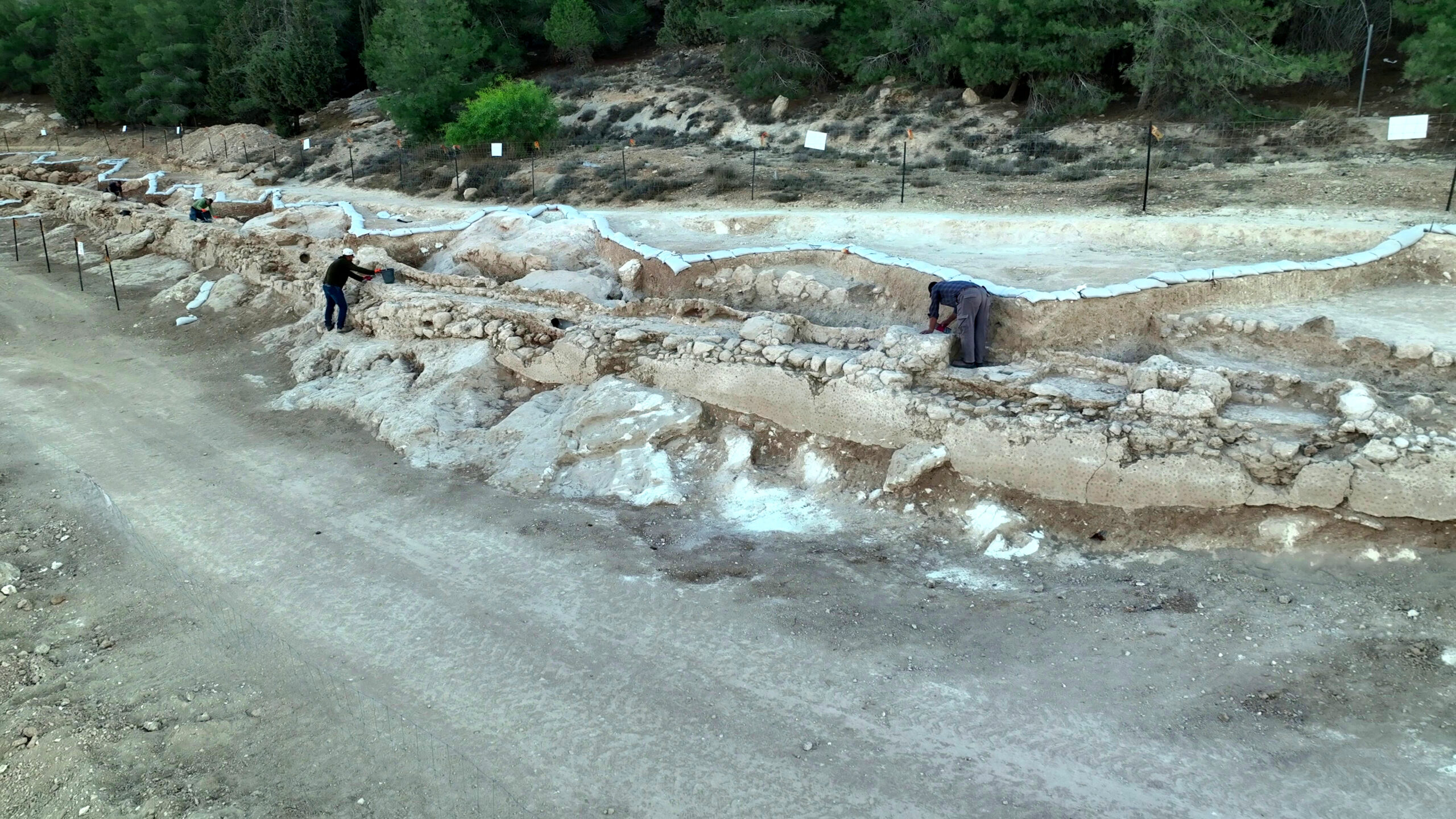
Construction of a new Jerusalem neighborhood has revealed a 300-meter stretch of the channel that carried water to the Temple Mount more than 2,000 years ago. Israel Antiquities Authority (IAA) archaeologists exposed the section of Jerusalem’s Lower Aqueduct south of Kibbutz Ramat Rachel, on land slated for development by the Israel Land Authority. The ancient waterway will now serve as the main entrance to the neighborhood.
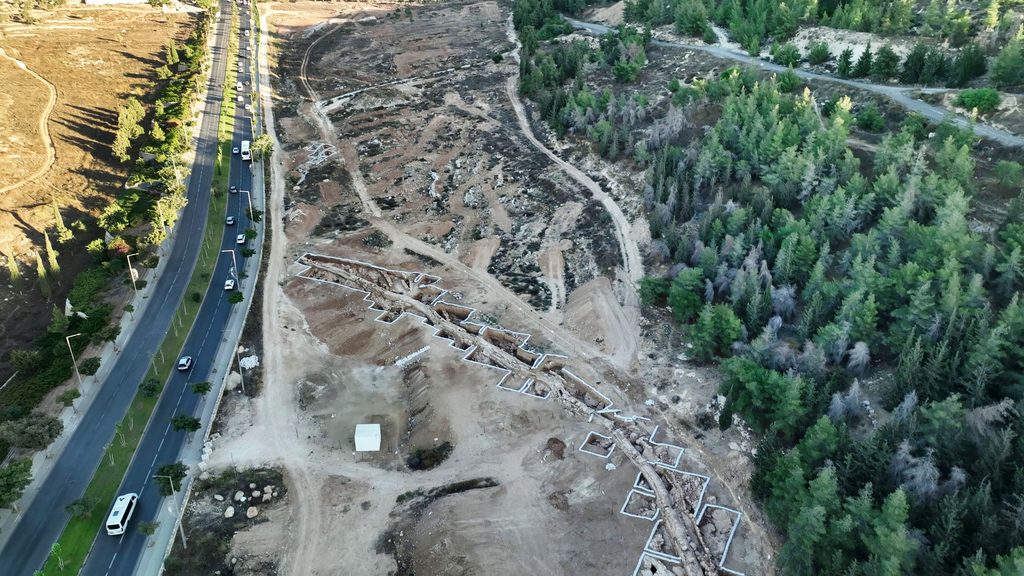
The aqueduct, attributed to the Hasmonean kings, was part of a water system that drew spring water from the Gush Etzion area in Judea, gathered it in Solomon’s Pools south of Bethlehem, and carried it north to the Temple.
“The Lower Aqueduct was an impressive engineering project, probably built in the time of the Hasmonean kings to supply water to Jerusalem,” said Dr. Benyamin Storchan and Gil Freid, the excavation directors on behalf of the IAA. “The system was so well planned that it remained in intermittent use until about 100 years ago. The aqueduct runs about 21 km from Solomon’s Pools, south of Bethlehem, to Jerusalem. Along most of the route, the water flowed along a very gentle gradient, dropping just one meter in elevation per kilometer.”
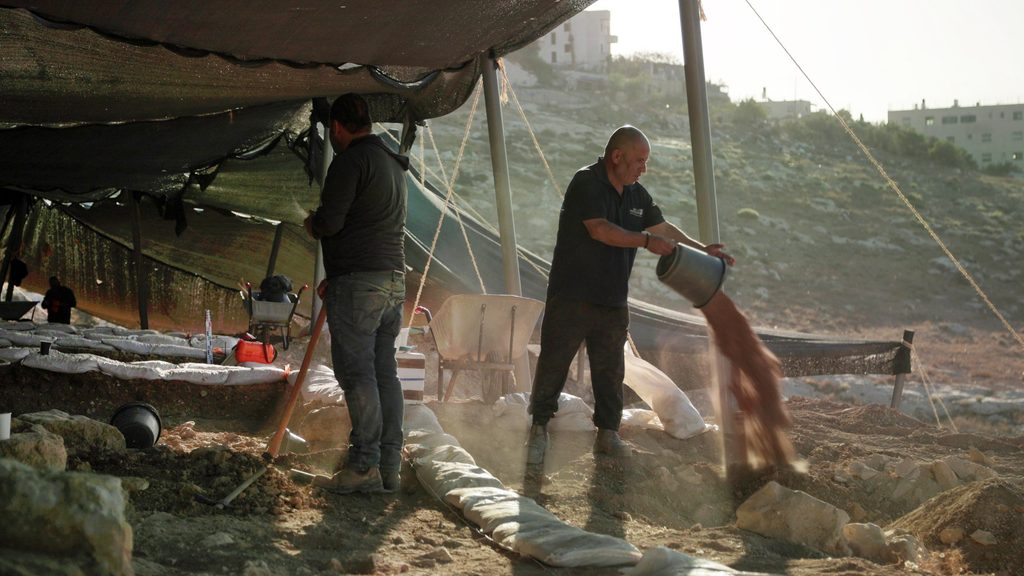
The system ran on gravity alone. Its engineers maintained that precise slope across the hill country, routing the channel around slopes and through bedrock, with cleanout points along the way to clear blockages.
The exposed section preserves several eras of use. The original builders laid a plastered stone channel. About 500 years ago, the Ottomans installed ceramic pipes inside it and coated the outer wall with plaster studded with small stones, a distinctive finish that runs along the aqueduct’s route.
“The aqueduct is an engineering marvel,” said Dr. Amit Re’em, Jerusalem District Archaeologist of the IAA. “The thought that about 2,000 years ago they managed to bring water to Jerusalem this way is astonishing.” Re’em said the IAA is working with the Jerusalem Municipality on a continuous park that would allow visitors to walk alongside the aqueduct from southern Jerusalem to the Old City.
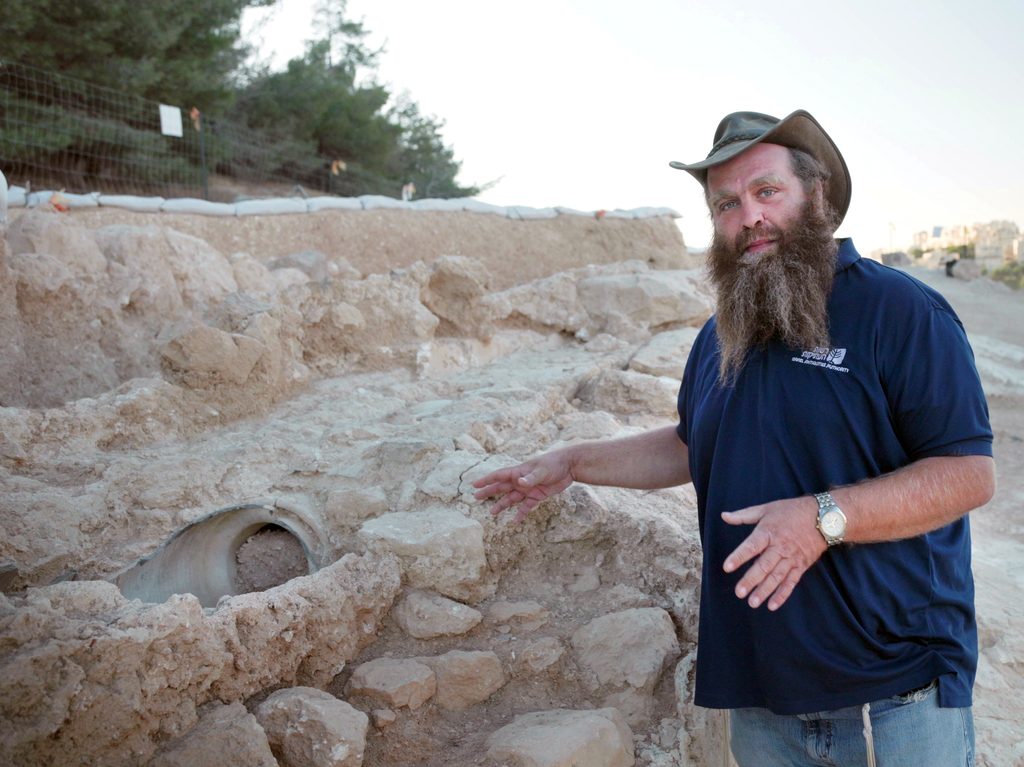
Heritage Minister Rabbi Amichai Eliyahu linked the find directly to the Temple. “The aqueduct, whose construction is attributed to the days of the Hasmonean kings, tells of a leadership that knew how to think ahead: to expand Jerusalem’s capacity to absorb residents, pilgrims, and public life around the Temple,” he said.
Yehuda Eliyahu, Acting Director of the Israel Land Authority, said the integration of the aqueduct into the neighborhood “will give residents and visitors a direct connection to Jerusalem’s rich history and to the deep bond of the people of Israel with its eternal capital.”
The research will be presented for the first time this week at the 19th “New Studies in the Archaeology of Jerusalem and Its Region” conference in Jerusalem and Tel Aviv.
Water for the Temple
The Temple required a constant supply of water for the kohanim (priests) washing at the kiyor (laver), for cleaning the altar, and for ritual immersion. The Talmud (Yoma 31a) records that the mikveh (ritual bath) used by the High Priest on Yom Kippur was fed by a channel from Ein Eitam, a spring the Sages describe as 23 cubits higher than the Temple courtyard floor. Ein Eitam lies beside Solomon’s Pools, at the head of the system now uncovered at Ramat Rachel.
Water also stood at the center of Sukkot in the Temple. Each morning of the festival, the kohanim poured a nisuch hamayim (water libation) on the altar, accompanied by the Simchat Beit HaShoeva (Celebration of the Water Drawing). The Mishna (Sukkah 5:1) states that whoever had not seen that celebration had never seen joy in his life.
The prophets foresaw Jerusalem’s water flowing in the opposite direction, outward from the city to the world:
“And it shall come to pass in that day, that living waters shall go out from Jerusalem: half of them toward the eastern sea, and half of them toward the western sea; in summer and in winter shall it be.” (Zechariah 14:8)
Ezekiel (47:1) saw those waters issuing from beneath the threshold of the Third Temple. For two millennia, the Lower Aqueduct carried water into Jerusalem for the Temple service. Today, as Jews build homes along its route and Israel plans a path following it to the Old City, the channel once again points to the Temple Mount.