



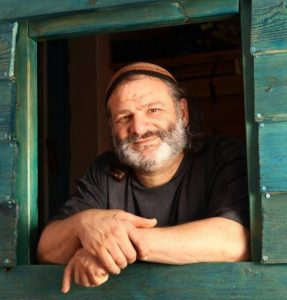
Freed hostage Avinatan Or revealed Monday that the Hamas terrorist who held him in Gaza told him, shortly before his release, to leave Israel because the terrorist organization intends to carry out another October 7 massacre. “As long as there is one Jew in the Land of Israel, we will slaughter you again and again and again,” the terrorist, identified as Abu Hassan, told Or, according to his account in an interview broadcast on Keshet 12’s investigative program Uvda (“Fact”).
The interview with journalist Ilana Dayan, Or’s first full account of his 738 days in captivity, aired on the eve of the third anniversary of the October 7 attack. In it, Or also disclosed a failed escape attempt, his opposition to a hostage deal while he was still being held, and a prayer he offered in the tunnels.
According to Or, Abu Hassan came to inform him that an agreement had been reached under which he would be released. “Go home, say goodbye to your father, goodbye to your mother, meet up with your friends. Two, three, four days, a week, and then take a bag, pack, and go to Europe,” the terrorist told him. “You know why? Because we will do October 7 again.”
Or said he refused. “I looked at him and said, ‘I’m not leaving,'” he recounted. “He asked, ‘Why?’ and I said, ‘Look at the Gaza Strip. Everything here is ruin, everything here is death. When the war ends and the crossings open, will you leave for Egypt?’ He said, ‘No.’ I asked, ‘Why not?’ He answered, ‘Because this is my home.’ I told him, ‘Excellent. This is also my home.'”
Or, 33, was abducted with his then-girlfriend Noa Argamani from the Nova music festival near Re’im on October 7, 2023. Terrorist footage of Argamani screaming on the back of a motorcycle while Or was marched away on foot by at least four gunmen became one of the most widely circulated images of the massacre. Because Or had completed IDF combat service, Hamas classified him as a “captured soldier” rather than a civilian hostage. He was released on October 13, 2025, along with the last 19 living hostages. The IDF later announced that two of the terrorists who abducted him, Ahmad Abu Marhil and Ahmad Ibrahim Rajab Shaar, were killed in separate airstrikes in 2025.
Or was held underground in near-total isolation, and no other Israeli hostage encountered him during his captivity. He told Dayan that his greatest fear was “to become Ron Arad,” a reference to the Israeli Air Force navigator captured in Lebanon in 1986 who never returned.
Nearly two meters tall and confined to a cell too low for him to stand upright, Or began searching for a way out. “In the army they always told us, there’s no such thing as one hundred percent defense. There will always be some weak point,” he said. Feeling along the sandbags lining the back wall in the dark, he detected airflow. “That doesn’t happen in a tunnel,” he said.
Over roughly six months, Or dug through the sandbags using a metal wire, a stolen pickaxe, an electrical cable he found, and an LED lamp. He concealed part of his cell from a surveillance camera with a garbage bag and improvised a 60-meter extension cord. He prepared an escape bag with clothing and a sack on which he planned to write “hostage,” and wrote farewell letters to his parents and a will. Or, who grew up in Shiloh, studied at Yeshivat Shavei Hevron, served in the IDF’s Rimon unit, earned an engineering degree at Ben-Gurion University and worked at Nvidia, said he drew on all of that experience to plan the escape.
He reached the surface more than a year after his abduction. “Suddenly I see a little girl walking with a backpack, and a few minutes later I see a wagon driver passing with a cart and a horse,” he said. He was captured, tortured, and held for another year, starved, beaten, and shackled to the door of a cell two and a half meters long.
Or also said he opposed a hostage deal while in captivity. His mother, Ditza Or, was a member of the Tikva Forum, a group of hostage families that opposed a deal at any price and argued that Israel’s security must take precedence. Or said he saw hostage-release protests on television in Gaza and knew his parents were not taking part. “The dispute here was over dinei nefashot,” he said, using the Hebrew legal term for matters of life and death. “It was clear to me that if we make a deal now, I’ll get out of here. But in two days, three, a month, two months, a year, two years, ten years, someone else will be sitting here in my place.” He added, “It was clear to me that a deal should not be made at any cost. Israel had to come out of this war victorious.”
He said he told one of his captors, “I’ll stay here a day, two days, a year, two years, even ten years. In the end, you’ll understand that I’m not worth your money, and that will be the victory.”
When his parents, Yaron and Ditza, first saw him after his release, they told him they hoped he was not angry with them. “I told them, ‘I’m not angry with you, I’m proud of you,'” Or said. “My parents fought for me like crazy.” Shortly after his release, Ditza Or told a conference in Jerusalem on the future of Judea and Samaria that her son’s return was a “wondrous miracle” and described the moment as a time to advance the fulfillment of Divine prophecy and the redemption of all humanity.
Or, who stopped wearing a kippah (skullcap) years before his abduction, also described praying in captivity. “On the 70th day, I speak to God and say to Him, ‘Listen, I know that for seven years I haven’t spoken to You at all, and it’s hypocritical that now I come to ask You for something, and there’s a good chance I’ll forget You when I get out. I’ll speak to You plainly. The Torah says to honor your parents, and I tried to do that before that Shabbat in October. Now it’s Your turn to fulfill the part about “that your days may be long,” and the rest of the verse, “upon the land.”‘”
The verse Or cited reads in full:
“Honour thy father and thy mother, that thy days may be long upon the land which the LORD thy God giveth thee.” (Exodus 20:12)
The reward the Bible attaches to honoring parents is life upon the land. Or honored parents who opposed trading Israel’s future security for his freedom, and he returned to that land.
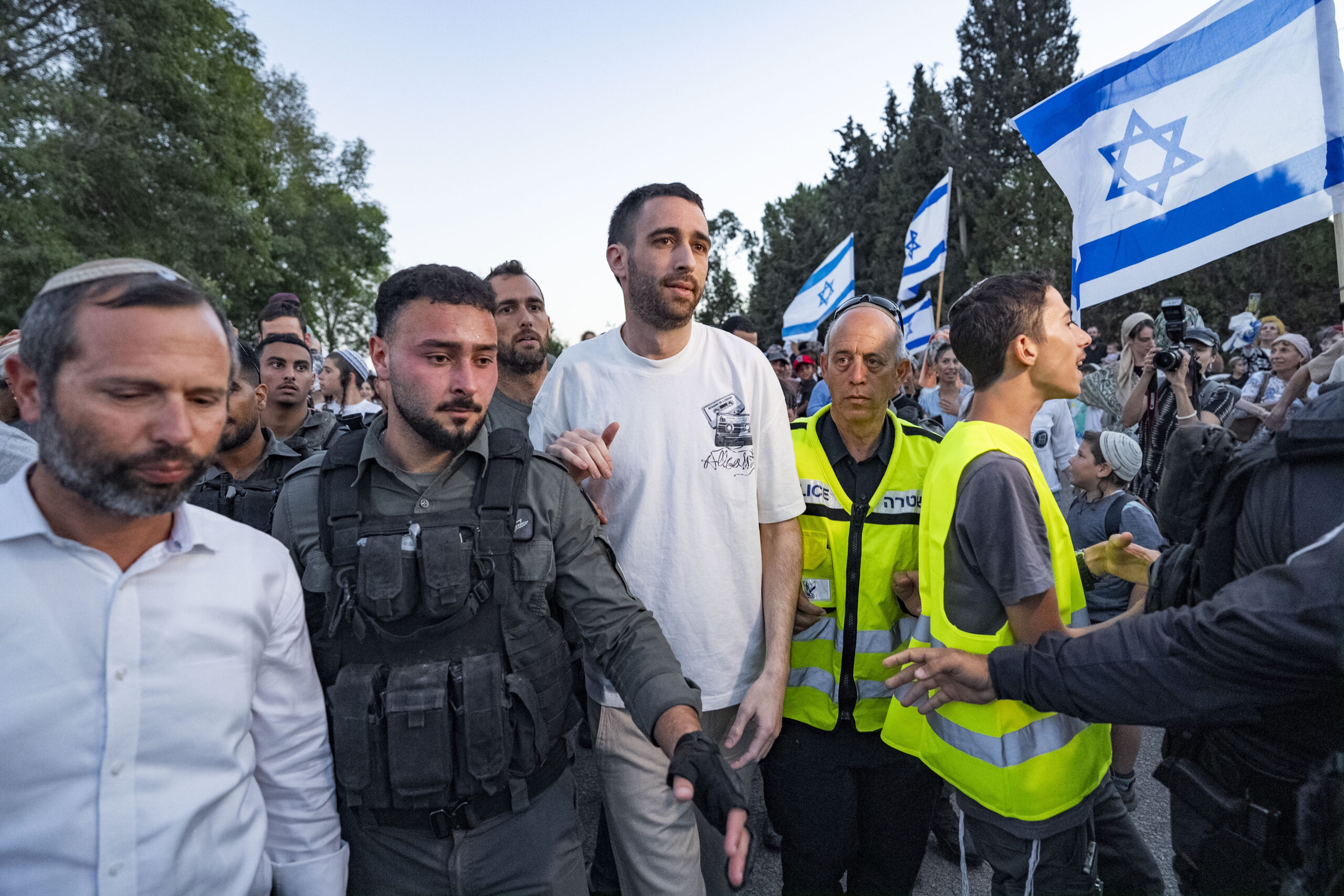
Eight days after his release, Or returned to Shiloh in Samaria, where crowds lined the roads to welcome him. According to the Sages, Shiloh housed the Mishkan (Tabernacle) for 369 years before the Temple was built in Jerusalem. Hamas told the son of Shiloh to pack a bag for Europe. He told his captor he was staying home.