
A NIS 3.2 million suspension bridge and promenade launches Israel’s new “Biblical Trails in Judea and Samaria” initiative at the site of God’s first promise of the land
About 3,800 years ago, a man from Mesopotamia walked into the hills of Samaria, stopped beneath a grove of trees, and heard God speak the words that have defined Jewish history ever since. This week, at that same spot, Israeli ministers laid the cornerstone for a path that will let thousands of visitors walk in his footsteps.
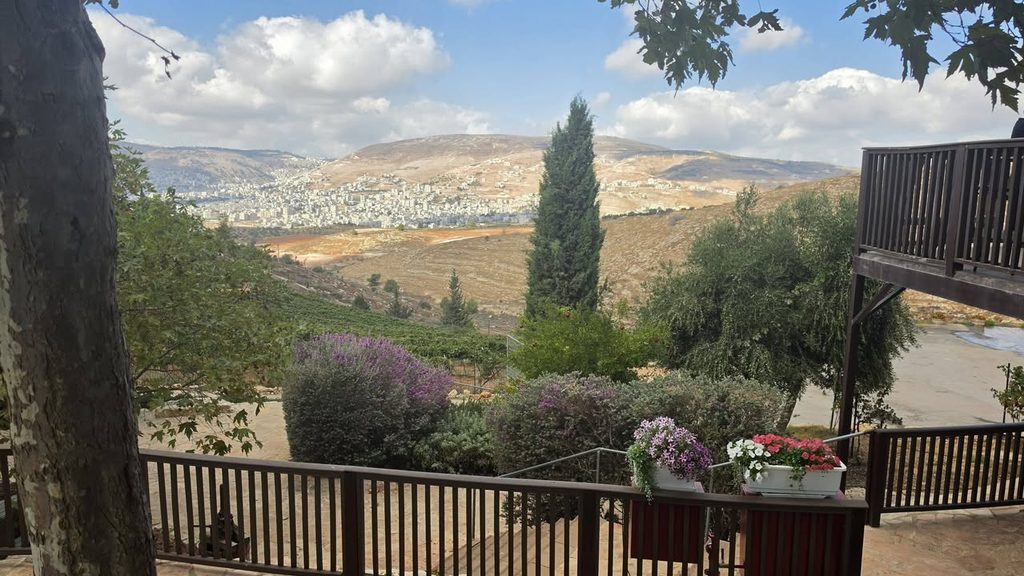
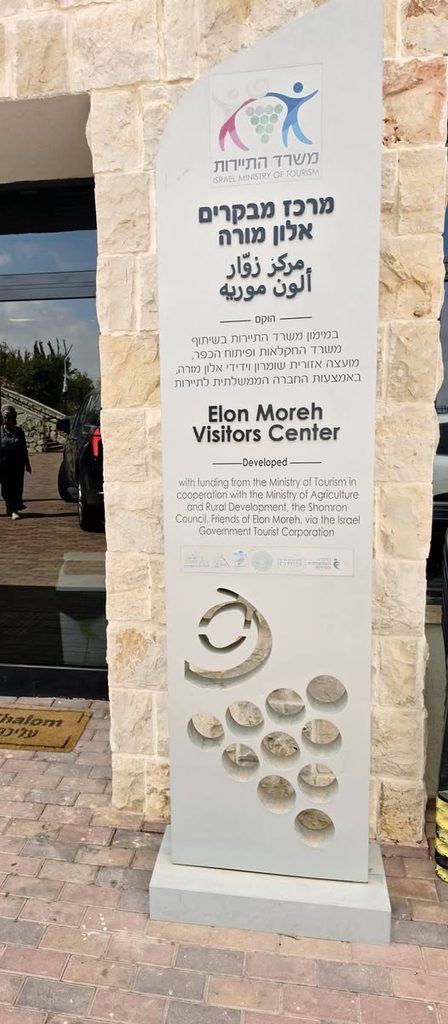
Israel’s Ministry of Tourism has launched the “Joshua Trail,” the first project of its new “Biblical Trails in Judea and Samaria” initiative. The NIS 3.2 million project, roughly $850,000, includes an accessible promenade and a suspension bridge connecting the Elon Moreh Heritage Center with the summit of the Mount Kabir Nature Reserve, overlooking the valley of Shechem. The route will combine the region’s dramatic scenery with sites tied to its biblical history.
The first of the biblical trails is named for Joshua and begins at Elon Moreh. The Bible explains the choice.
The Ceremony
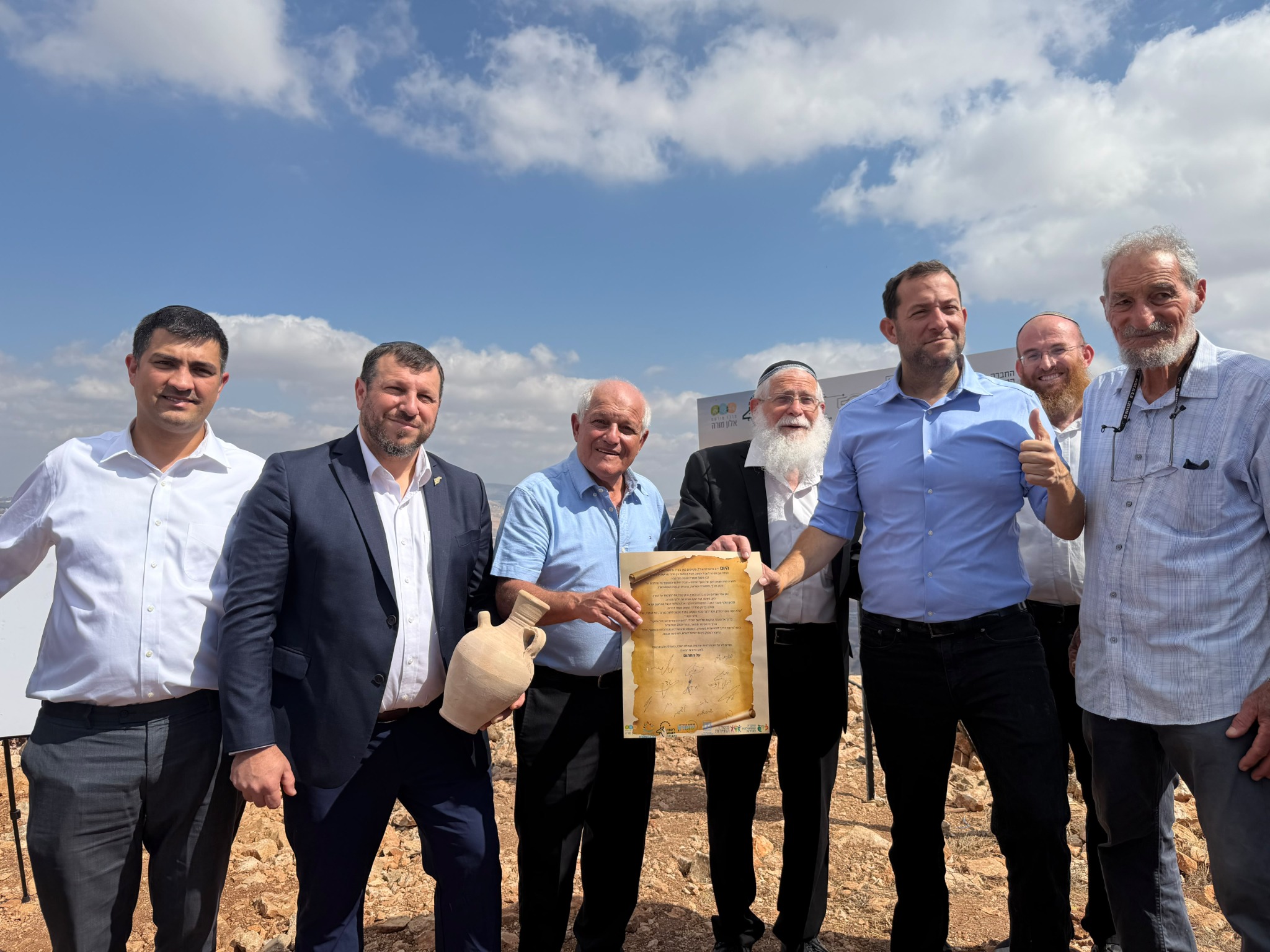
The cornerstone ceremony brought together Minister of Tourism Haim Katz, Minister of Heritage Rabbi Amichai Eliyahu, Samaria Regional Council Head Yossi Dagan, Judea and Samaria Regional Cluster Director-General Keren Gefen and Tourism Ministry Director-General Michael Izhakov. Also attending were Elon Moreh Heritage Center founder Shira Simchi, Samaria Tourism Director Lilian Zitman, and Beni Katzover, one of the leaders of the original Elon Moreh group and a founder of the Jewish return to Samaria.
The project is a joint effort of the Ministry of Tourism, the Ministry of Heritage, the Israel Nature and Parks Authority, the Samaria Regional Council, the Judea and Samaria Regional Cluster and the Elon Moreh Heritage Center. The promenade is designed for families and visitors of all abilities. Walkers will cross the suspension bridge high above the landscapes of Samaria while learning the history of the land beneath their feet.
“In Samaria, the story is found on the ground, in the places where the events that shaped our history took place,” Minister Katz said. “Developing tourism is part of building the country. Every trail we develop and every site we make accessible connects more people to the area, strengthens settlement and generates growth. Samaria can and should become Israel’s Tuscany. It has landscapes, vineyards, wineries, history and heritage that cannot be found anywhere else.”
Dagan called the trail “another moving step in building the country.” “This place, where the forefathers of the nation walked, will now become accessible and welcoming to large numbers of visitors from across Israel,” he said. “Our response to every challenge is to continue building and continue developing tourism in the heart of the land of the Bible.”
The First Promise
Elon Moreh takes its name from the first place Abraham stopped when he entered the Land of Israel. There, God appeared to him for the first time in the land and made the promise on which all of Jewish history rests:
“And Abram passed through the land unto the place of Shechem, unto the terebinth of Moreh. And the Canaanite was then in the land. And the LORD appeared unto Abram, and said: ‘Unto thy seed will I give this land’; and he builded there an altar unto the LORD, who appeared unto him” (Genesis 12:6–7).
Elon Moreh means “the terebinth of Moreh,” a great tree that served as a landmark in the hills above Shechem. Rashi explains that God brought Abraham to this specific place for a reason. From Elon Moreh, God showed Abraham Mount Gerizim and Mount Ebal, the two mountains where his descendants would one day accept the covenant of the Torah. Both mountains are visible from the summit of Mount Kabir, where the new trail ends.
The Bible also records that “the Canaanite was then in the land.” The promise was given while others held the land. Dagan’s words at the ceremony, “our response to every challenge is to continue building,” echo Abraham’s own response. He heard the promise, and he built an altar.
Joshua on Mount Ebal
Five hundred years later, Moses commanded the children of Israel to return to this spot once they crossed the Jordan. He instructed them to proclaim the blessing on Mount Gerizim and the curse on Mount Ebal, “beside the terebinths of Moreh” (Deuteronomy 11:29–30). Joshua carried out the command. After the conquest of Jericho and Ai, he led the entire nation to the valley between the two mountains, built an altar of whole stones on Mount Ebal, and read aloud every word of the Torah:
“There was not a word of all that Moses commanded, which Joshua read not before all the assembly of Israel, and the women, and the little ones, and the strangers that walked among them” (Joshua 8:35).
In the 1980s, archaeologist Adam Zertal uncovered a large stone structure on the northeastern slope of Mount Ebal that he identified as Joshua’s altar. It lies within sight of Mount Kabir.
Joshua returned to this region at the end of his life. At Shechem, below Elon Moreh, he gathered the tribes to renew the covenant, and there the children of Israel buried the bones of Joseph, which they had carried out of Egypt (Joshua 24:32). The trail named for Joshua overlooks the valley where he read the Torah to the nation and where he sealed its covenant with God.
The verse in Joshua carries a message for today’s visitors. When Joshua read the Torah on Mount Ebal, “the strangers that walked among them” were standing beside Israel. The Tourism Ministry expects the trail to draw visitors from across Israel and around the world, including the growing number of Christians who come to Samaria to stand where the Bible happened.
Walking the Land
The Sages taught that walking the Land of Israel is itself an act of taking possession. After Abraham parted from Lot, God commanded him: “Arise, walk through the land in the length of it and in the breadth of it; for unto thee will I give it” (Genesis 13:17). The Talmud derives from this verse that walking the length and breadth of a field can establish ownership of it (Bava Batra 100a).
Beni Katzover, who stood at this week’s ceremony, knows the cost of walking this land. The Elon Moreh group was evicted from Sebastia in 1975 and again from a site near Rujib in 1979, after a ruling by Israel’s Supreme Court. In 1980, the group climbed Mount Kabir and established the community that stands there today. Nearly half a century later, the path they fought to climb is becoming a promenade open to all.
A suspension bridge in Samaria might seem a modest project. It stands on the spot where God first promised the land to Abraham, and where Joshua read the covenant to the nation. The Joshua Trail invites visitors to walk the land as Abraham was commanded to walk it, in the length and in the breadth. With every step, they reclaim a promise first spoken beneath the terebinth of Moreh: “Unto thy seed will I give this land.”