

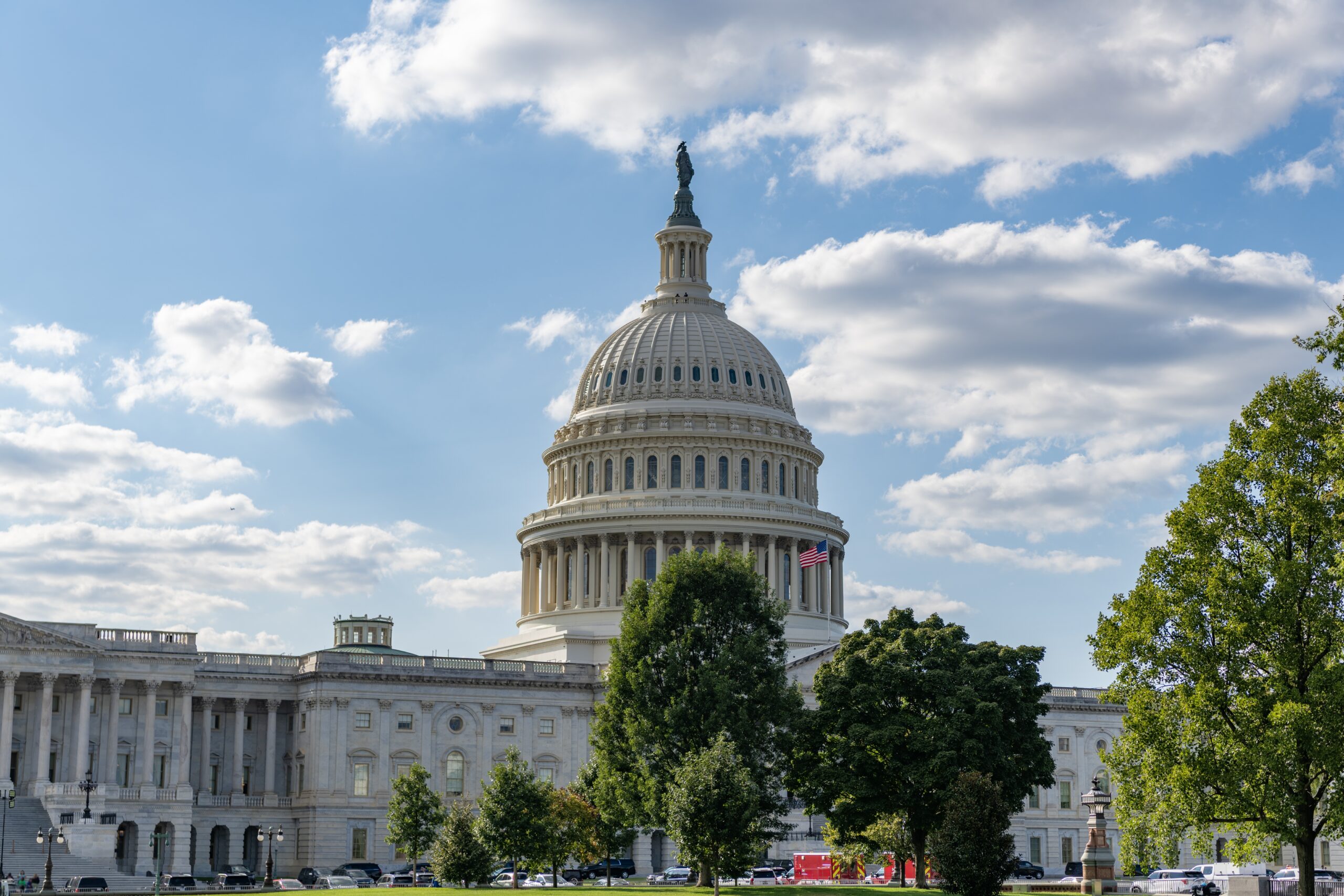
West Virginia Congressman Riley Moore stood in front of a room of conservative activists this month and made an admission rarely heard from anyone on Capitol Hill: he does not consider his voters his first boss. Moore told the Heritage Foundation’s ongoing “Belief in Action” series that too many politicians in Washington chase social media clicks instead of the will of God, and that his own service to his constituents comes second to his service to God. Illinois Congresswoman Mary Miller, seated beside him, said much the same. The two joined Heritage President Kevin Roberts for a conversation on faith and public office, part of a series that has also featured Housing and Urban Development Secretary Scott Turner earlier this year.
Moore seemed to grasp this instinctively. He spoke candidly about the pull of power and envy inside the Capitol, forces that can blur the line between personal ambition and good policy. “It is very easy to be governed by your own will,” he told the gathering, adding that he prays every day for the discernment to recognize God’s will instead of his own. That daily discipline, he said, is what keeps a lawmaker from making decisions rooted in ego rather than principle.
Miller grounded her own account of public service in language considerably older than the American republic, though she may not have realized its source. She told the audience that God has kept the nation in this moment for a purpose, and that believers are meant to stay active and engaged rather than retreat into comfort while waiting on divine deliverance. That framing of a people preserved “for such a time as this” comes from the Book of Esther, spoken by Mordechai as he pushes his niece to risk her life for her people: “For who knows whether you have attained royal position for such a time as this?” (Esther 4:14). The Sages note that God’s own name never once appears in the Book of Esther, not because He is absent from the story, but because His hand moves through the deliberate choices of ordinary people willing to act. It is a fitting text for a lawmaker describing her own presence in Washington as obedience rather than ambition, whether she cited it knowingly or not.
Miller also named her favorite verse from the pulpit that day, reciting from memory, “as Psalm 18:30 says, ‘God’s ways are perfect.'” The fuller verse reads: “As for God, His way is perfect; the word of the LORD is tried; He is a shield to all those that trust in Him” (Psalm 18:31 in the Hebrew numbering, 18:30 in most English translations). Miller described her committee assignments, which are the Congressional Family Caucus, Agriculture, Education and Workforce, and House Administration, as an attempt to keep government out of matters she believes belong to God, family, and private enterprise. Both lawmakers raised the persecution of Christians overseas and voiced hope that the current administration’s direction continues regardless of the coming midterms. Moore predicted the Republican Party’s continued realignment toward what he called the American worker, family, and church, under the leadership of Vice President JD Vance.
The Bible commands this kind of scriptural discipline among leaders. When Israel appointed a king, the law required something specific of him beyond any other citizen: “And it shall be, when he sits on the throne of his kingdom, that he shall write for himself a copy of this law in a scroll, out of that which is before the priests, the Levites. And it shall be with him, and he shall read from it all the days of his life, so that he may learn to fear the LORD his God, to keep all the words of this law and these statutes, to do them” (Deuteronomy 17:18-19). The king was not permitted to rule from memory or from the counsel of advisors alone. He kept his own handwritten sefer Torah, a Torah scroll, physically before him, a daily check against the very temptation Moore described from the Heritage stage: the slow drift toward governing by one’s own will instead of God’s. Moore and Miller do not hold scrolls in the well of the House. But the instinct behind the ancient command and the instinct both lawmakers described are the same: power left unaccountable to scripture becomes power accountable only to itself.
The setting for this conversation, Heritage’s “Belief in Action” series, has itself weathered a difficult stretch. In late October, Heritage President Kevin Roberts drew sharp criticism from figures including Mitch McConnell and Ben Shapiro after publicly defending former Fox News host Tucker Carlson’s friendly interview with white nationalist Nick Fuentes, using language that several colleagues flagged as an antisemitic trope. Roberts apologized for his phrasing, and in the weeks that followed, members of Heritage’s antisemitism task force and more than a dozen other staffers left the organization, several joining a new group founded by former Vice President Mike Pence. Heritage has since said the departures clear the way for a stronger, more focused team.
That backdrop makes Moore and Miller’s message land with more weight, not less. Both lawmakers described a Washington where self-will and public performance constantly compete with genuine conviction, and both named daily prayer and scriptural discipline as the corrective. “It doesn’t mean you’re going to be the most popular,” Moore said of putting God ahead of the constituency he serves. In a capital built on measuring influence by polls, headlines, and follower counts, two elected officials stood up and said their real accounting happens elsewhere. Proverbs framed that same choice long before Capitol Hill existed: trust that does not lean on human understanding is not a retreat from responsibility. It is what makes responsibility possible to carry well.