




A new survey by the Tzohar Index for Judaism and Tradition finds that 61% of Israeli Jews plan to fast this Yom Kippur, even as a near-universal 96% of Jewish Israeli drivers say they will not get behind the wheel on the holiest day of the Jewish calendar, underscoring how deeply the day’s traditions hold even among those who will not set foot in a synagogue.
The Israel Democracy Institute, in its Biennial Statistical Report on Religion and State in Israel, found that 74% of Jewish Israelis fast on Yom Kippur, 63% for the full day and 11% partially. The survey, conducted in July and August among 1,002 Jewish Israelis, asked respondents whether they usually fast, a question aimed at habitual practice rather than plans for this specific year.
A separate survey by the Tzohar Index for Judaism and Tradition, conducted in late August with the Mashav channel, found 61% of Jewish Israelis planning to fast this Yom Kippur, 54% fully and 7% partially. That survey polled 1,330 Jewish Israeli adults and asked about intentions for the upcoming holiday rather than general habits, a wording difference that likely explains much of the gap between the two figures.
Both surveys agree on the sharpest divide in Israeli society: the gap between secular Israelis and everyone else. The IDI found that 47% of secular Jews fast at least partially, 28% fully, and 19% partially. Tzohar found a lower 34% of secular respondents planning to fast this year, with only 14% planning to attend synagogue. 51% of secular respondents in the Tzohar survey said they feel uncomfortable in a synagogue setting, including 26% who said they feel completely uncomfortable there.
Even among secular Israelis who neither fast nor pray, both surveys describe a day still treated as distinct from an ordinary Wednesday. Tzohar found that 92% of secular car owners do not plan to drive on Yom Kippur, nearly matching the 96% rate among the general Jewish public. Secular respondents described a quiet, home-centered day instead: 61% said they plan to rest or sleep, 55% to read, and 44% to take walks or visit with neighbors. Only 9% said they plan to do work-related tasks.
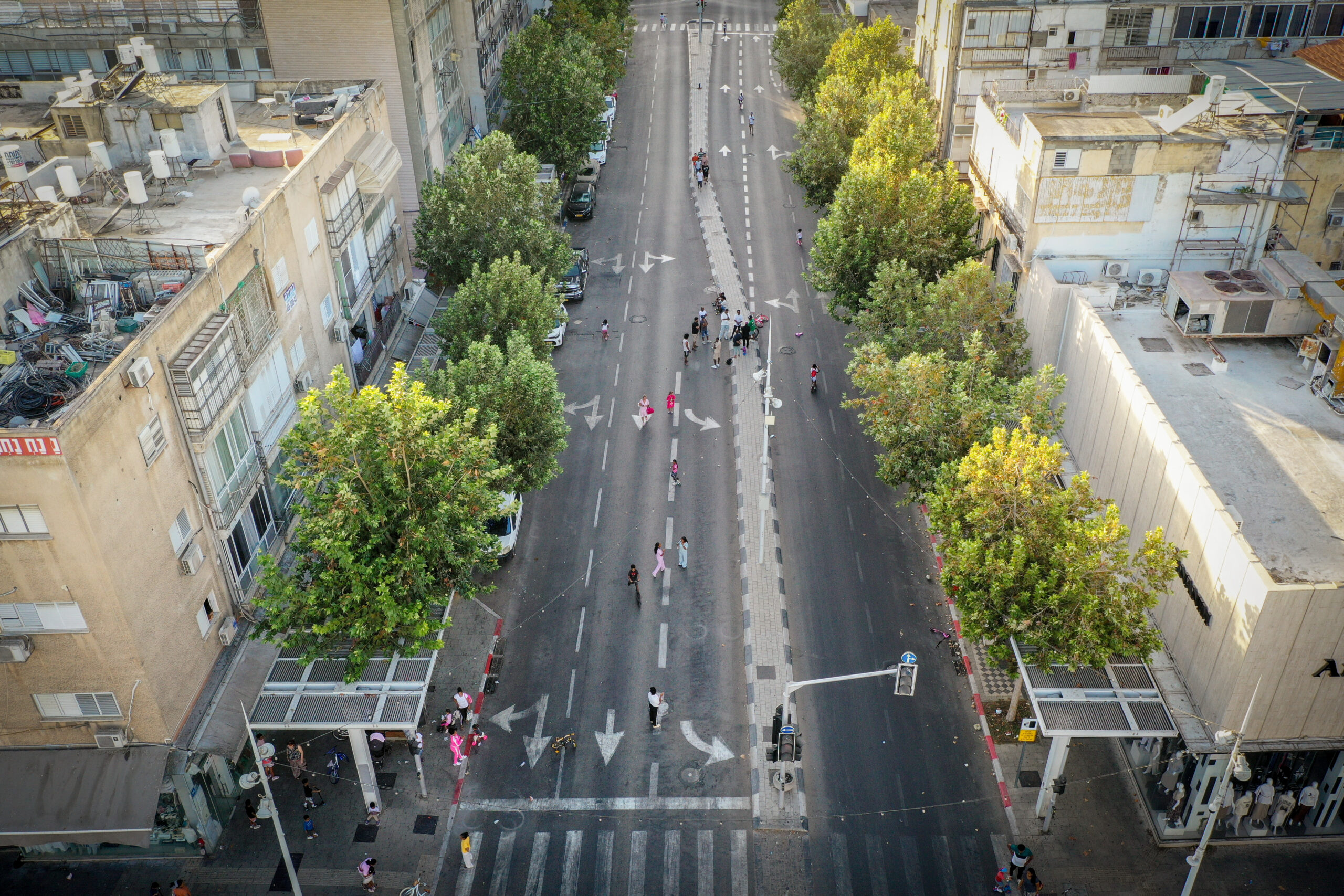
The empty roads have long produced one of Israel’s more charming secular customs: children and adults alike take to the streets on bicycles, skateboards, and scooters, turning normally traffic-choked highways and intersections into an impromptu playground for the day. With the country’s roads legally and culturally off-limits to cars, the practice has become, for many non-observant Israelis, its own kind of Yom Kippur ritual, a physical expression of the day’s stillness even without the fast or the prayer.
The IDI survey also found a strong ethnic divide in observance. Mizrahi Jews fast at a rate of 88%, compared to 64% among Ashkenazi Jews, a gap that holds even when comparing Israelis with the same religious self-definition. Among secular Jews specifically, 63% of Mizrahim fast, compared to 39% of Ashkenazim. Tzohar recorded a similar pattern, with 68% of Mizrahi and Sephardic respondents planning a full fast, compared with 48% of Ashkenazi respondents.
Regarding synagogue attendance, the IDI found that 57% of Jewish Israelis usually attend Yom Kippur services, 51% attend Orthodox services, and 6% attend Reform or Conservative services. 18% of all Jewish Israelis attend synagogue only on Yom Kippur and at no other point in the year, a figure that climbs to 37% among traditional non-religious Jews. Tzohar found a lower overall attendance figure of 46%, consistent with its narrower focus on plans for this specific holiday rather than general habit.
Taken together, the two surveys, whatever their differences in framing and figures, point in the same direction: a majority of Israeli Jews will fast this Yom Kippur, and a country that argues over nearly everything else will once again largely stop.

