

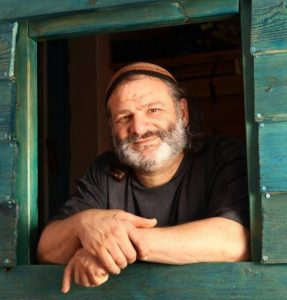

Five Chassidic Rebbes and the head of America’s largest yeshiva traveled to Washington Thursday for a White House visit that brought together rival factions of Chassidic leadership for the first time in roughly two decades, culminating in a personal letter to President Trump asking him to intervene in Israel’s Haredi military draft dispute.
The visit was part of what has become Trump’s annual meeting with Jewish community leaders ahead of Rosh Hashanah. The delegation included the Satmar Rebbes of Kiryas Joel and Williamsburg, Aaron Teitelbaum and Zalman Teitelbaum, along with the Bobover Rebbe, the Vizhnitzer Rebbe of Monsey, and Rabbi Aron Mendel Twersky, representing his father, the Skverer Rebbe. Rabbi Malkiel Kotler, head of Beth Medrash Govoha in Lakewood, New Jersey, rounded out the group. The visit included meetings with Vice President JD Vance, senior advisor Jared Kushner, and Congressman Mike Lawler, in addition to Trump himself. Lawler, a Republican running in a competitive reelection race, represents a district north of New York City with significant Orthodox support, and Hasidic areas of the region backed Trump in 2024.
The Satmar movement, one of the largest Hasidic groups in the United States, holds a non-Zionist position on theological grounds, rejecting the idea that a Jewish state should be established before the coming of the Messiah. That position is distinct from the smaller, explicitly anti-Zionist activist movement associated with groups like Neturei Karta, and it did not prevent Thursday’s delegation from asking an American president to intervene directly in Israeli domestic policy.
The delegation’s first extended session took place in the Roosevelt Room with Vance and other officials, covering a wide range of communal concerns: kosher food preparation for federal prisoners, furlough policies that Williamsburg’s Rebbe said leave inmates with almost no meaningful time at home before a two-day holiday, housing assistance for large families, funding for Maimonides Medical Center, the redemption of Jews held captive abroad, and water infrastructure needs in Kiryas Joel. Vance, who recently had his fourth child, spoke about family-friendly policy and fielded a lighthearted appeal to expand an assistance program currently capped at families with three children.
The group also raised the protection of Jewish cemeteries across Europe, including a historic burial ground in Vilna that Rabbi Kotler specifically flagged as under threat, along with several sites in Poland.
Before entering the Oval Office, the two Satmar brothers, whose factions have been publicly estranged for years, greeted each other warmly, with the Kiryas Joel Rebbe congratulating his brother on a grandson’s recent wedding and a granddaughter’s engagement. The rift between them traces to the 2006 death of their father, Rabbi Moshe Teitelbaum, who had appointed Zalman Leib to lead the Williamsburg community and named him his successor in his will. Aaron, the elder son, disputed that designation, arguing that primogeniture should have determined the succession. Both brothers were proclaimed Rebbe by their respective followers, splitting Satmar into the rival Kiryas Joel and Williamsburg factions that have persisted ever since. The Kiryas Joel Rebbe then held a roughly ten-minute private meeting with Trump, raising the redemption of captives and what the delegation calls the Haredi draft crisis in Israel before the rest of the group joined.
In the Oval Office, the meeting opened with the Kiryas Joel Rebbe reciting the Hanosein Teshuah, the traditional Jewish prayer for the government of one’s country, which was translated into English for Trump and Kushner. Rabbi Kotler, invited to address the president directly, chose instead to hand Trump a private letter. That letter, dated September 3, asked Trump to intervene on behalf of roughly 100,000 Haredi yeshiva and seminary students in Israel, stating that dozens have been imprisoned for refusing military conscription, that tens of thousands live under threat of arrest, and that thousands of dual American-Israeli citizens are currently unable to freely return to the United States.
The Williamsburg Rebbe used his time to raise conditions facing Jewish federal prisoners and the situation of yeshiva students in Israel, while the Bobover Rebbe had prepared remarks on Maimonides Medical Center and Polish cemetery preservation that went unaddressed due to time constraints. Trump also recalled his 2020 commutation of Sholom Mordechai Rubashkin’s sentence, prompting an account from one advisor of crowds dancing in the streets after Rubashkin’s release, which was used to raise broader concerns about sentencing in Haredi criminal cases.
The roughly thirty-minute Oval Office meeting closed with Trump distributing presidential challenge coins to the delegation and receiving blessings from each Rebbe in turn.
President Trump just met with Jewish leaders at the White House.
— Libbey Dean (@LibbeyDean_) September 3, 2026
One man told us this on his way out of the West Wing. pic.twitter.com/wYzX824LuU
The dispute Rabbi Kotler’s letter addresses rests on numbers that have grown sharply more contentious since the war against Hamas began. Roughly 14,000 Haredi men reach draft age in Israel each year, and the IDF has said it needs on the order of 15,000 additional soldiers, split between combat and support roles, to meet the strain of an extended, multi-front war. Enlistment among Haredim has risen since October 7, 2023, from about 1,700 a year before the war to 2,200 in its first year, 2,800 the year after, and roughly 4,000 between July 2025 and July 2026, with about 1,000 of those entering combat units. Even so, that represents barely more than a quarter of eligible Haredi men in a single year. The IDF has separately said some 80,000 Haredi men between the ages of 18 and 24 are eligible for service but have not enlisted, and roughly 30,000 Israelis are currently classified as draft evaders, about half of them identified as Haredi. Compliance with individual draft orders has been especially low: of one recent batch of 7,000 summonses sent to Haredi men, fewer than 3 percent reported for service.
Those numbers sit atop Israeli society’s oldest fault line. Reserve soldiers, drawn overwhelmingly from secular and religious-Zionist communities, have absorbed the bulk of an extended war’s casualties and repeated call-ups, while blanket exemptions have kept most Haredi men in yeshiva. Anti-draft protests in Haredi neighborhoods have produced placards reading, in Hebrew, “We will not enlist in the enemy army,” with a harder-edged slogan among some protesters going as far as “Better to die than enlist.” Many secular and religious-Zionist Israelis view continued exemption during a war triggered by the deadliest attack on Jews since the Holocaust as a betrayal of shared national burden. Haredi leadership counters that full-time Torah study is itself a form of spiritual defense of the country, a position rooted in Talmudic teaching that Rabbi Shimon bar Yochai’s Torah study shielded his generation from harm.
That standoff persists in large part because of how Israeli politics is built. The Knesset’s 120 seats are allocated by proportional representation, no party has ever won an outright majority, and every government is therefore a coalition requiring 61 seats to function. Shas and United Torah Judaism, the two main Haredi parties, together command a reliable bloc of roughly 15 to 17 seats, a small share of the Knesset but a decisive one, since Israel’s secular center-left bloc will not partner with them and Netanyahu’s Likud has depended on their votes to form governments for decades. That leverage is not theoretical: in 2025, both parties walked out of Netanyahu’s coalition specifically over its failure to pass a Haredi exemption law, dropping his government from a comfortable majority to a bare minority and helping push Israel toward the October 27 election in which the draft law remains a central issue.
Beneath the politics sits a religious argument that Haredi leaders and their critics read in opposite directions. Jewish law, as codified by Maimonides, divides wars into two categories: a milchemet reshut, a discretionary war fought at a king’s initiative, and a milchemet mitzvah, an obligatory war fought to save Israel from an enemy already attacking it. The Mishnah in tractate Sotah states that in a milchemet mitzvah, the entire nation goes out to fight, exempting no one, not even a groom from his wedding chamber. Since October 7, a number of religious-Zionist rabbis have argued that the war against Hamas plainly meets that definition, meaning Jewish law itself, not merely Israeli civil law, obligates yeshiva students to serve alongside everyone else. Haredi authorities have historically countered that a dedicated class of full-time Torah scholars provides its own form of national protection, tracing the claim to the same teaching about Rabbi Shimon bar Yochai, and that determining who qualifies as such a scholar belongs to rabbinic rather than military judgment.
The doctrine traces to a passage in the Talmud, tractate Ketubot 111a, built around a verse repeated three times in Song of Songs: “I charge you, O daughters of Jerusalem, by the roes, and by the hinds of the field, that ye stir not up, nor awake my love, till he please” (Song of Songs 2:7). The Sages read that triple repetition as three binding oaths: that the Jewish people would not forcibly reclaim the Land of Israel as a mass movement, that they would not rebel against the nations of their exile, and that the nations, in turn, would not oppress Israel excessively.
Rabbi Yoel Teitelbaum, the Satmar Rebbe, built the movement’s modern position on these oaths in his 1961 work Vayoel Moshe, arguing that establishing Jewish sovereignty through human political and military effort, rather than waiting for the Messiah, violates the first oath outright. His ruling drew a sharp line: individual Jews may live in the land, but a Jewish government and army built by human hands before the Messiah’s arrival stand against the will of God, a position Satmar’s more than 100,000 followers worldwide hold to this day.
That reading is disputed by the majority of Orthodox scholarship, which points to sources including Maimonides’ student the Ramban, who counted settling the land as an independent commandment with no messianic precondition, and Rabbi Avraham Yitzchak Kook, who framed the modern return as the gradual, human-driven beginning of redemption rather than a rebellion against it. The dispute over these same three verses is what allows a Satmar Rebbe to ask an American president to intervene in Israeli policy while still declining to recognize the legitimacy of the Israeli government itself.
At the furthest edge of the debate sits Neturei Karta, a small anti-Zionist Haredi sect founded in Jerusalem in 1938 that holds the modern State of Israel to be a violation of Jewish law until the Messiah’s arrival. Satmar’s theological non-Zionism coexists with its adherents living in and benefiting from the state; Neturei Karta has turned its position into direct alliances with Israel’s enemies. Its representatives have traveled to Tehran to meet Iranian officials, including then-President Mahmoud Ahmadinejad, attended a Holocaust denial conference there in 2006, met Hamas leader Ismail Haniyeh in Gaza and pledged what one spokesman called “complete support” for the Palestinian people after Hamas’s 2006 election victory, and met Hezbollah officials in Lebanon, where members laid a wreath at the grave of a Hezbollah operative responsible for killing Israelis and Americans. As recently as September 2023, Neturei Karta members met Iran’s president on the sidelines of the United Nations General Assembly.
The pattern has continued closer to home and closer to the present. In January 2023, a Neturei Karta delegation traveled to Jenin to meet a member of Palestinian Islamic Jihad, telling the group “We are Palestinian Jews” and declaring support for a single Palestinian state in place of Israel; Israeli police arrested several members of the delegation afterward. Days later, sect members marched through Brooklyn carrying a banner honoring Palestinian “martyrs” and signs reading “Globalize the Intifada,” in a protest co-organized with Samidoun, a group the Israeli Ministry of Defense has designated a terrorist organization tied to the Popular Front for the Liberation of Palestine. In January 2020, a Neturei Karta delegation attended the Tehran funeral of Qassem Soleimani, the Iranian general killed in a U.S. drone strike, and met with Iranian Foreign Minister Javad Zarif. In 2013, Israel’s Shin Bet security service arrested one member of the sect on suspicion of spying for Iran, and a separate member once served in Yasser Arafat’s cabinet as Minister for Jewish Affairs. The sect’s American protests typically draw only a few dozen participants, and its gatherings in Israel usually run into the low hundreds; the group is estimated at roughly 5,000 members worldwide, of whom only about 140 are actively involved in anti-Israel activism, and mainstream Haredi organizations, including Agudath Israel and the Satmar movement itself, have repeatedly and explicitly disavowed it.
The letter Rabbi Kotler delivered has already drawn public pushback from within Orthodox Jewish circles. Rabbi Natan Slifkin, writing on his blog Rationalist Judaism, disputed the letter’s characterization of the Israeli exemption as a seventy-five-year tradition, noting that the original 1948 arrangement covered only 400 students and was expanded gradually under later governments. He also challenged the letter’s comparison to the American clergy exemption, arguing that the U.S. policy was built to preserve spiritual leadership for congregations during wartime, a rationale he said does not extend to yeshiva students who are not training to become rabbis.
The dispute arrives as Israel’s High Court of Justice continues to press the government over its failure to conscript Haredi citizens, with reservists shouldering a disproportionate share of an extended, multi-front war. It also lands squarely in the middle of an Israeli election campaign. Ultra-Orthodox parties allied with Prime Minister Benjamin Netanyahu have made extending the blanket exemption a central plank ahead of the October 27 Knesset elections, turning Thursday’s Oval Office letter from a communal appeal into a direct intervention in Israeli electoral politics from New York.
That approach carries its own complication, separate from the merits of the exemption question itself. Israel’s draft law is domestic legislation, passed and amended by its own elected Knesset and reviewed by its own courts. Asking a foreign head of state, however friendly, to press a sovereign ally on how it structures its own military conscription runs against the ordinary norm that allied nations do not direct one another’s internal governance, and it is a request Israeli voters and lawmakers, not their counterparts in Washington, are constitutionally positioned to answer.

