During the Hebrew month of Elul, immediately preceding the High Holidays of Rosh Hashanah and Yom Kippur, it is a season when Jews turn inward, toward God and one another. Seeking forgiveness sits at the center of that.
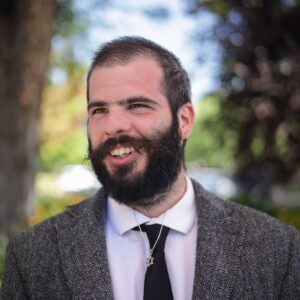
Rabbi Jonathan Hausman of Ahavat Torah Congregation in Stoughton, Massachusetts, and Pastor Joe Green, senior vice president of Eagles’ Wings, joined the Inspiration from Zion podcast to discuss Jewish and Christian perspectives on forgiveness, not as opponents but as long-standing friends.
In Elul, during which the conversation took place, Jewish daily liturgy shifts. Psalm 27 is recited each morning: “The Lord is my light and my help, whom shall I fear?” The shofar is sounded on weekdays, not first on Rosh Hashanah. Hausman compared Elul to an alarm clock that has already gone off. He reflected on the pulse of this season, not just from timeless Jewish teaching and practice. He related that his grandfather used another image. Sometimes you need someone to turn the key and walk in. Elul is that key.
He also corrected a common Christian impression that Jews barely think about sin until this season. The Amidah prayer recited three times a day already contains petitions for understanding, return, and pardon. The Hebrew word for sin, he noted, begins as an image of an arrow that misses the mark. The language of the prayers is first person plural. “Forgive us, our Father, for we have sinned.” The High Holiday season does not invent the work. It raises the volume from private petition to communal accounting.
Though having many Jewish friends and being to Israel many times, Green was unaware of the daily Jewish prayers repenting from sin. He said the Christian calendar works differently. In church life, reminders of sin, repentance, and asking God for pardon come daily and weekly, not as a single climax. His interaction with many Jewish friends in Israel and the US, he said, has deepened his own reading of Scripture: “The roots of our faith are truly grounded in Judaism.” Jews have been custodians of the Torah since Sinai. That history, for him, is not a footnote. It is a cornerstone of Christian faith.
Both men kept returning to practice, not mood. Hausman pointed out that in Hebrew, the word Elul is often read as an acronym for “Ani l’dodi v’dodi li,” which comes from the Song of Songs. “I am my beloved’s and my beloved is mine.” Modern talk treats love as a feeling. In Jewish life, he said, love has to be an action. Rituals of Elul force that move from emotion to deed. Green pressed the same point from the Christian side. Jesus taught that those who will not forgive should not expect the Father to forgive them. Saying “I forgive you” without meaning it is not the thing required. “Forgiveness means reconciliation,” he said, and the heart behind the words is what the Christian gospel keeps asking about.
Moderating the powerful conversation, I used myself as an example of how difficult forgiveness can be in practice. I shared an example of a pastor who harmed me in a very serious way more than ten years ago. This year, out of the blue, the pastor reached out to try to make amends. Green’s pastoral counsel was concrete. Do everything you can. Clear your own conscience. Reach out, even over coffee. Then leave the other person’s heart to God. He has watched people forgive and pray, only to get a call years later from someone ready to make things right.
When I pressed on whether an old wound that was never resolved but no longer burdens me, Green still urged the outreach. His reflection was not theoretical. He and his wife were sued after trying to help someone. The case cost years, and more than six figures. Hatred rose in him until he wanted to “take care of this guy.” Letting that go, he said later of wartime grudges as well, is “not for their benefit. It’s for me.”
One of the areas of difference that Hausman highlighted was that, in Judaism, one does not simply grant forgiveness. A person who has wronged another needs to ask for forgiveness, three times if needed, to demonstrate sincerity and repentance, not just following a script.
The most pressing questions came from listeners. If Israelis forgive the perpetrators of October 7, do they give permission to repeat it? Must one forgive enemies in war? Are some things unforgivable? Hausman answered without softening the distinction. Judaism does not mandate forgiving an active, unrepentant enemy during war. There is a duty to defend life when life is threatened. Compassion has limits, even as Torah also teaches restraint toward civilians, the logic behind the well-known IDF practice of issuing warnings to civilians before striking terrorists. Personal forgiveness and national justice are not the same file.
Green agreed that wartime is not the hour for that language. He was in Israel on October 7, 2023, with a group of pastors and leaders. Israel’s right of self-defense, he said, is not in doubt. After a war ends, he has seen former enemies face one another and forgive. He used post WWII Japan as an example. That is a different chapter.
Pastor Todd Schumacher, invited to close, named the tension many Christians felt in the room. Jesus commands forgiveness. Reconciliation, he was taught, is still a choice. Hearing Hausman say a nation need not forgive an enemy at war made him sit up. He was still wrestling. Holding a wrong, he admitted, has never worked out well for his own soul.
What lingered for both panelists was the friendship beneath the theology. Green said the most important fact of the hour was the dialogue itself: Jews and Christians sitting down without flinching. He now watches Orthodox rabbis and pastors exchange pulpits, something he could not arrange in decades of earlier ministry. Hausman said his first time inside a church was in 2008. A large share of his work now happens in churches. His synagogue recently hosted a Gospel Shabbat. Neither side stopped being who they were.
The conversation did not resolve every difference between daily Christian and Jewish perspectives but it did offer important insight, especially at this season. It showed two traditions that share a root, and two friends who can disagree, stand up, and still embrace.
Listen to the full conversation on YouTube or the Inspiration from Zion podcast.