
Constitution Committee Chairman Rothman submitted an urgent letter to Netanyahu and Ben-Gvir seeking shofar blowing and prayer rights on the holiday; Communications Minister Karai and MK Halevi pressed the same demand for weekly Shabbat access at a public conference moderated by Temple Mount activist Assaf Fried.
The push to open the Temple Mount to Jewish prayer, which this publication profiled through the campaign led by Temple Mount activist Assaf Fried to secure Shabbat access, has now reached the Knesset floor and the government’s senior ministries ahead of the High Holidays.
Knesset Constitution, Law and Justice Committee Chairman Simcha Rothman submitted an urgent letter Wednesday to Prime Minister Benjamin Netanyahu and National Security Minister Itamar Ben-Gvir, demanding that Jews be permitted to blow the shofar and pray on the Temple Mount during Rosh Hashanah. This year, the first day of the holiday falls on Shabbat.
“Blowing the shofar on Rosh Hashanah is one of the most central and important commandments of the holiday,” Rothman wrote. “The inability to blow the shofar on the Temple Mount on this day constitutes a significant infringement on the public’s ability to fulfill this commandment at the site most sacred to it.”
The shofar blast Rothman is demanding is not a modern innovation but a direct continuation of the Rosh Hashanah service performed in the Temple itself. The Mishnah in Tractate Rosh Hashanah describes the shofar sounded in the Temple on Rosh Hashanah as part of the Musaf offering, accompanied by trumpets, with the priests and Levites marking the day with the same triad of sounds Rothman cited from the Psalms. The Jerusalem Talmud’s ruling that the Temple Mount shofar obligation overrides Shabbat is itself a preserved fragment of Temple-era practice, when the blast sounded at the site regardless of the day of the week. For Rothman and the activists behind Tuesday’s conference, restoring the shofar to the Temple Mount on Rosh Hashanah is framed as restoring that unbroken practice to the one place it was once performed in full.
Rothman grounded the request in Scripture, citing the verse: “With trumpets and the sound of the shofar, shout for joy before the King, the LORD” (Psalms 98:6).
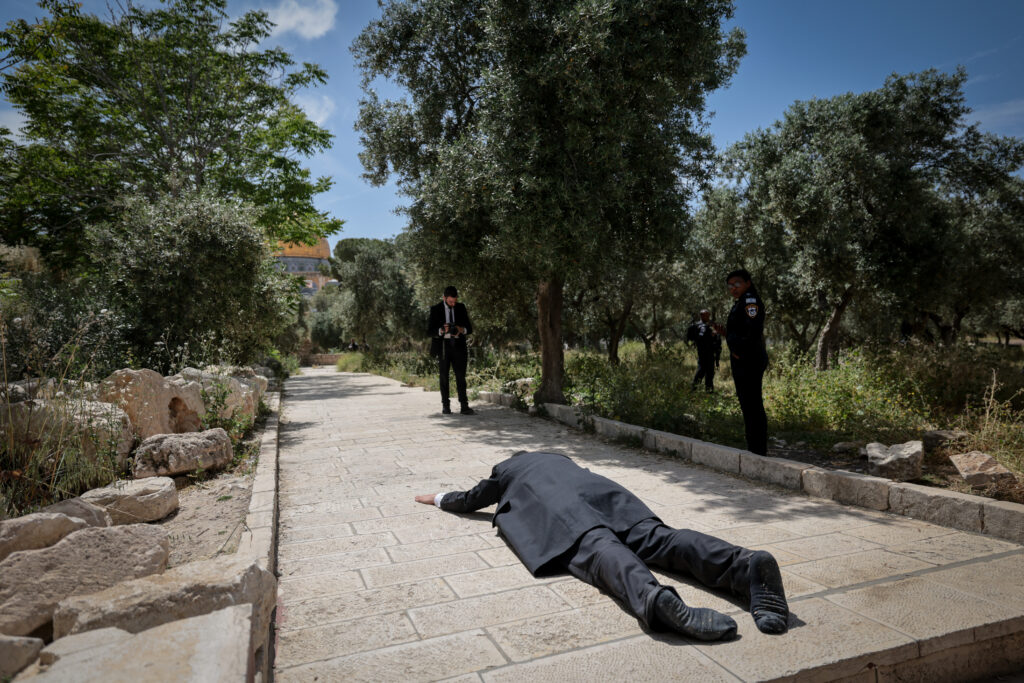
Rothman also pressed for the site to be opened for Musaf, the additional Rosh Hashanah prayer service, on the holiday’s first day. “This would provide a rare opportunity for the broader public to come and pray at the holy site on a major holiday,” he wrote, adding that current restrictions prevent Jews from exercising their right to pray at the most important site in Jewish history. He closed the letter with New Year’s wishes and an expression of confidence that Netanyahu and Ben-Gvir would grant the request given its “spiritual, religious, and national importance to the observant public in Israel.”
Absent government action, the Temple Mount is set to remain closed to Jews on the first day of Rosh Hashanah, on Sukkot, and on Simchat Torah. The closures stem from a policy barring Jewish access to the site on Shabbat, in place since 5760 (2000), which Temple Mount activists say violates the status quo governing the site. Rothman’s letter noted that according to the Jerusalem Talmud, the obligation to blow the shofar on Rosh Hashanah overrides Shabbat restrictions at the Temple Mount specifically, since the mitzvah there is understood to derive directly from the Torah.
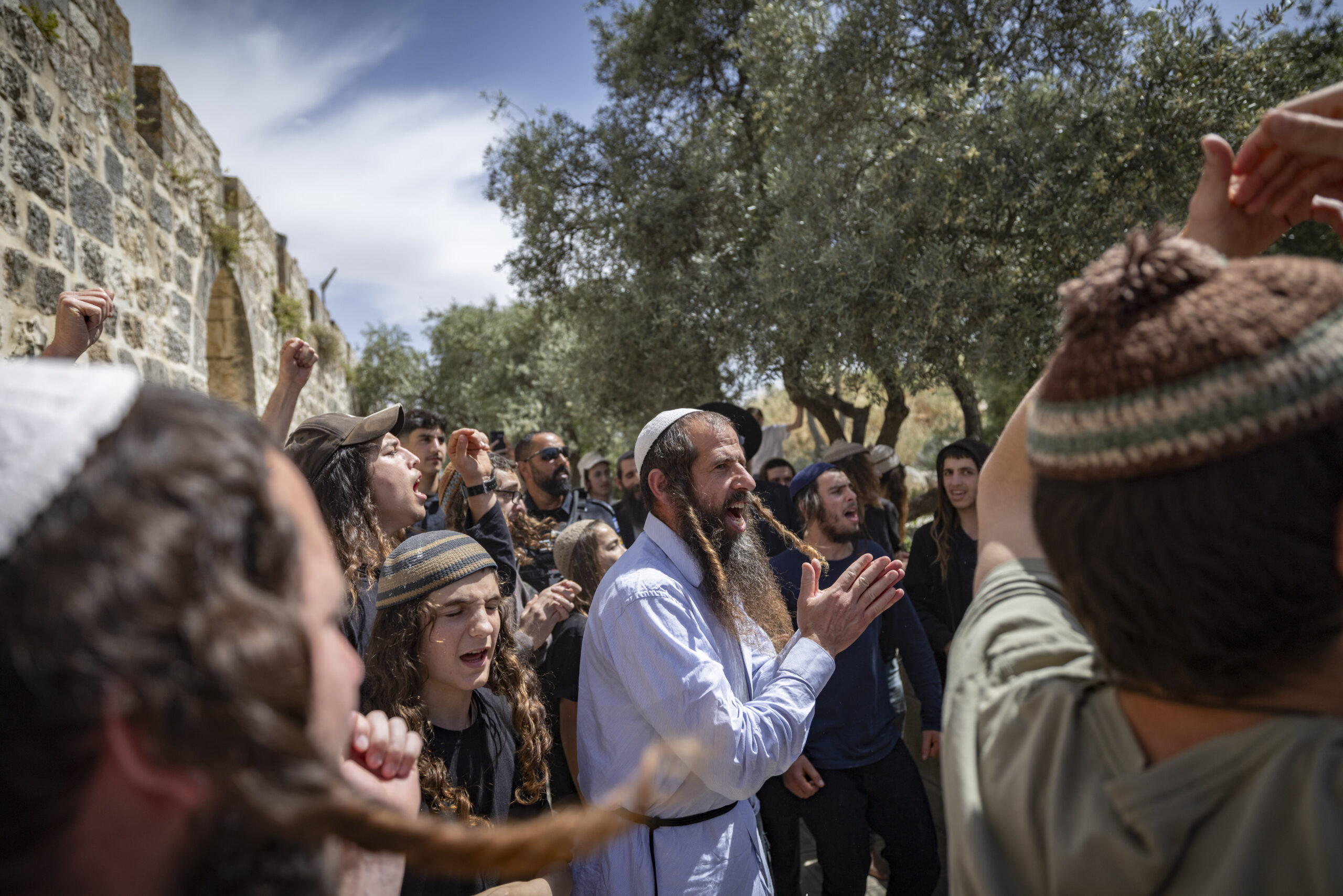
Rothman’s letter followed a public conference held Tuesday night demanding regular Shabbat access to the Temple Mount. Communications Minister Shlomo Karai addressed the gathering directly. “Yesterday the Temple Mount was closed to Jews for the outrageous reason that the Waqf decided to mark Muhammad’s birthday,” Karai told the crowd. “If this is the reality, where they determine what is permitted and forbidden for Jews in the Land of Israel, we may find ourselves facing closed gates on Rosh Hashanah, on Sukkot, on Simchat Torah, on the Shabbatot of the month of Tishrei, and so on.” Karai was direct about the nature of the demand: “We are not asking anyone for a favor. We are demanding our historic right.”
MK Amit Halevi, who also addressed the conference, called the current restrictions on Jewish access to the Temple Mount “incomprehensible.” “It is unfathomable that Jews face time limitations on the Temple Mount,” Halevi said. “The demand to open the Mount on Shabbat is a demand that, it must be stressed, is self-evident.” Halevi added, with a smile, that he is “always late” to events organized by the Waqf’s Islamic authorities on the Mount, “to prove to them that there are no set hours when it comes to the Temple Mount.”
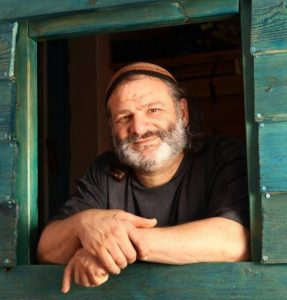
Fried, whose own campaign for Shabbat access this publication has previously covered, moderated Tuesday’s conference. He told attendees that his first ascents to the Temple Mount took place on Shabbat itself.
Other speakers included Rabbi David Cohen, who addressed the connection between the sanctity of Shabbat and the sanctity of the Temple Mount; Rabbi Michael Poa, who spoke on the changes underway at the site under Ben-Gvir’s backing and the shift that opening the Mount on Shabbat would represent; Yaakov Heiman, chairman of the Temple Mount activist organization Beyadenu (“In Our Hands”), who outlined the momentum he expects to follow a Shabbat opening; and attorney Baruch Ben Yosef, a veteran of Temple Mount ascents, who spoke about his own Shabbat visits to the site and described Jewish access on Shabbat as a natural and legal right, citing Israel’s Basic Law: Jerusalem.
The conference concluded with a decision to hold a prayer rally at the Temple Mount this coming Thursday, calling for the site’s opening to Jews on Shabbat.