
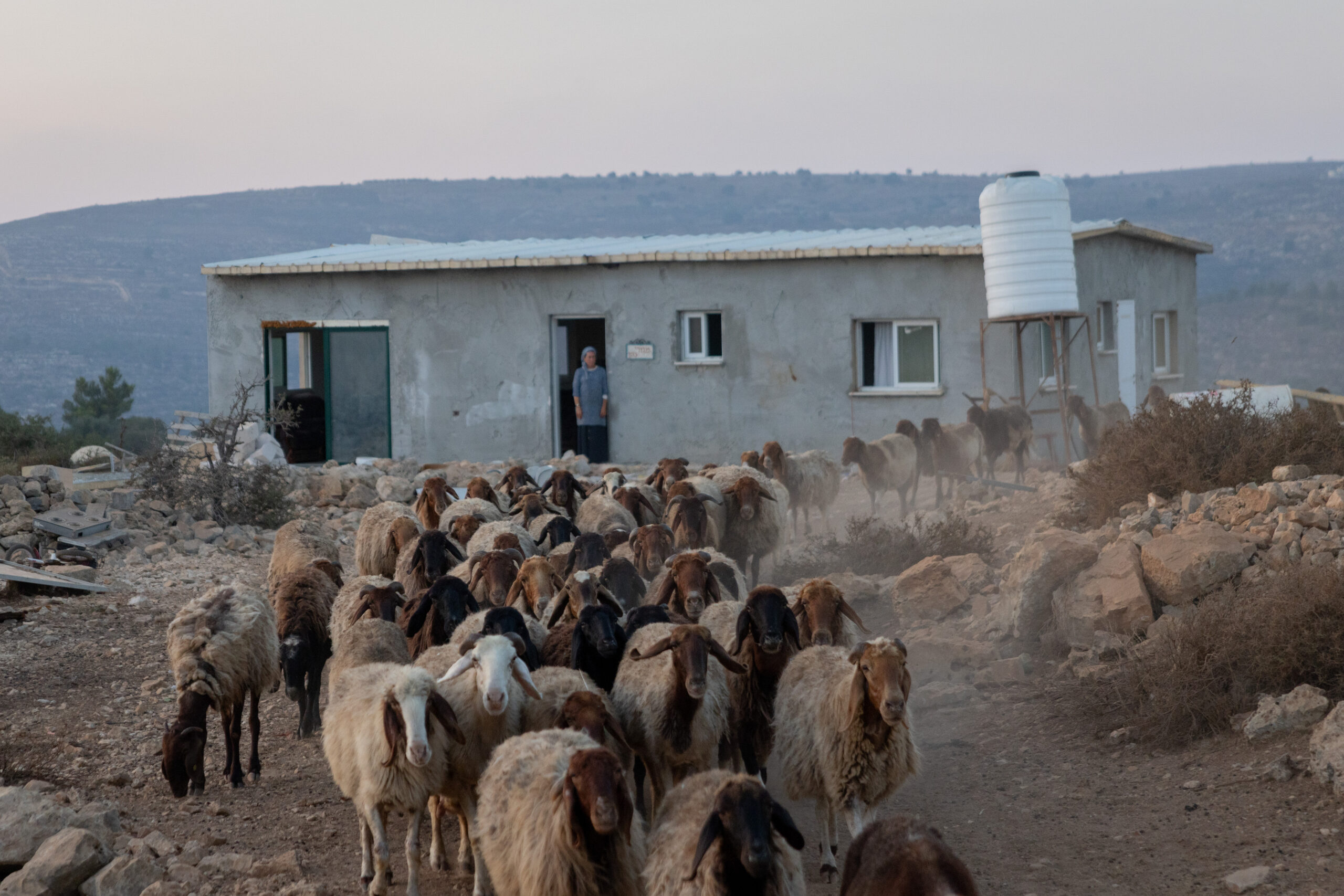
For the second time in a week, a terrorist cell from the village of al-Mu’ayyir in the Binyamin region infiltrated the grazing grounds of David’s Fortress Farm near Route Alon on Sunday and hid poison inside water troughs placed throughout the area. Shepherds discovered that goats that drank from the troughs had begun showing severe poisoning symptoms, foaming at the mouth and convulsing. Three goats have died so far, and the farm is working to save the rest of the affected herd.
Residents from nearby farms rushed to the scene to administer emergency veterinary care and antidote medication. When they arrived, dozens of rioters from the village attacked them with stones, charging at the shepherds and residents in an attempt to stop them from saving the animals.
The attack came days after two goats at the same farm began foaming at the mouth last Wednesday after eating pita bread laced with a toxic substance. Farmers intervened before the rest of the hundred-goat herd could reach the tainted bread, and both affected goats survived. The farm’s owner, Evyatar Karo, told JNS it was the fourth poisoning attack against his herd, following earlier incidents in which he said poison was hidden inside dates left in the grazing area, killing several goats. Karo said the evidence has not been sufficient for arrests, but he believes the same individuals are responsible each time, and he has notified Israeli authorities.
'Palestinians' poison goats, then stone Israelis rushing to help:
— C14 News | EN (@c14english) September 1, 2026
For the second time in the past week, a terrorist cell from the village of al-Mu'ayyir in the Binyamin region infiltrated the grazing grounds of a ranch near Route Alon on Sunday and spread poison hidden inside… pic.twitter.com/DeeNCitJhi
David’s Fortress Farm was established in 2025 and named in memory of David Libi, a civilian contractor from Binyamin killed while working with the IDF in Gaza in May 2025. A previous poisoning at the farm, reported in November 2025, led to the arrest of four residents of Al-Mughayyir within twenty-four hours, after cameras on the property recorded them fleeing the scene where poisoned pita was found.
Karo said his family will continue grazing its herd in the area despite the repeated attacks. “We are not afraid,” he said. “We will continue to go out here in the Land of Israel despite all the intimidation and the poisonings, the blocking of trails and the attempts to prevent us from being here.” He called on police and the Israeli Security Agency to treat the poisonings as a single, ongoing pattern rather than isolated incidents, warning that poisoned bait can also kill wildlife that later feeds on affected animals.
Yisrael Ganz, head of the Binyamin Regional Council and chairman of the Yesha Council, called the poisonings “terrorism in every sense of the word,” describing them as an attempt “to destroy the livelihoods of farmers, cause them severe economic damage, and drive them off the land.” He warned that attacks on livestock could be a precursor to attacks on people. “Arab rioters are starting by poisoning animals, and if we do not respond in time and create the necessary deterrence, they may move on to harming the brave residents themselves,” Ganz said, calling on security forces to pursue “both those who carried out these attacks and those who sent them.”
The IDF declined to comment.