

President Trump was speaking at the Knesset, celebrating the return of the hostages, when he went off script and turned to Miriam Adelson.
“I’m going to get her in trouble with this, but I once asked her, Miriam, I know you love Israel. What do you love more, the United States or Israel?”
Adelson said nothing. She had refused to answer the question in private, and now she refused to answer it in front of the world. Trump answered it for her. “That might mean Israel.”
Rabbi Elie Mischel says her silence was the right response, because there was no answer she could have given without either lying or betraying her people.
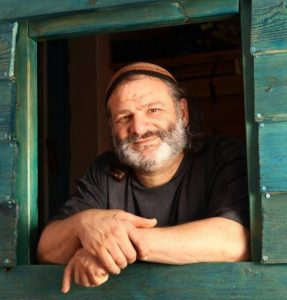
Mischel is the Director of Education and Content at Israel365 and the author of a new book, Countdown: American Jews and God’s Plan for Redemption. He discussed it at length with Rabbi Tuly Weisz on Weisz’s podcast, The Universal Zionist. His argument is simple and uncomfortable. The Jews are a nation, not a religion. Most American Jews no longer understand this. And the antisemitism now flooding American life is God’s way of forcing them to remember.
Christian readers may assume this is an internal Jewish argument that has nothing to do with them. Mischel says the opposite is true. God set Israel apart in order to teach the nations, and a nation is the only thing that can teach what Israel was given to teach. When millions of Jews insist that they are merely a faith community, the entire world pays for it. “If Jews are not Jews the way that they are meant to be, then the nations cannot be the nations the way they are meant to be.”
The nation God asked Abraham to build
Mischel starts with Abraham, and with a detail most readers pass over.
Before God ever spoke to him, Abraham was already a religious leader with a following. He and Sarah had gathered converts. Genesis calls them “the souls they had acquired in Haran.” Abraham had built something real, and it was growing.
Then God told him to walk away from it.
“Go forth from your land and from your birthplace and from your father’s house, to the land that I will show you. And I will make you into a great nation” (Genesis 12:1-2).
“God is telling Abraham, leave the religion that you started and go and start a new nation,” Mischel said. “It’s so clear all through the Bible. I mean, you have to really blind yourself to not see it.”
The pattern repeats. God tells Rebecca that two nations are struggling inside her. Israel stands at Sinai and hears that it will be a kingdom of priests and a holy nation. “It doesn’t say anywhere that we will be a religion.”
Then Mischel makes the claim the whole book rests on. “If you look at the Bible itself, it’s a national constitution. It’s not a personal religious guide.”
The Torah does give instructions to the individual. It tells a Jew to wear tefillin and tzitzit. But those passages are a handful of verses. Most of the Torah deals with how to run an army, a government, and an economy, and how to make all three holy. “You don’t necessarily need the Bible to be a holy individual,” Mischel said. “The great question that the Bible is dealing with is how do you have a holy nation?”
Even the word “Judaism” is foreign. It comes from the Greek Ioudaismos, and Jews only adopted it while living under Greek rule. “You will not find the word Judaism in the Bible. In fact, you will also not find the word religion in the Bible.” Neither concept exists in Hebrew scripture, because neither concept applies. “We were never an ism of any sort. We were a nation and we still are a nation.”
Readers who want the full case can take Mischel’s online course built on the book, What Is a Jew?, on Bible Plus, where he walks through these sources one by one.
Dual loyalty is a slur. Dual identity is real.
Mischel has no patience for the dual loyalty charge now coming from Tucker Carlson on the right and Ilhan Omar on the left. He calls it straight up antisemitic. American Jews are loyal citizens, and Jewish law demands nothing less. “We actually have a law, and the Sages say in the Talmud, that the law of the land is a law. If you’re living in a country, you must be a good citizen, a loyal citizen. That’s not the question.”
Then he says something his host did not expect.
“There is a problem, however, of dual identity.”
Weisz objected. The whole premise is childish, he said. “It’s like who do you love more, your mother or your father? You have to choose one. Why do you have to choose one?”
Mischel held his ground. “I think you do have to choose.”
His reasoning comes from what Jews have been saying for two thousand years. Three times a day we ask God to sound the great shofar and gather our exiles to Jerusalem. Ezra and Nehemiah were comfortable and successful in Persia, and they came home anyway. A Jew’s identity is bound up with the land of Israel, whether or not he lives there.
That is what Trump was actually asking Miriam Adelson. “He does not say, are you loyal to America or Israel. He doesn’t say that, because President Trump is not an antisemite. He knows she’s loyal,” Mischel said. “He asked her about identity. Where is your heart? And of course she refused to answer, because what could she say? As a good Jew, her heart is in Jerusalem. It has to be.”
Why a Star of David necklace matters
If national identity matters more than religious observance, then who qualifies as part of the Jewish nation?
Mischel answers with the Exodus. Jewish tradition teaches that only one fifth of the Israelites actually left Egypt. The Torah says they went out chamushim, a word that means “armed” but also hints at the number five. The other four fifths stayed behind and disappeared into Egypt forever.
So what separated the ones who left? Not their piety. The Zohar teaches that the Israelites carried their idols with them as they walked through the sea. The Sages give a different answer entirely: they kept their Hebrew names, they kept their Hebrew language, and they married other Hebrews.
“Those are not religious requirements,” Mischel said. “Those are national elements of identity.”
He sees the same thing happening in America right now, among Jews who are not traditionally observant. Michael Rapaport, the New York actor and comedian, was shaken awake on October 8 when he watched New Yorkers celebrate the slaughter of Jews. He now lays tefillin and photographs himself doing it. Sheryl Sandberg’s family wanted nothing to do with Jewish life before October 7. Today she says her primary identity is that she is a Jew, one of her children runs the Jewish club at college, and another wears a Star of David necklace.
Plenty of people would dismiss a necklace as jewelry. Mischel does not.
“I say they’re absolutely wrong. Somebody walking around with a Star of David necklace identifying as part of the nation of Israel is a very big deal. And in fact, I’ll go so far as to say that that is the criteria to be included in the final redemption.”
This is also why the book does not open by calling on Jews to make aliyah, the move to Israel that Jewish tradition treats as a homecoming rather than an emigration. Mischel admits without hesitation that bringing Jews home is his goal. He also thinks most American Jews are nowhere near ready. “I don’t mean financially. I mean in terms of their connection to being Jews. They don’t even know who they are.” Identity has to come first. “The main goal of my book is to awaken American Jews to become the nation that they are meant to be.”
Esther, in its proper frame
The book of the Bible that speaks most directly to American Jews, Mischel argues, is Esther. And most people have the story badly out of order.
Ask a Jewish audience when Purim happened and they will tell you it took place during the Babylonian exile, before the return to Zion. Mordechai and Esther save the day, the curtain falls, and the Jews go home to rebuild.
That is not what happened. The events of Esther took place roughly fifty years after the Second Temple was already standing in Jerusalem. Cyrus had opened the gates. The Temple was rebuilt. And ninety-five percent of the Jews in the Persian Empire chose to stay in Persia.
They had reasons. The land was in ruins, the work was brutal, and rebuilding it demanded a pioneer’s spirit. Only a few thousand Jews went.
“So essentially American Jews today who are saying I don’t want to go back to Israel are in a very similar situation to the Jews of Persia at that time,” Mischel said.
So God sent Haman. “He sends a Haman to awaken the people of Israel, and to tell them, you guys are not Persians. Ultimately, you are Jews and you’ve got to go back.”
Then Mischel names names. “Tucker Carlson and Candace Owens. All these people are the Hamans of our time.”
He goes further. The antisemites, he says, are doing God’s work without knowing it. “They are all God’s messengers without realizing it.” God has not abandoned American Jews. He is pressing on the one nerve that will make them ask who they are. “I know it sounds crazy, but this antisemitism we are experiencing in America today, I believe is an unbelievable love letter, a kiss from God to His people.”
That reading changes the most famous scene in the book. When Mordechai tells Esther she must go to the king, he is not only asking her to be brave. He is asking her to declare which nation she belongs to. “He’s saying you have to choose. Are you a Persian or are you a Jew? Because one way or another salvation will come to the Jews. The real question is, will you be a part of it?”
The Christian stake in a Jewish argument
Weisz returned to the question of what all this means for the largely Christian audience of Israel365.
God set Israel apart to be a nation of priests, Mischel answered, and a priest exists in order to teach. The point was never the priest. “The goal is the people that the priest is teaching. Israel is the means to get to the ends, to bring the whole world to God.”
That teaching cannot come from scattered individuals. Only a nation running its own army, courts, and economy can show the world what it looks like when an entire society lives by God’s word. Jews who deny that they are a nation are not merely confused about themselves. They are holding up something the world is waiting for.
Weisz suggested that this is where antisemitism actually comes from. The Tucker Carlsons of the world sense that the Jews are failing at a job the world needs done, and they resent us for it. Mischel agreed. “They’re waiting for us to bring our unique message to the world. The world desperately needs leadership.”
He was careful not to rank the two roles, only to separate them. “Christians are this unbelievable faith that has brought the Bible to every last corner of this earth. That’s a different role. It’s an essential role, but it’s a different role from what the people of Israel are meant to do, which is that we have to create a nation in one particular place that teaches the world how to live as a holy nation. No one has ever figured that out. Nobody.”
Where he draws the line
Weisz raised the objection any American reader will raise. Some Jews cannot move. They have elderly parents, jobs that do not transfer, and lives they cannot simply dismantle.
Mischel does not blame them. “I am in no way sitting in judgment on any individual person. Everybody has their own individual situation.”
He aims his criticism somewhere else, and there he is harsh. “My great criticism is actually towards American Jewish leadership for not being honest about who we are and where we belong.”
A rabbi should be willing to stand in front of his congregation and tell them that they have no long-term future in America. Not because America is bad, Mischel stressed, but because God did not intend for the Jewish people to build their future there. When leaders stay silent, he warned, they repeat the sin of the spies and turn the hearts of the people away from the land.
Watch the full conversation on The Universal Zionist, and subscribe for new episodes.