

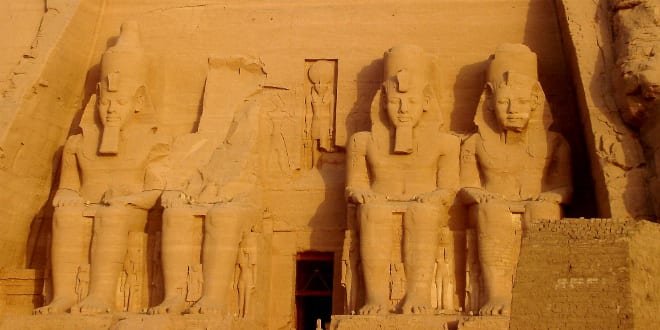
A broken sandstone lintel bearing the name of Ramses II has emerged from the sands of Egypt’s eastern border, and archaeologists say it may finally confirm the location of a city that has eluded scholars for millennia. For readers who have long wondered whether the Bible’s account of Israel’s slavery in Egypt has a face and a name attached to it, this find lands close to the heart of that question.
The discovery was made at Tell Abu Saifi, near East Qantara in Egypt’s Ismailia Governorate, by a mission working under Egypt’s Supreme Council of Antiquities. The site sits along the ancient Horus Military Road, the fortified highway that once guarded Egypt’s frontier with Sinai and connected the Nile Delta to Canaan.
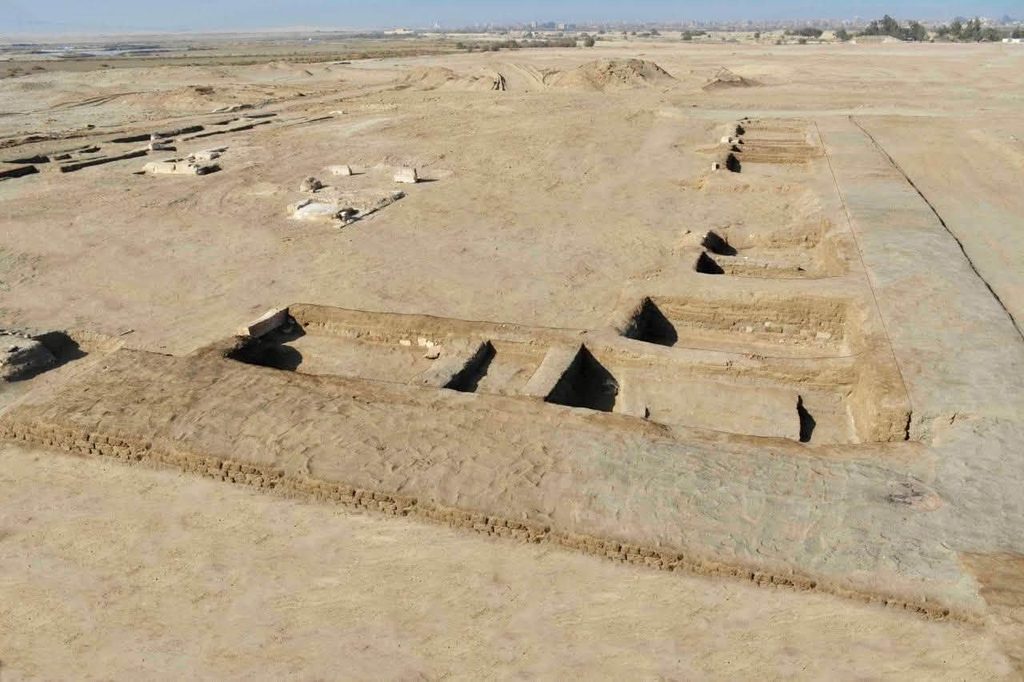
This season’s excavation resolved a long-standing confusion at the site. A massive mudbrick wall, previously mistaken for the temple itself, has now been identified as the outer boundary of the temple’s sacred precinct, complete with gates and multiple phases of construction. Two stone roads were traced leading into the temple: a wider Ptolemaic-era road beneath a narrower Roman one built directly above it.
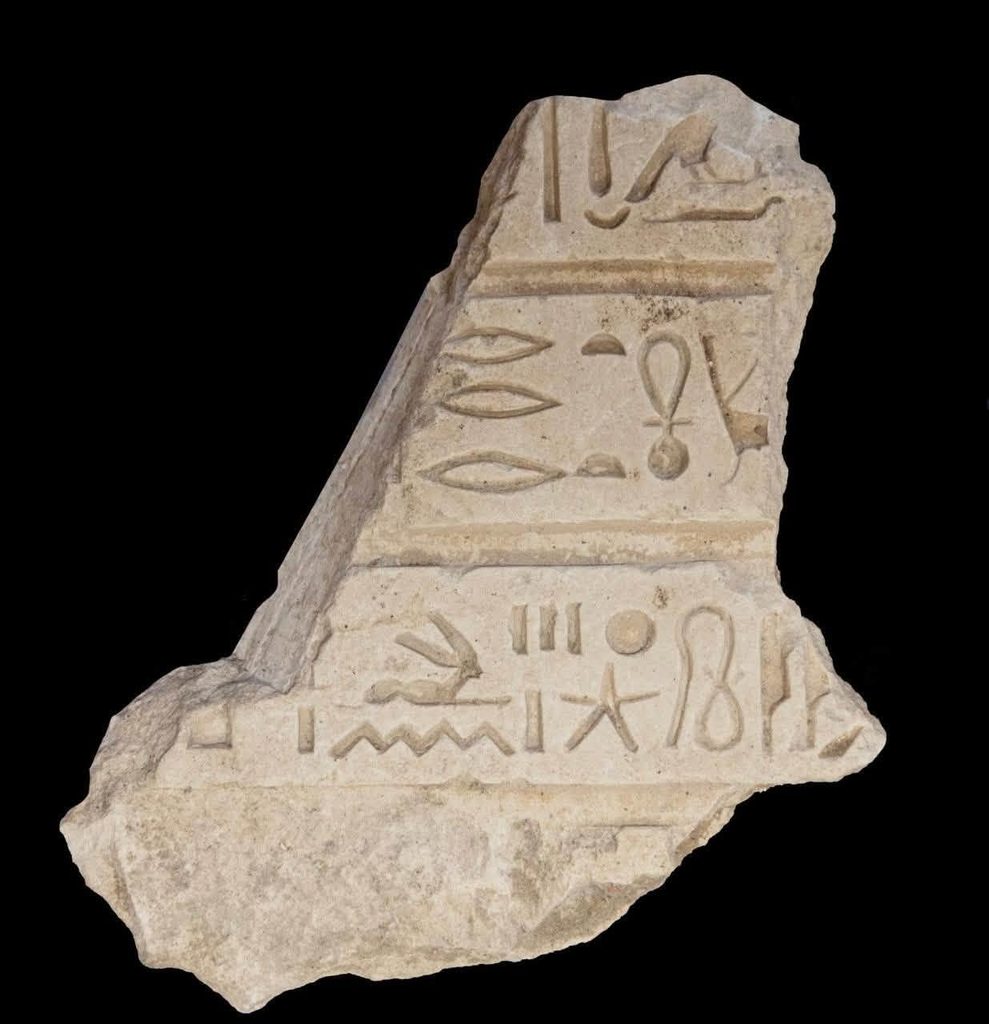
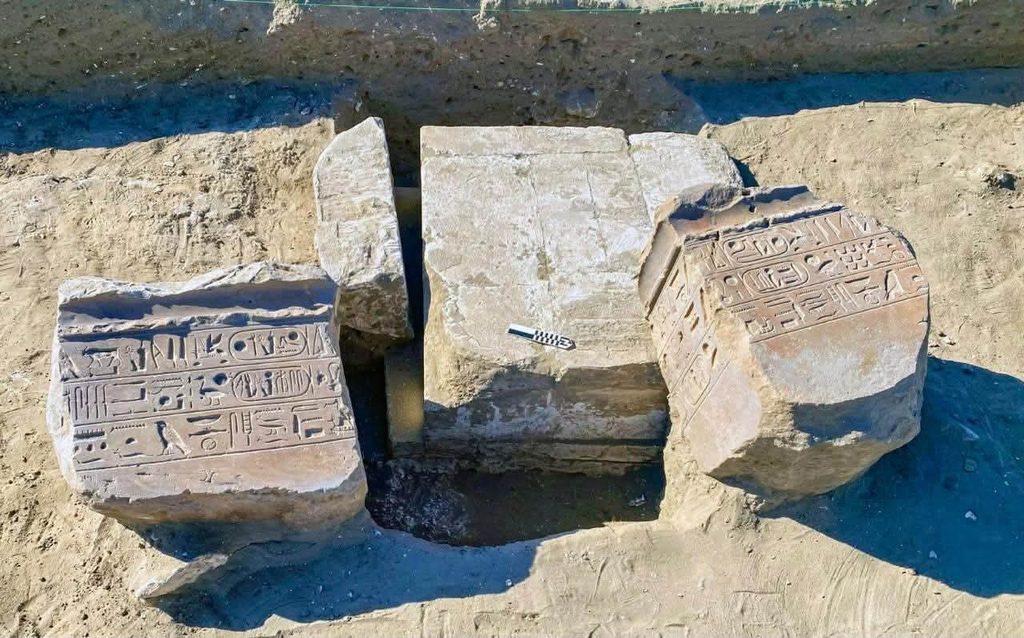
The season’s most significant find was the broken lintel. Inscribed on three sides with the royal titles of Ramses II, the stone also references restoration work once carried out on a statue of the god Horus, called “Lord of the City of Mesen.” That title is the key. Ancient Egyptian texts place a settlement named Mesen in this eastern border region during the New Kingdom, and the lintel now provides a direct textual link between the temple at Tell Abu Saifi and that city’s patron god.
Mohamed Abdel Badie, head of the Egyptian Antiquities Sector at the Supreme Council of Antiquities, said the evidence “shows that the site underwent several phases of development,” tracing a history that runs from a Pharaonic religious center to a Ptolemaic temple to Roman military barracks, known as a castrum, and finally to a Roman-era lime quarry, where two large kilns were built directly over the ruined sanctuary.
Mission director Mahmoud Galal, Director General of Sinai Antiquities, said additional finds at the site included part of a schist statue of a 26th Dynasty army scribe holding a broken shrine, a headless statue from Egypt’s Late Period, a royal torso carved from basalt, and fragments of falcon statues in basalt and limestone. Tourism and Antiquities Minister Sherif Fathy said the results advance ongoing efforts to document the Qantara region’s role in defending Egypt’s eastern border along the Horus road.
Egyptian officials have been careful to frame the find as strong supporting evidence rather than final proof. As Hisham El-Leithy, secretary-general of the Supreme Council of Antiquities, noted, the season’s work built on decades of prior excavation and allowed researchers to reexamine earlier findings with far greater precision. Excavations are set to continue in coming seasons to further test the Mesen identification.
Why has a broken stone naming an Egyptian king generated headlines among Bible readers around the world? Because Ramses II is the pharaoh most commonly linked to the enslavement of the Israelites, and any new light on his cities and building projects touches directly on the biblical record of the Exodus.
The Bible states plainly:
“Therefore they set over them taskmasters to afflict them with their burdens. And they built for Pharaoh store cities, Pithom and Raamses.” (Exodus 1:11)
The city of Raamses named in this verse is widely identified by scholars with Pi-Ramesses, the royal capital Ramses II built in the Nile Delta using forced labor. That geographical connection, combined with Ramses II’s 66-year reign and his position within the 19th Dynasty, is the primary reason his name is so often attached to the Exodus story. The Bible itself never names the pharaoh of the Exodus. No Egyptian record has ever been found describing the departure of the Israelites or the plagues that preceded it. The closest ancient Egyptian reference to Israel comes from the Merneptah Stele, raised by one of Ramses II’s own sons, which names “Israel” as a people already established in Canaan by the late 13th century BCE.
The lintel from Tell Abu Saifi does not mention Israel, Moses, or the Exodus. It confirms nothing about the biblical narrative directly. What it does confirm is the historical reality of the world the Bible describes: a pharaoh named Ramses commanding vast building projects along Egypt’s eastern frontier, using the very roads and cities that the Torah places at the edge of Israel’s escape from bondage. Exodus even records that God deliberately routed the Israelites away from this militarized road, “lest the people repent when they see war, and they return to Egypt” (Exodus 13:17).
Archaeology will never hand us a stone that says “Moses was here.” That has never been how this works, and readers who expect it will always be disappointed. What continues to happen, dig after dig, is that the physical landscape of Egypt’s eastern border keeps matching the landscape described in the book of Exodus with striking precision: fortified roads, royal store cities, and now, quite possibly, the lost city of Mesen standing exactly where the biblical text says an empire once stood guard against a nation trying to leave it.