

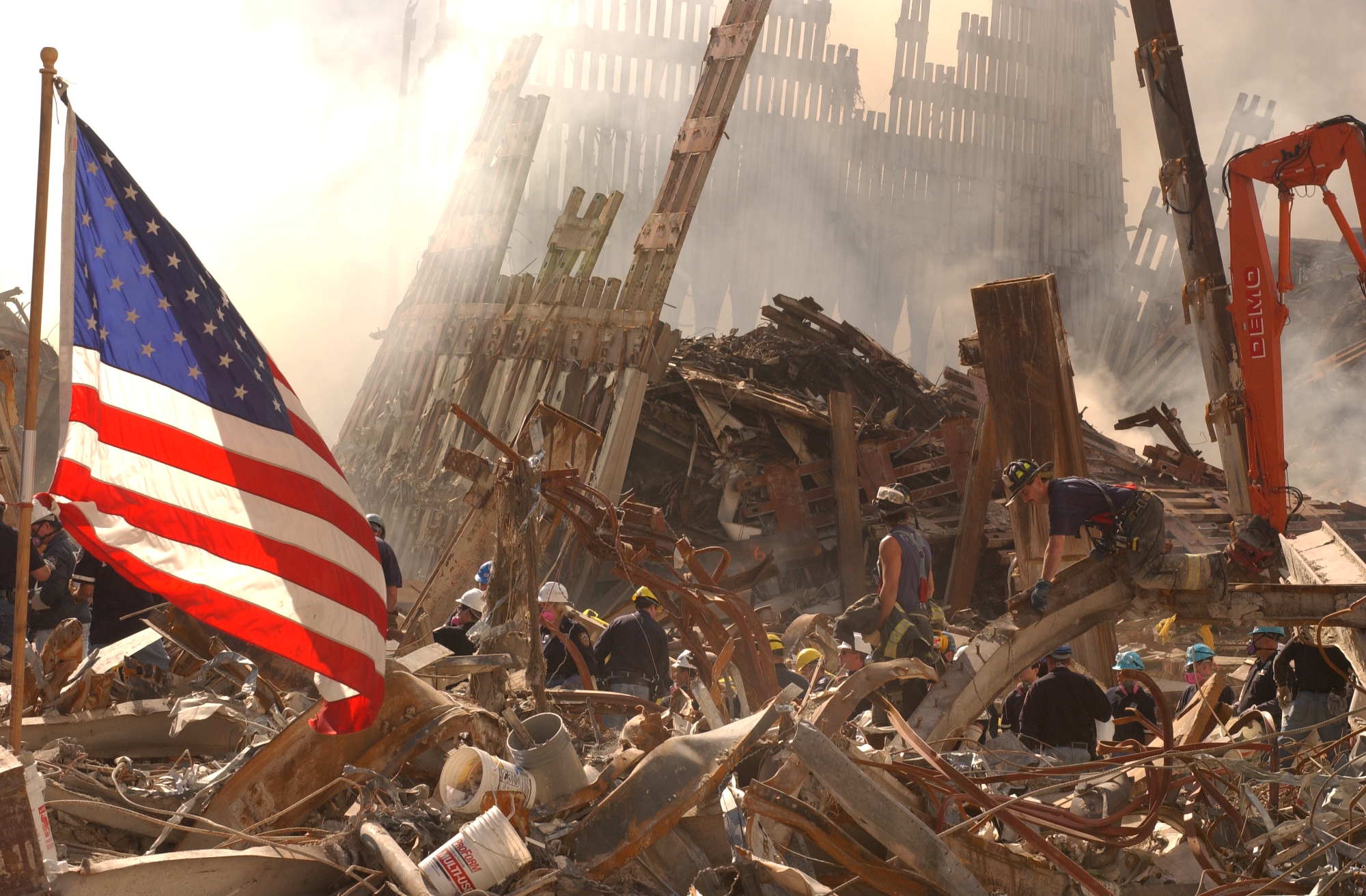
This Rosh Hashanah arrives on the eve of September 11, 2026, twenty-five years to the day since nineteen terrorists hijacked four American airliners and killed 2,977 people, including five Israelis, drawn from more than seventy nations. The Jewish New Year, the Yamim Noraim, the Days of Awe, begins this year at the exact hour America marks a quarter century of mourning. It is only the second time since 2001 that the two dates have coincided, and this year Rosh Hashanah falls on Shabbat as well, meaning the shofar that normally opens the Jewish year will not sound at all.
The Unetane Tokef prayer, recited on Rosh Hashanah since medieval times, states, “B’Rosh Hashanah yikateivu, u’v’yom tzom Kippur yeichateimun,” “On Rosh Hashanah it is written, and on the fast day of Yom Kippur it is sealed” (from the Unetane Tokef prayer). The prayer plainly names what will be decided that day: “who will live and who will die.” American Jews reciting those words this year will do so twenty-five years and two days after standing in synagogues in 2001, when Rosh Hashanah fell on September 17, and half the country was still counting its dead. Some families that year were sitting shiva. Others were still waiting by phones for news that would never come good. The prayer that names life and death was never abstract for them. This year it returns on the anniversary itself.
Israelis reading the same liturgy carry a second reckoning few Americans are asked to hold. Nineteen attackers killed 2,977 people on September 11. On October 7, Hamas killed more than 1,300 Israelis and citizens of other nations, including at least 29 Americans, in a country of under ten million people. October 7 fell on Shabbat, Shemini Atzeret, the culmination of the High Holy Day cycle that begins with Rosh Hashanah. It is also Simchat Torah, when Jews joyfully celebrate the Torah.
Scaled to the size of the United States, the October 7 massacre was the equivalent of nearly 40,000 dead in a single day, thirteen times the toll of September 11. Every Israeli family knew someone touched by that day, directly or through a neighbor, a classmate, a friend. Hostages, including children and the elderly, were taken across a border in numbers with no precedent in the conflict’s history. The distinction is not a competition in grief. It is a statement of scale that Rosh Hashanah, arriving each year to ask who will live and who will die, no longer lets Israel or the Jewish world set aside.
There is one more layer to this year’s convergence that goes beyond memory alone. Because the first day of Rosh Hashanah falls on Shabbat, the shofar will not be blown in any synagogue that follows accepted practice. The Mishnah records that the shofar was once sounded on Shabbat throughout Jerusalem and wherever a beit din, a rabbinical court, was seated, but that after the Temple’s destruction, Rabban Yochanan ben Zakkai limited the practice to the place where such a court sat. Maimonides, in the Mishneh Torah, explains that the concern was carrying the shofar through a public space – an act which is forbidden on Shabbat- to reach someone who could blow it, a concern the Sages set aside only where a functioning court’s authority could prevent error. Once the Sanhedrin ceased to convene, that exemption applied nowhere, and the shofar has fallen silent on Shabbat ever since.

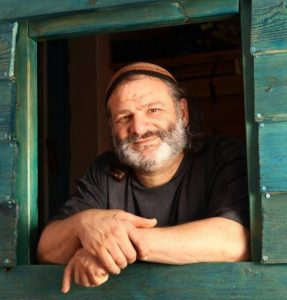
A newly reconstituted beit din of three, led by Rabbi Yisrael Ariel, founder of the Temple Institute in Jerusalem, announced this week that it intends to sound the shofar on Rosh Hashanah despite the day falling on Shabbat, asserting that its own convening meets the standard described in the Mishnah and Rambam. The ceremony is planned for the Temple Institute in Jerusalem’s Old City. The mainstream Orthodox rabbinate does not recognize this body’s authority to rule as the historical Sanhedrin did, and the ruling should be understood as a minority position rather than an accepted change in practice. But the timing gives it a weight beyond the halachic question alone. The Sages taught that a year which begins in humility is a favorable sign, so long as it does not close in the teruah of war. The prophet Zechariah bound the shofar to God’s own intervention in battle: “Then the Lord will appear over them, and His arrow will go forth like lightning; the Lord God will sound the shofar, and will march in the storms of the south” (Zechariah 9:14). Rabbi Ariel’s beit din invoked that same connection this week, expressing the hope that the sound the Sages silenced out of caution two thousand years ago might yet return, on the very Shabbat marking twenty-five years since America’s darkest morning, not as an announcement of war but as its ending.
The names of 2,977 people will be read aloud at the World Trade Center this September 11, a recitation expected to take some four hours. For the first time, the reading of names will include those who died in the years since from illnesses tied to what they breathed that day. A twin ceremony will be held, moved this year to September 9 because of the holiday, at the Twin Towers Memorial in the Ha’arazim Valley west of Jerusalem, where the names of the same 2,977 victims are etched into stone an ocean away from where they died. It is the only memorial outside of the US that has all the victims’ names on it. An entire generation now reaches adulthood with no memory of September 11 at all, inheriting the grief without the day itself. What they do inherit, whether they know it yet or not, is a Rosh Hashanah that asks, in the oldest words Jewish tradition has for the question, who will live and who will die, arriving this year on the exact date that answer was given to thousands of families twenty-five years ago.

