Ashes, Ownership, and Inheritance: The Three Failures of the Texas Red Heifer Ceremony
Public statements have circulated for nearly a year asserting that a valid red-heifer ceremony took place on 1 July 2025, that usable ashes were produced, and that those ashes possess independent healing properties. These claims appear in recorded interviews, media profiles, and subsequent presentations. They require careful examination against the precise demands of the Torah.
Documented Public Claims
According to the March 2026 Texas Monthly profile, Byron Stinson maintained that the ashes collected after the July burning are kosher and that they possess healing properties. He stated that he gave a portion to his wife and that their use, together with medical care, helped resolve long-standing memory issues stemming from an earlier accident. Stinson has further described the ashes as having “power” and has spoken of mixing them with spring water for sprinkling.
In an appearance on Timcast IRL, Adam King displayed a small bag he identified as ashes from the same burning. He asserted that the ceremony had been performed according to the requirements of Numbers 19, that the ashes were already being disseminated, and that reported effects included restored memory and sight. Subsequent coverage recorded his claim that a Kohen later mixed a portion of the ashes with spring water.
Adam Eliyahu Berkowitz, who has interviewed the principal figures involved over several years, has documented these same assertions through direct conversations. His reporting records the participants’ own descriptions of the event, the collection of remaining ashes, and the later distribution and claimed uses. These accounts form part of the public record and may be examined on their own terms.
Sevel Yerushah: The Inherited Burden of Continuous Obligation
The decisive requirement is not merely personal intention or later testimony. It is the presence of Sevel Yerushah — the inherited burden of continuous, obligated diligence against corpse impurity that certain Jewish lineages have carried across generations. Only those who bear this inheritance can provide the unbroken chain of reliable custody and the form of testimony the halakhah accepts for a matter of this gravity.
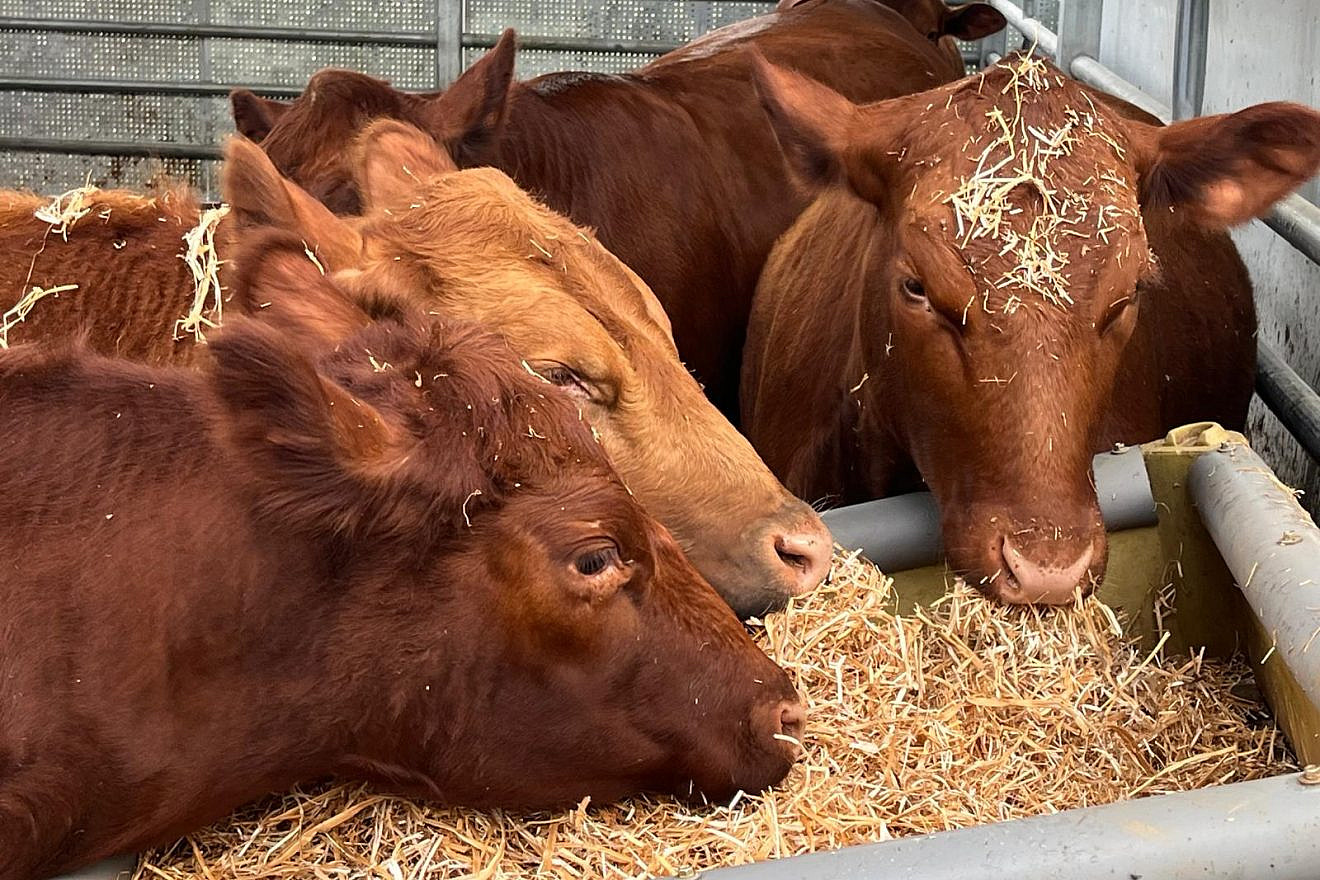
A non-Jew stands outside this inheritance. Even a sincere Christian who intends the animals for Israel’s use has neither the hereditary status nor the obligatory burden that would make his oversight or testimony reliable. The Texas-born heifers spent their formative period under non-Jewish custody. A subsequent sale, however clean the transfer of title, cannot erase that earlier period. Ownership can be transferred; the lost chain of Sevel Yerushah cannot be restored retroactively.
If a Jew who is obligated in the mitzvah had owned the animals from birth and could provide reliable testimony that no yoke, load, or other form of work had ever been placed upon them, the central disqualification arising from non-Jewish custody would be removed. The testimony of an obligated Jew carries the form of ne’emanut that the sources accept. The testimony of a non-Jew does not. Later inspection by rabbis can evaluate only the animals’ present physical condition. It cannot supply or reconstruct the missing period of continuous, obligated oversight.
Parallel Integrity from Birth
The same structural demand for uninterrupted integrity appears in the case of those who perform the critical acts of the rite. The individual who slaughters and burns becomes impure by the act itself (Numbers 19:7–8). Collection of the ashes must therefore be performed by a different person who is confirmed pure at the moment of gathering.
Under ordinary conditions, when confirmed ashes of a valid parah adumah were already present in Israel, tens of thousands of pure individuals would have been available to perform that collection without difficulty. Today the situation is inverted. Without any confirmed ashes, the number of people who have maintained the necessary diligence against corpse impurity from birth has dropped to almost zero. Only one family is known to have preserved that standard across generations, and only a small percentage of its members continue to uphold it consistently. As a practical reality of our present circumstances, therefore, a second Kohen who has himself maintained those heightened standards would almost certainly be required. Once valid ashes become available, the picture would change rapidly: within a single week many thousands could be cleansed of corpse impurity, and the pool of eligible participants would expand accordingly. This is not a change in the underlying halakhah; it is simply the reality of the conditions under which we now live.
Location, Ownership, and the Principle of Acquisition
The Torah requires that the heifer be slaughtered and burned outside the camp in a place that faces the entrance of the Tent of Meeting. Any assertion that an “authorized location” was used must be measured against that fixed topographic and directional requirement. A site chosen for convenience or symbolic resonance does not satisfy it.
Related groups associated with the Texas heifers have publicly stated that they acquired a plot on the Mount of Olives intended for a future ceremony and that the site meets the required directional alignment. Public documentation of that acquisition exists in the form of statements by Byron Stinson and Yitzchak Mamo. Even if the topography and orientation are ultimately confirmed to be adequate, the land must be fully and unambiguously owned for that purpose. David’s purchase of the threshing floor of Araunah establishes the principle: the site of a sacred act cannot remain under incomplete or non-Jewish title, nor can it be accepted merely as a gift or temporary offer of use. Clear, paid, and permanent possession is required. The slaughter and burning must take place on land that is properly owned, not on property that remains under non-Jewish ownership.
Collection, Subsequent Use, and Foreign Purposes
Once the burning is complete, the ashes are designated exclusively for the water of purification. Any private retention, distribution as personal tokens, or public presentation as possessing independent healing power removes them from their sole permitted purpose. When the same individuals then attribute therapeutic or spiritual efficacy to the ashes and tour with portions of them, the divergence from the halakhic framework becomes complete.
A pure individual, including a Kohen, may mix valid ashes with spring water for the purpose defined in Numbers 19. Requesting that act so that the mixture can be used for purposes foreign to the commandment—independent healing claims or any form of avodah zarah—is itself improper. A Kohen is forbidden to assist in or facilitate foreign worship. Enlisting him under the appearance of a legitimate ritual act while intending a different use does not sanitize the request.
Reported Effects and the Torah’s Test
If individuals who undergo the two sprinklings later experience genuine physical recovery, that outcome is not inherently objectionable. Physical healing is good, and one may rightly hope for it. Yet the Torah does not designate the ashes of the parah adumah as a general therapeutic agent. Their exclusive purpose is the removal of corpse impurity so that the purified person may enter the sacred precincts. Any additional effect, even if real, remains incidental and outside the defined function of the mitzvah.
The Torah itself anticipates the possibility of genuine signs or wonders accompanying a message that leads away from exclusive fidelity to its commandments. Deuteronomy 13 frames such phenomena as a test, not as validation of the accompanying claim. Even if the reported effects were confirmed true, they would not confer halakhic validity on ashes produced outside the required conditions, nor would they authorize the expansion of the ashes’ purpose beyond the statute.
A New Calf Born in Israel
This week a third red heifer calf was born in Israel under local Jewish oversight. The animal displayed a fully red coat at birth and has been placed under continuous supervision from the outset. At only days old, it stands far from the required age of two years and remains subject to the ordinary risks of later blemish or white hairs. Its significance lies not in immediate eligibility but in the simple fact that a new candidate has entered the world under the only conditions the sources recognize as capable of producing a verifiable record: Jewish obligation and continuous custody from day one — the presence of Sevel Yerushah.
Limited Legitimate Use
The Texas-born animals may properly serve as breeding stock. If acquired for that limited purpose and thereafter raised under continuous Jewish supervision, a new and verifiable chain of testimony begins. Every subsequent generation raised under that supervision can then meet the full requirements. Until such a chain is established from the outset, however, the animals remain disqualified for the parah adumah itself, and ashes derived from them cannot satisfy the Torah’s standard.
The insistence on Jewish obligation and participation from birth to the pyre is not an excess of caution. It is the only method the sources recognize for removing the inherent doubts that attach to any prior non-obligated custody. Appearances of legitimacy—whether produced by the involvement of a Kohen, the display of ashes, reports of physical benefit, or the acquisition of a potentially suitable site—do not create the substance required by the commandment. Genuine progress toward a valid parah adumah depends on fidelity to those boundaries rather than on claims that stand outside them.
We thank Mr. Byron Stinson for his sincere intention. His efforts have raised significant public awareness within Israel and contributed directly to the establishment of an Institute of the Parah Adumah. That institute is now producing candidates raised under continuous Jewish oversight and aligned with the requirements of the Torah. The path forward remains the same: patient, precise fidelity to the statute itself, grounded in the presence of Sevel Yerushah.