



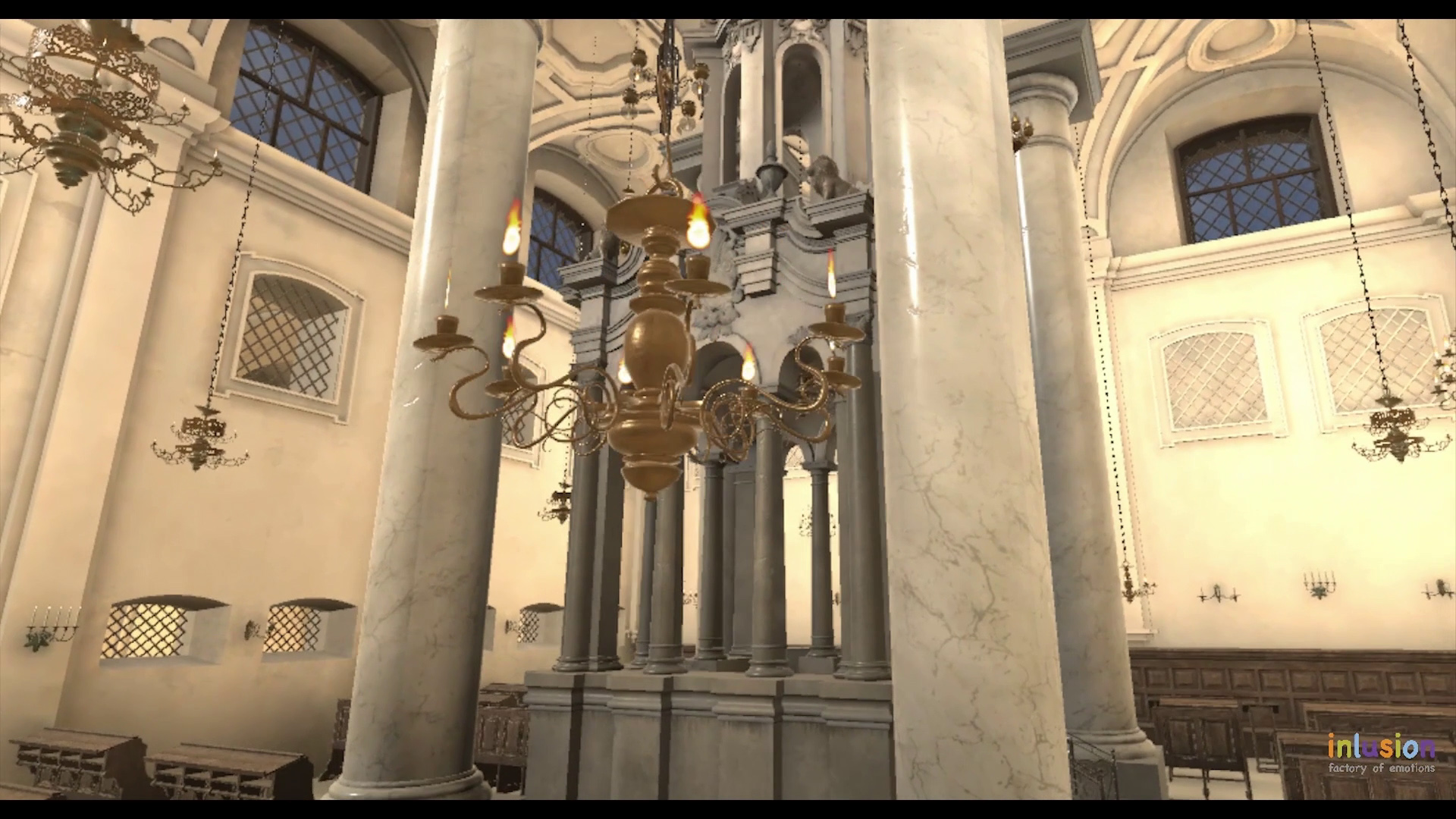
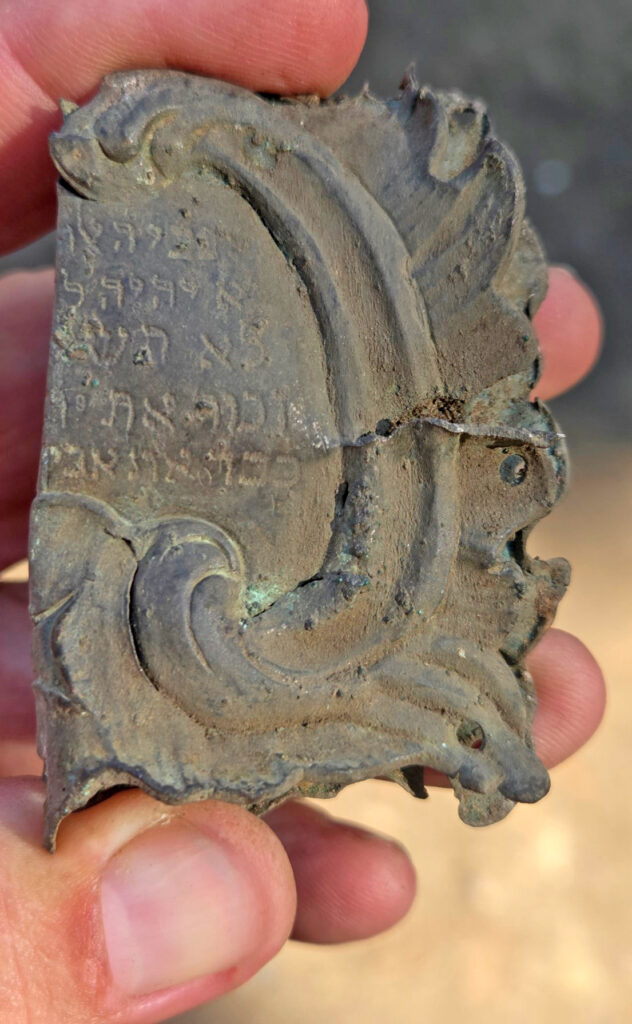
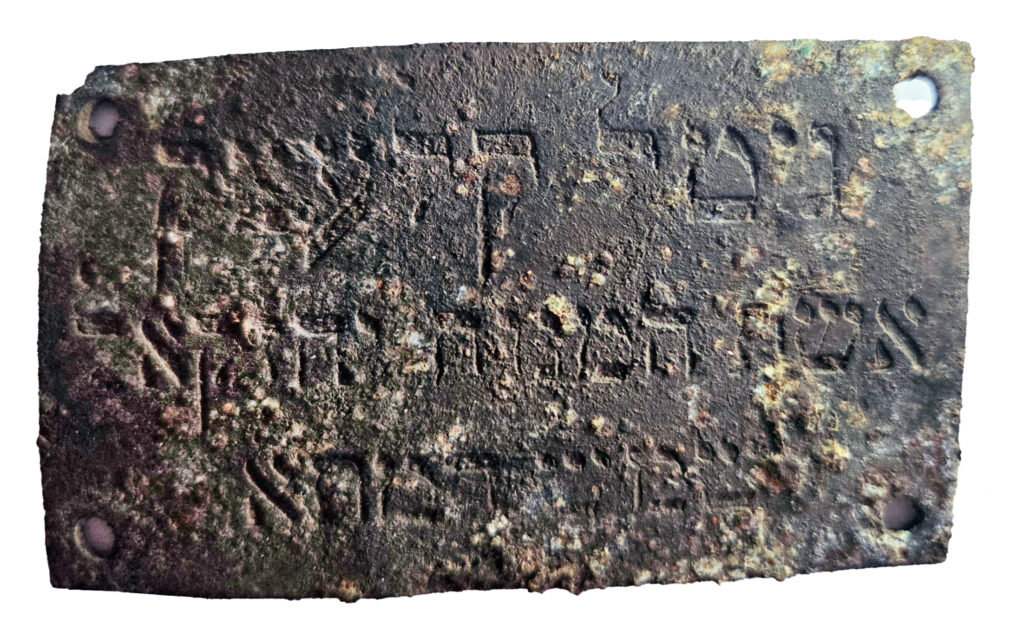
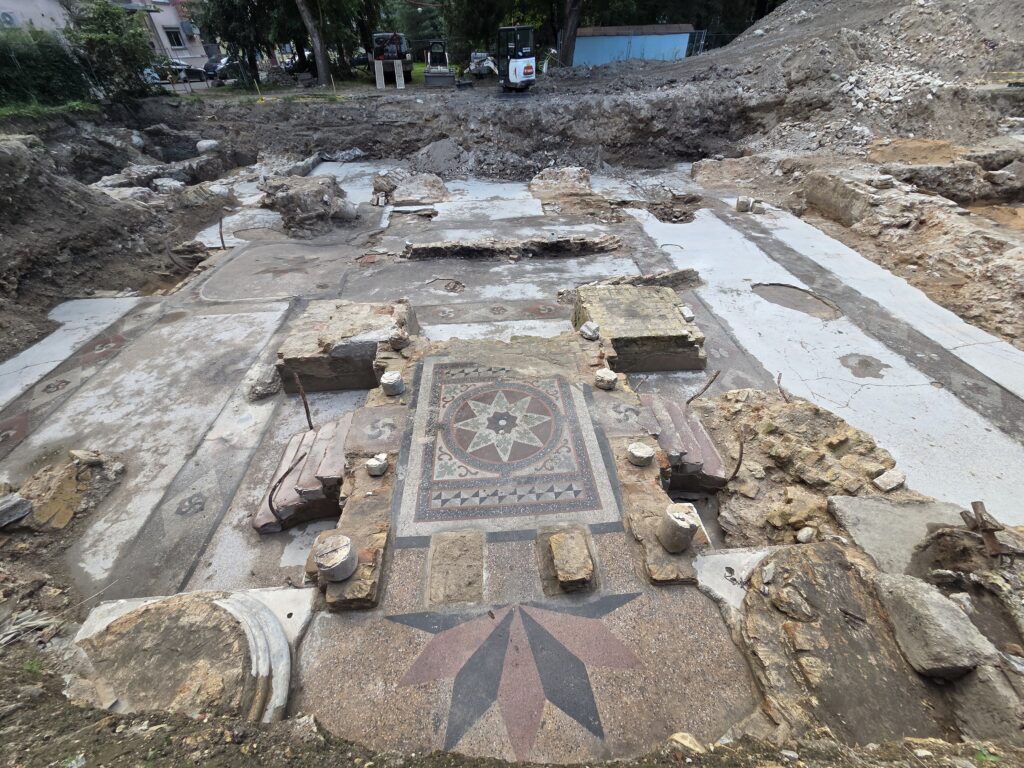
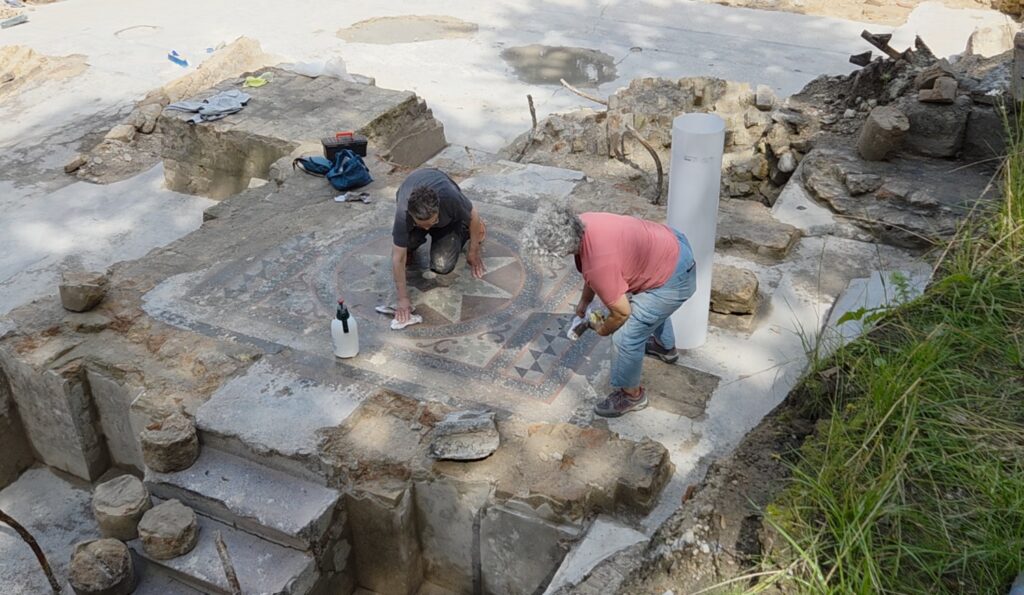
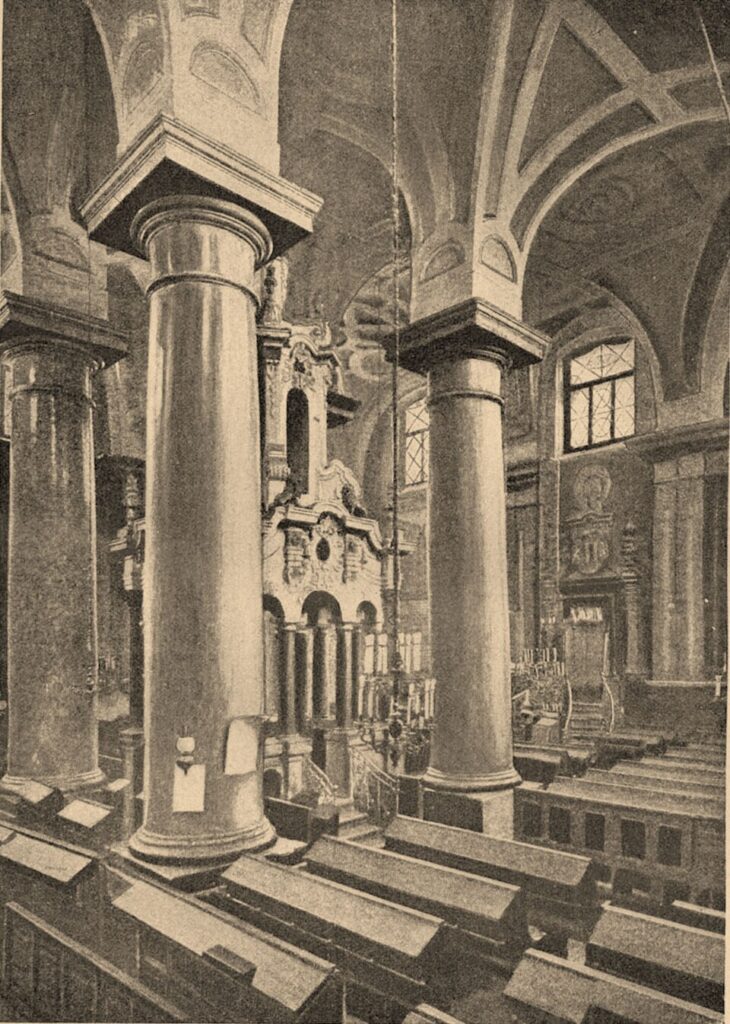
Seventy years after Soviet authorities finished what the Nazis started, the stones of the Great Synagogue of Vilna are speaking again. Archaeologists have fully exposed the synagogue’s massive central bimah, the raised platform from which the Bible was read to a congregation that once stood among the greatest in Jewish history. Beneath the rubble and the Soviet-era school building that buried the site for generations, excavators uncovered sections of the main prayer hall and the ezrat nashim, the women’s gallery, along with colorful terrazzo floors, seating plaques bearing the names of individual worshippers, and a small metal plaque engraved with the Ten Commandments.
Writing to the exiles in Babylon, the Prophet Ezekiel hints that synagogues in the exile are a manifestation of the Temple in Jerusalem, albeit in a diminished form. He delivers God’s promise: “Yet I have removed them far off among the nations, and I have scattered them among the countries, and I have become to them a diminished sanctuary in the countries where they have come” (Ezekiel 11:16). The Sages teach that this “diminished sanctuary,” mikdash me’at, refers to the synagogues and study halls Jews built in every land of their dispersion. A fragment of the Temple’s holiness travels with the Jewish people wherever they are scattered, and it settles into the walls of the places where they gather to pray. That is why a synagogue floor in Lithuania, buried under a Soviet schoolhouse, can still be excavated as sacred ground rather than simply as archaeology.
A City Called the Jerusalem of Lithuania
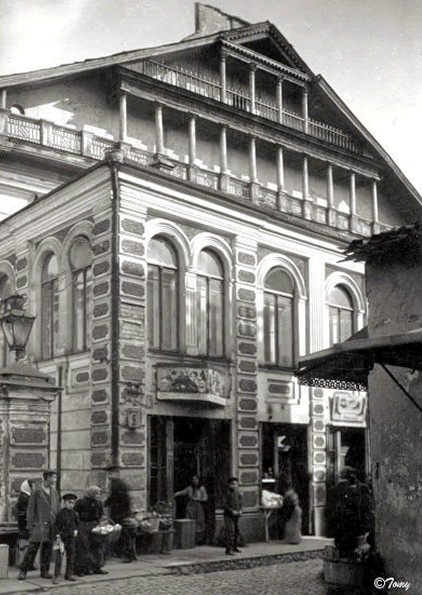
Vilna earned the title “Jerusalem of Lithuania” because its Jewish community produced a concentration of Torah scholarship rarely matched anywhere in the Diaspora. At the center of that reputation stood Rabbi Eliyahu ben Shlomo Zalman, known universally as the Vilna Gaon, or the Gra. Born in 1720 and active in Vilna until his death in 1797, the Vilna Gaon mastered the entire scope of rabbinic literature, as well as mathematics, astronomy, and Hebrew grammar, and wrote commentaries on nearly every text in the Jewish canon. He led the Mitnagdim, the opponents of the emerging Hasidic movement, insisting on rigorous textual study as the foundation of Jewish life. The Great Synagogue of Vilna, first built in the 1630s, functioned as the anchor of the surrounding Shulhoyf, the communal courtyard complex of synagogues, study halls, a kosher slaughterhouse, and communal offices that grew up around it over the following century.
The Vilna Gaon’s connection to the Land of Israel went beyond scholarship. He twice attempted the journey himself, in 1772 and again in 1782, but on both occasions, circumstances prevented him from arriving. He never gave up the vision. In 1808, more than a decade after his death, his disciples acted on it. Led first by Rabbi Menachem Mendel of Shklov, roughly five hundred of the Vilna Gaon’s students and their families made aliyah to the Land of Israel in a movement historians call the Aliyat Talmidei HaGra. They settled first in Safed, since Ottoman authorities barred Ashkenazi Jews from Jerusalem at the time, and by 1816, many had relocated to Jerusalem itself. Their arrival restored a permanent Ashkenazi presence in the city for the first time in over a century, and their communities went on to found what became the Mea Shearim neighborhood and to rebuild the long-ruined Hurva Synagogue. Historian Arie Morgenstern has argued that this influx, driven by the Gaon’s students, laid the foundation for the Jewish majority that Jerusalem has maintained since 1860.
The Legend of the Golem
The Vilna Gaon’s mastery extended into Kabbalah, Jewish mysticism, and, from that mastery, grew one of the most striking legends attached to his name. According to an account recorded by his own disciple, Rabbi Chaim of Volozhin, the young Gaon once attempted to create a golem, a being formed from clay and animated through the mystical letter combinations of the Sefer Yetzirah, the Book of Formation. He was not yet thirteen years old. Before the figure could be brought fully to life, the Gaon said, he received a divine sign instructing him to stop, and he obeyed. The story stands apart from the better-known golem legend associated with Rabbi Judah Loew of Prague, the Maharal, because the Vilna Gaon is the only historical figure on record to acknowledge, in his own words, that he personally attempted the act. It became one more thread in the reputation that surrounded him: a scholar whose command of Jewish law was matched by a command of Judaism’s most hidden mystical traditions.
What the Excavation Found
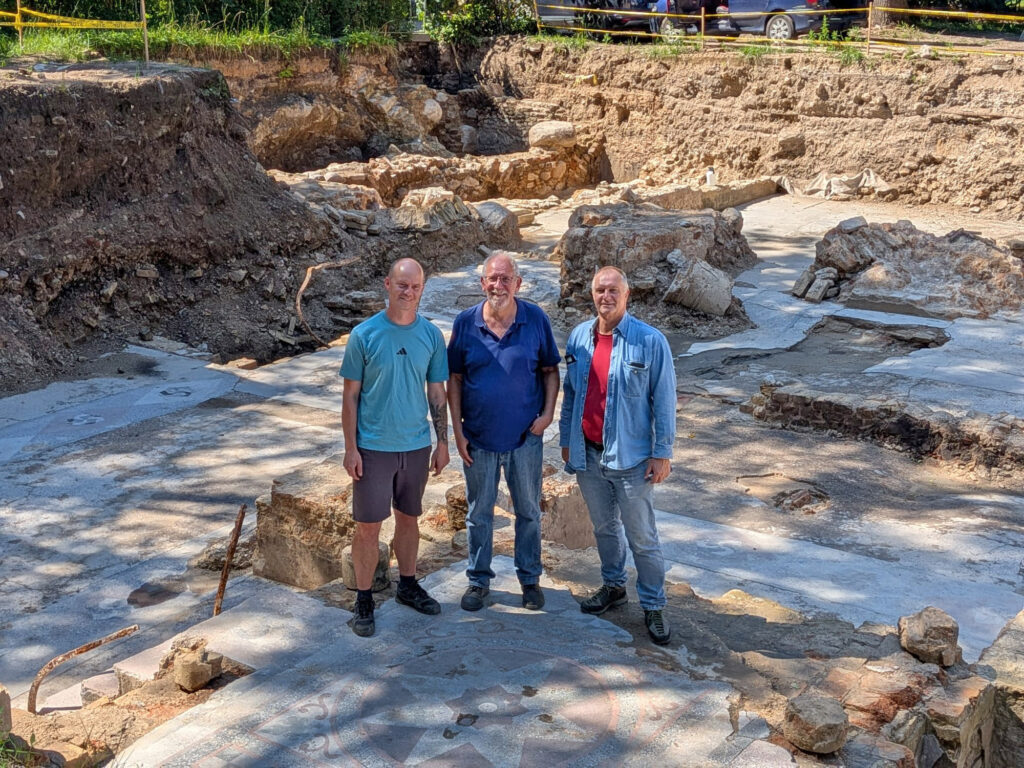
That is the community whose physical remains are now emerging from the ground in Vilnius. Research at the site has continued since 2011, and this sixth excavation season, led by the Israel Antiquities Authority and Lithuania’s Kultūros paveldo išsaugojimo pajėgos, with funding from the Good Will Foundation and cooperation from the Lithuanian Jewish, or Litvak, Community, produced the most complete picture yet of the synagogue’s interior.
Excavation directors Dr. Jon Seligman of the Israel Antiquities Authority and Justinas Račas of Kultūros paveldo išsaugojimo pajėgos said the removal of the old Soviet school building allowed archaeologists, for the first time, to expose continuous sections at the heart of the structure. “The removal of the old school building that covered the historic synagogue enabled us, for the first time, to expose additional extensive and continuous sections at the heart of the building: the main prayer hall, paved with colourful terrazzo floors decorated with floral and geometric patterns; plaques bearing names; and many other finds that offer us a moving, almost personal encounter with the people who prayed here and with the community life that developed around the synagogue over the course of centuries,” they said.
The seating plaques mark the permanent places where worshippers held in the synagogue. Some bear the names of women who prayed in the ezrat nashim; others mark the seats of men, including members of a major charitable society that helped administer Vilna’s Jewish community. One plaque records a seat donated by “Gitel Klachek, wife of the late Yechezkel, Shamash d’Mata,” the city sexton. The Klachek family owned numerous businesses on the streets surrounding the synagogue and stood among Vilna’s most influential Jewish families. Yechezkel apparently served the community directly, handling public announcements and practical affairs on its behalf.
Every plaque names a person who sat in that exact spot, prayed those exact prayers, and built a life around that synagogue for generations. The Ten Commandments plaque, the terrazzo floors, the women’s gallery, the bimah where the Vilna Gaon himself once stood to hear the Bible read aloud, these are not abstractions. They are the physical remains of a diminished sanctuary that outlasted the empire that tried to erase it, and outlasted the one that came after. Vilna’s Jews are gone, scattered by the very century their own rabbi’s students left to escape toward Zion. The ground where they prayed has just been uncovered, and it is still holy.
