




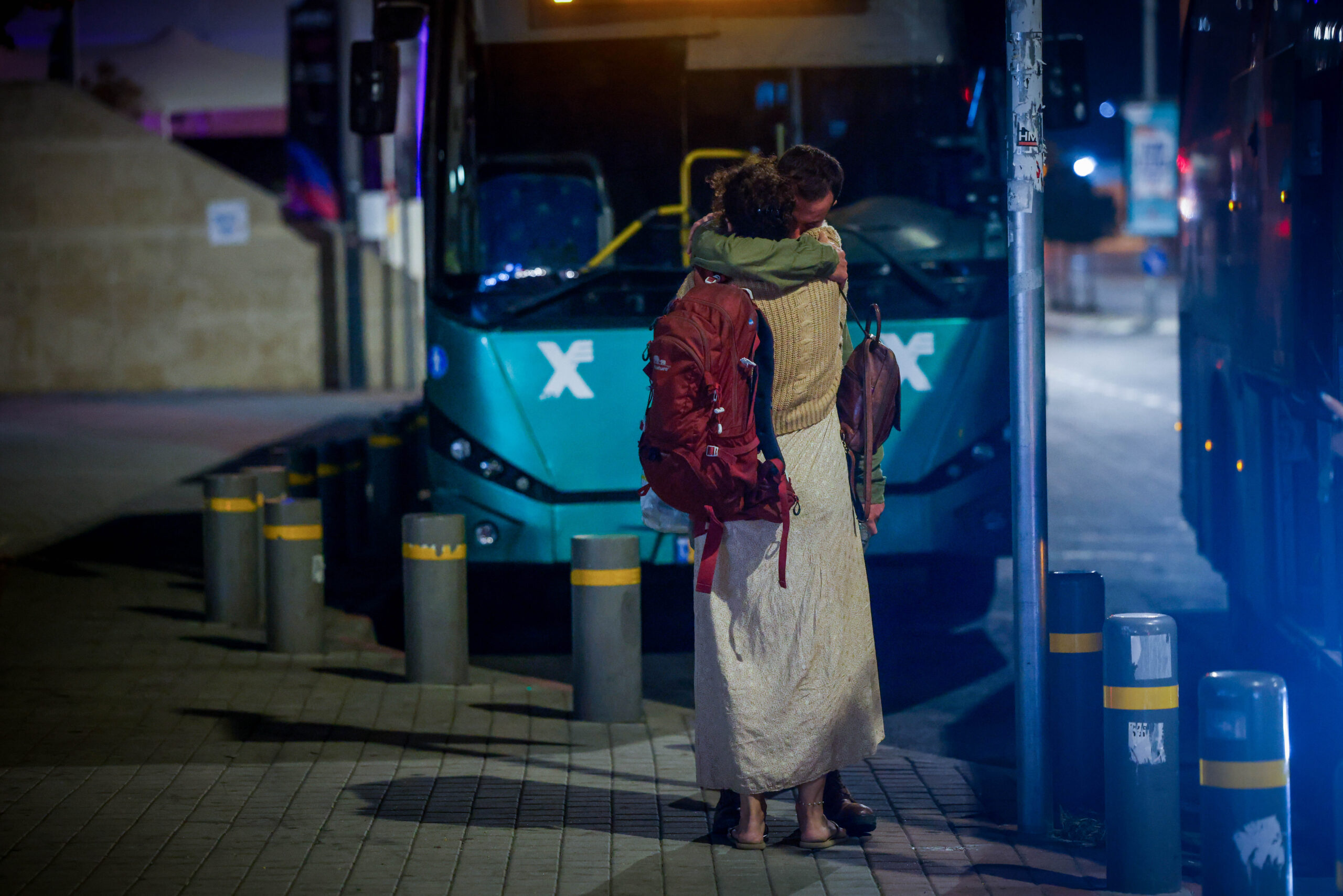
New data published this week by Israel’s National Insurance Institute complicates a narrative that has circulated since the war began: that extended reserve duty is quietly destroying marriages across the country. According to the Institute’s figures, 44% of reservists are married or living with a partner, 53% are single, 3% are divorced or separated, and 0.5% are widowed. Among that 3% currently classified as divorced or separated, only about 26% separated after their first period of wartime service, a rate the Institute says closely tracks the national average of roughly 28%.
Zvika Cohen, the Institute’s acting director general, framed the finding carefully rather than as simple good news. “The families of reserve service members are the pillar of the national resilience of the State of Israel at this time,” he said. “Although the data shows that the percentage of divorces among the reserve service is the same as the national average, it is important to pay attention to the clear challenges and the great complexity that prolonged service poses to the family unit.” The Institute said it will continue supporting reservists and their families, including spouses who separated during the war, through its existing benefits framework.
Reconciling the Numbers
That finding sits uneasily next to two earlier reports that painted a far more alarming picture, and it is worth working through why they do not actually contradict each other.
In November 2025, the Knesset’s Committee on the Status of Women and Gender Equality heard testimony based on a Central Bureau of Statistics survey finding that 34% of reservists’ wives had considered divorce or separation since the war began. Committee chair Meirav Cohen called it evidence of “a broad and deep crisis,” noting that roughly half of women surveyed reported harm to their marital relationship and a third had gone as far as thinking about ending it. Earlier still, in May 2025, a study by Polly Labs, conducted with the Reservists’ Wives Forum and the Soldiers on the Home Front NGO, found that 21% of couples had considered divorce since October 7, a figure the report described as ten times the national divorce rate.
The gap between those numbers and the Institute’s new figures stems from what each actually measures. The CBS and Polly Labs surveys asked people whether they had considered divorce, a measure of marital strain and distress. The National Insurance Institute measured something else entirely: current legal and administrative status, whether a reservist is actually divorced or separated as of now. Considering divorce and completing one are very different outcomes, particularly in Israel, where divorce is processed through the rabbinical courts and can take months or years to finalize. A meaningful share of the 34% who told surveyors they had considered separating may simply not yet appear in any dataset measuring completed divorces, even a year or more later. The often-repeated claim that reservists divorce at ten times the national rate also compares two different kinds of numbers: a “considered divorce” percentage with a completed-divorce rate, which inflates the apparent gap rather than accurately describing it. The Institute’s report is the first of the three built for a genuine like-for-like comparison, current status against current status, which is very likely why it reads so differently from what came before it.
A National Rate That Has Moved With the War
The comparison the Institute draws also deserves a qualifier that the initial coverage of its report is likely to miss: Israel’s national divorce rate has itself shifted with the war rather than holding steady as a fixed baseline. Data from Israel’s rabbinical courts show roughly 10,800 couples divorcing annually in 2022 and 2023, a figure that climbed to 11,527 in 2024, a 6.7% increase officials tied directly to the strain of the war, before easing back to 11,074 in 2025 as active combat wound down. Rabbinical court officials have described this as a recurring pattern tied to national crisis broadly, noting a similar spike during the COVID period in 2021, when divorces reached 11,534, followed by a decline once that crisis passed.

That context changes what the Institute’s finding actually means. It is not that reservist marriages have proven immune to the war. It is that reservist marriages are tracking with a national divorce rate that the war itself has already pushed upward, rather than sitting meaningfully above it. The honest reading of the data is not “reserve duty has no effect on marriages.” It is that whatever effect it has had has not made reservist families disproportionately worse off than every other Israeli family living through the same war.
An Old Recognition of the Same Strain
None of this would have surprised the Bible. Before the officers of an ancient Israelite army led their troops into battle, the Bible required them to publicly exempt several categories of men whose domestic and financial lives had been left unfinished at home:
And the officers shall speak unto the people, saying: What man is there that hath built a new house, and hath not dedicated it? Let him go and return to his house, lest he die in the battle, and another man dedicate it. And what man is there that hath planted a vineyard, and hath not used the fruit thereof? Let him go and return unto his house, lest he die in the battle, and another man use the fruit thereof. And what man is there that hath betrothed a wife, and hath not taken her? Let him go and return unto his house, lest he die in the battle, and another man take her. (Deuteronomy 20:5-7)
Each exemption maps directly onto one of the pressures the modern surveys are struggling to measure. The undedicated house and the unharvested vineyard are financial exemptions, protecting a man whose major investment of labor and capital sat unfinished and vulnerable while he was away. The betrothed but not yet married wife is the marital exemption, a direct acknowledgment that leaving a household relationship in an unsettled state before deploying carries its own real cost, separate from the physical danger of war itself. The Mishnah in Sotah expands on all three categories in detail, specifying, for example, that the vineyard exemption applied even to one who had planted but not yet eaten from it during the years the Bible restricts its fruit, and that the house exemption covered a home built and dedicated but not yet lived in for a full year.
The Bible adds a fourth category immediately after these three, exempting whoever is “fearful and fainthearted” (Deuteronomy 20:8). The Talmud records a dispute over what this means: Rabbi Akiva read it plainly, as a man genuinely afraid of the dangers of battle, while Rabbi Yosei HaGlili read it as a man fearful because of his own unresolved sins. Read either way, the exemption is a formal acknowledgment that a soldier’s inner state, not only his physical fitness, determines his readiness for war, and that sending an unready man into battle endangers him and the men beside him alike.
None of these exemptions applied to Israel’s reservists this war, fought as a war of survival with no equivalent opt-out available. But the structure the Bible built three thousand years ago concedes exactly what the CBS and Polly Labs surveys are trying to document now: that a man’s home, his finances, and his marriage do not simply wait quietly while he is at war, and that ignoring those pressures has a real cost worth building into the law itself. The modern state did not create the exemption categories that fit this war. It is left instead to build the support systems – financial, marital, and psychological – that the Bible once handled by sending certain men home before the fighting began.
The Mishnah in Sotah (8:7) draws a line between two categories of war: a milchemet reshut, a discretionary or optional war, and a milchemet mitzvah or milchemet chovah, an obligatory war, which includes a war fought in defense against an attacking enemy. The Deuteronomy 20:5-8 exemptions, the Mishnah states, apply only to the discretionary category. In an obligatory defensive war, the exemptions are suspended entirely, and the Mishnah’s own language is stark: everyone goes out to fight, “even a groom from his chamber and a bride from her wedding canopy.” Rambam codifies this same rule in Hilchot Melachim 7:4.
Since Israel’s current war is understood, including by religious authorities across the spectrum, as a defensive war for the country’s survival rather than a discretionary campaign, the Biblical exemptions wouldn’t have applied to this war even in a Temple-era context with a fully functioning system of these opt-outs.
Where the War’s Toll Is Undeniable
If the marriage data calls for caution before assuming the worst, the suicide data does not leave the same room for reassurance, and it points squarely at reservists rather than the population as a whole.
Israel’s Health Ministry and its National Suicide Prevention Council examined national suicide data in the months after October 7 and found no increase at all. Suicides in the general population actually dipped slightly in the immediate aftermath of the attack compared to the same months in prior years, a pattern officials attributed to a wartime effect of social cohesion, in which people’s attention turned outward toward collective survival rather than inward toward personal distress. Roughly 300 Israelis take their own lives in an average year, and that baseline held even through the most acute period of national trauma.
Among soldiers and reservists, the pattern ran in the opposite direction. Seventeen soldiers died by suicide in 2023, a toll that included seven deaths in the immediate aftermath of October 7, most of them reservists. That figure climbed to 21 in 2024, the highest annual total in more than a decade, and held at 21 again in 2025, even as combat itself moderated. A Knesset Research and Information Center report found 279 suicide attempts among soldiers over a two-year span, meaning roughly seven attempts occurred for every completed suicide. Of the roughly 20,000 soldiers wounded since the war began, more than half are being treated for mental health conditions, and reservists make up about 64% of that wounded total.
The case of Roi Wasserstein, a 24-year-old reservist combat medic from Netanya, became the catalyst for the military’s current reckoning with this gap. Wasserstein had completed more than 300 days of reserve duty evacuating wounded and fallen soldiers under fire with the IDF’s 401st Armored Brigade, and died by suicide in July 2025, two months after his last stretch of active duty ended. Because he was not on active service at the time of his death, the IDF initially informed his family through unofficial channels that he would not be recognized as a fallen soldier and would be buried in a civilian ceremony, a decision that drew public outrage and pushed Chief of Staff Lt. Gen. Eyal Zamir to form a dedicated committee, led by former Personnel Directorate chief Maj. Gen. (res.) Moti Almoz, to examine how the military recognizes service-linked suicides after discharge. That committee found 15 additional civilian deaths by suicide since the war began that it linked to military service, and recommended a two-year window after discharge during which families could seek formal recognition, along with military honors, at funerals where a service connection appears likely. Wasserstein’s father, Roni, put the underlying argument plainly to Army Radio: “A soldier who is wounded by a bullet and dies a year later is recognized as a fallen soldier. Psychological injury is also a wound. It’s a scar from the army that doesn’t heal.”
Taken together, the two datasets tell a coherent and sobering story rather than a contradictory one. Israeli society as a whole has absorbed the shock of this war with its family structures largely intact and its collective mental health more resilient than many feared, even among reservist marriages. But that resilience was not evenly distributed. It was purchased, in significant part, by the roughly 300,000 reservists who carried hundreds of days of combat and evacuation duty on behalf of everyone else, and the toll of that burden shows up exactly where the marriage data does not: in the sharply elevated suicide rate among the very people who served. The war did not break the Israeli family. It broke, in a measurable and continuing way, some of the men and women who spent the war defending it.