


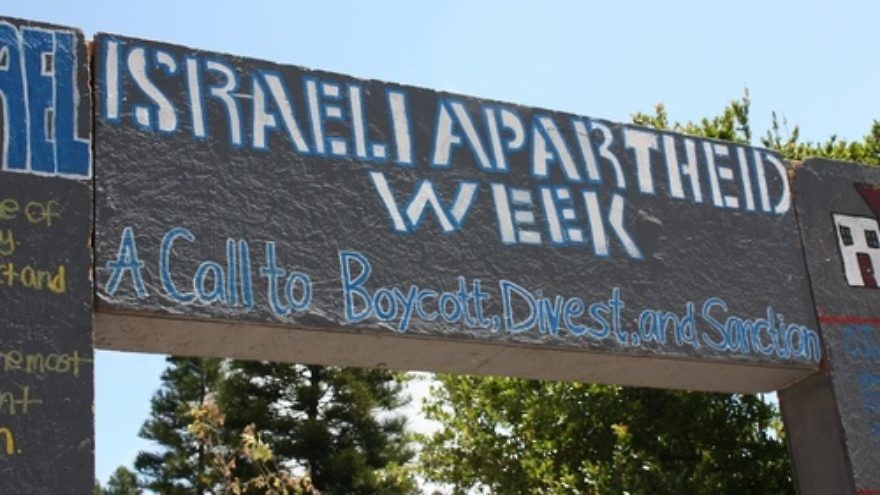
I often find that many Jews and conservative types of Christians have an allergy to decolonial language and thinking. This kind of discourse understandably makes many Jews uncomfortable, precisely because it is being used against Jews to once again construe us as powerful oppressors. A tired trope, which is centuries old and yet ever repeated. Decolonialism has become the framework for arguments against Jewish sovereignty and the historical reality of Israel as the ancestral Jewish homeland. Even a large majority of those who identify as decolonialists or post-colonialists are radically anti-Israel, often using such language to justify both Nazi-style racist-genocidal ideologies held by “Palestinian” Arabs, and horrendous atrocities such as the genocide of October 7th. For instance, on October 8th and after, “this is what decolonialism looks like” was often chanted at anti-Israel protests to describe the atrocities of October 7th. Given all of this, it is understandable that many Jews are uncomfortable with so-called decolonialism. In truth, if that is what decolonialism looks like, then I want nothing to do with it.
Similarly, many conservative Christians find this type of discourse deeply uncomfortable for at least two reasons. The first is that many Christian people’s ancestors took part in the colonization of indigenous peoples. Certainly, much of Western Christianity today was spread as a direct or indirect result of Western colonialism; that’s hard to deny. It is also hard to deny that many people today live in other indigenous peoples’ ancestral homelands because of such colonialism. Being confronted with evil that has benefited one is deeply uncomfortable. I think there is an unconscious fear that if such language is used on behalf of Zionism, then the doors will be opened for other indigenous peoples to have their own sort of Zionism, and that is a costly thing to contemplate, let alone to enact.
The second reason I believe this makes many conservative Christians uncomfortable is that such thinking is thought to be inherently Leftist, namely, it is thought to be Marxist. The charge of Marxism often becomes a way of delegitimizing the grievances of those experiencing racism so that the argument is shut down even before it begins. While this is not the way to win an argument, that does not mean Marxism is wholly right as a secular religion, but given it was born within the Judeo-Christian ecosystem, we should also not be so quick to invalidate everything it says. The Judeo-Christian tradition is cheeky and often has a way of seeping through and sticking around even when it is secularized and used for reasons that conflict with the Judeo-Christian tradition.
Within this angst towards “Marxism,” there is a strong reaction against the binaries of oppressor and oppressed, powerful and powerless, colonizer and colonized. Surely these must be defined, and they can be defined by the oppressors in a way that inverts reality, by construing oppressors as the oppressed and the oppressed as oppressors. The Nazis, for instance, accused Jews of genociding the Germans even while the Germans were committing a genocide against the Jewish people. This also happens with colonial settlers, in which the colonizer accuses those they have colonized as being the colonizer. This is precisely what the Arabs who colonized all of Southwest Asia and North African have done to Jews. The colonizing Arab has said to the colonized Jew, “We Arabs are the colonized, and you Jews are the colonizer.” Both of these reversals of the oppressor-oppressed dynamic are of course absurd denials of reality. In addition to those caveats, accepting these binaries does not mean that a powerless, colonized, oppressed people cease to be on this side of the equation merely because they can defend themselves and now have sovereignty over part or all of their ancestral homeland. Defining these binaries in that way only benefits the oppressor and does not give the oppressed the full opportunity to cease to be the oppressed, but such a definition seeks to maintain the status quo.
Despite the fact that Marxism thinks in terms of binaries such as oppressor and oppressed, it should not deter us from accepting that such binaries exist. One can easily apply this to the slavery of African Americans in the United States. Such a rejection of this binary would be out of step with the Judeo-Christian tradition of naming evil as evil, of calling the guilty to account, and assuring the victim of God’s judgment toward their oppressor. One need only think about the language of the Psalms to verify this. Or one could easily apply this oppressed and oppressor binary to the Nazis and their victims. In this instance, it would also be absurd and completely unethical not to categorize the Nazis as oppressors and Jews as the oppressed in the context of the Shoah. Excluding all binaries is, in fact, a binary way of thinking, thus showing that even in a world that is often grey, there are still binaries, and we should embrace that reality.
But despite all these hesitations, I want to make the case that those of us who support a Jewish state should use decolonial thinking and language, not only because it is the language of the day and if we want to communicate effectively, we need to speak that language, but also because I believe it is true and rooted in the Judeo-Christian tradition. The Left does not have a monopoly on justice, and much of its emphasis on justice is, whether they’d like to admit it, rooted in the Jewish people and tradition. For example, the notion of human dignity, so important to the Left, comes from the Torah, where we are taught that all human beings, both male and female, and not just kings, are made in the image of God. Ironically, many of the Left’s insights are drawn from the very people they are condemning today, namely Jews, and it is time for us to reclaim those insights as our own.
So what about decolonialism? Is this another insight from Jewish tradition that the Left has failed to cite as its source? To begin answering this, we must look to Rabbi Jonathan Sacks, who writes in his Essays on Ethics that forgiveness requires repentance, confession, and atonement. Until these three things happen, forgiveness is not possible. This is what the story of Joseph re-encountering his brothers after his enslavement and rise to power in Egypt teaches us. This process of forgiveness, as found in that story and outlined by Sacks, is a Judeo-Christian impulse rooted in the Torah and is fundamental to the decolonial project. For decolonialism requires a recognition that some wrong was done, in this case colonialism, that it must therefore be repented of, that the exact nature of those wrongs must be confessed, and that if the repentance and confession of those wrongs is real, then atonement must be made for those sins. As a very simple example, if I steal your bicycle and I only apologize with words, repent, and confess that it was morally wrong for me to do so, but I do not give your bicycle back as the act of atonement that proves my repentance and confession is real, then I am not truly sorry for what I have done. This is also the idea of penance in the Catholic Church: after confession of sin, one must do some action that shows and embodies the truth of that confession. In this way, the driving force behind the decolonial project is an ethic and process of justice and forgiveness which is rooted in the Judeo-Christian tradition itself.
Furthermore, the notion of national boundaries, which should not be transgressed, a staple in decolonial thinking, is also found in the Jewish tradition. Moreover, indigeneity is not simply about being the original settlers of a land, the first betrothed to the land, which it is, but it is also about divine allotment of that land. Like the Jewish people, other indigenous peoples from around the world claim that God gave their people their ancestral land and led them into it. Deuteronomy 2 tells us that when the Israelites were returning to the land of their fathers, namely Abraham, Isaac, and Jacob, God commanded that they not take one foot of land from the Moabites or Ammonites for this land was given to them by God, just as the land of Israel was given to the Jews. Deuteronomy 32:8 seems to suggest that God divided up the whole world giving all people’s lands. An idea which is expanded upon in The Book of Jubilees, the earliest midrashic commentary on Genesis and Exodus.
It tells the story of Noah, his sons, and grandsons drawing lots to reveal which lands of the earth God had allotted to each people. They then each take oaths swearing that they will remain on their own land allotment and will not steal the land given to another people. Then they bring down a curse upon anyone who transgresses such divinely ordained borders. So the midrash goes, Canaan the son of Ham, was allotted land far to the west, while the sons of Shem (the ancestor of Abraham) were allotted the land of Israel. Upon discovering this land, Canaan sees its desirability, deciding to steal this land for himself and is thus cursed, explaining why Noah curses him in the biblical text. Given the political context in which this text was written the person of “Canaan” in this midrashic commentary seems to be a symbolic stand in for the Greeks, just as the author of the New Testament book of Revelation calls the Roman Empire “Babylon,” rather than referring to it directly. Said another way, the Greeks who were colonizing Israel around the time The Book of Jubilees was composed are here condemned under the literary pseudonym of “Canaan” who have stolen the land allotted to the people of Israel and are thus cursed for transgressing the boundaries of their land [i.e. Greece] and those boundaries which were allotted to another [i.e. the land of Israel].
Additionally, the Jewish books of first and second Maccabees (considered canonical by most Christian traditions but not accepted as canonical by the Rabbinic tradition) tells the decolonial story of Hanukkah, namely it tells the story of the Jewish people living under Greek colonialism, who rise up under the leadership of the Maccabees to decolonize the land of Israel, reaffirm the ways of their ancestors (namely the ways of Torah) and cleanse the Temple. Furthermore, the biblical narrative as a whole revolves around God’s promise to give the land of Israel to the descendants of Abraham, Isaac, and Jacob, the forceful conquest of that land by foreign powers, God’s faithfulness to restore the indigenous people of Israel to the land of Israel despite their own unfaithfulness, a removal of the foreign control of the land, and a time when foreigners will never again occupy the land of Israel. In a certain sense, much of the biblical story is about the decolonization of the land of Israel. Considering all of this, we can see that decolonialism is rooted in the Judeo-Christian tradition itself.
Now up to this point I have on a number of occasions claimed that the Jewish people are indigenous to the land of Israel. This claim of indigeneity may seem strange to those familiar with the biblical conquest narrative, and while I do not have time to explain how I think we should read that narrative, which I have written on elsewhere, there are good reasons to make this claim. Namely, the scholarly consensus is that the Israelites originated from within the land of Israel, that they were in reality a subset of Canaanites, and thus indigenous to the land. The scholar Mary Ellen Buck summarizes this consensus when she writes, “The Israelites were themselves part of the Canaanite tradition, having emerged out of the Late Bronze Age culture, retaining their Canaanite culture, religion, and language.” One example of this is that Hebrew is a Canaanite language originating in the land of Israel, where it is still spoken today. In fact, even the book of Isaiah calls Hebrew “the language of Canaan.” In some sense, the Bible even acknowledges Israel’s Canaanite origins. Ezekiel 16:3 records God saying to Jerusalem, “Your origin and your birth were in the land of the Canaanites; your father was an Amorite and your mother was a Hittite.” It is important to note that the Amorites and Hittites were Canaanite tribes. The 3rd century Egyptian Christian theologian Origen, who spent the latter half of his life in the land of Israel where he had a “Hebrew” teacher, reports to us an interpretative tradition of this passage that says before God’s promises to Abraham, Abraham was an Amorite, and Sarah a Hittite!
Even the way Jews have traditionally spoken about our ancestral land is similar to the way other indigenous people have done so. In her book, In Defense of Mohawk Land, Linda Pertusati describes the relationship of indigenous or aboriginal peoples to their land in a way that perfectly fits how the Jewish people have related to the land of Israel since time immemorial, there she writes, “For aboriginal peoples, the concept of land is sacred, rooted in a history and a sense of responsibility to that history. Further, land is part of their cultural, social, and religious fabric – it is what constitutes their identity as aboriginal peoples.” In the same way, the land of Israel is sacred to us Jews, it is inseparable from our “cultural, social, and religious fabric.” For centuries Jews have been facing Jerusalem multiple times a day as we pray, every Passover seder we repeat the words, “Next year in Jerusalem,” most of our holidays are oriented around the land of Israel, even the prayer following the recitation of the Shema in the evening prayer for weekdays (Ma’ariv) is oriented around the seasons of the land of Israel, namely its early fall and late spring rains. In Birkat Hamazon (grace after meals) we give thanks for the land of Israel and pray for Jerusalem to be rebuilt. Isaiah, as I read the prophet, even describes the people of Israel as married to the land of Israel.
When seen in this light, it is clear that as indigenous people; we have been colonized like other native peoples. Our land, the land of Israel has been occupied by colonial-settlers for centuries, going back to the Egyptians in the bronze period, to Assyrians, Babylonians, Persians, Greeks, Romans, Christian Rome, briefly the Persians again, then the Arabs, Crusaders, Ottomans, and the British and now much of our land is currently occupied by Arab settlers, who since the 1960s have called themselves “Palestinian” Arabs. All the while Jews have had a continual presence in the land throughout this period, even while most of us were initially forced to live in diaspora by our imperial oppressors. After the smaller Aliyah’s (returns) of Jews in the 13th and 15th centuries, the Aliyah of the 19th and 20th century saw a large number of indigenous Jews returning to their ancestral land from forced colonial diaspora.
During that return in the 19th and 20th century the colonialist Arabs/Muslims attempted to prevent us as the indigenous people, from returning and reclaiming sovereignty, a sovereignty which goes against the Islamic ideal of Islamic superiority and their racist belief that Jews are inherently inferior. In 1948, we did the impossible, what many other indigenous peoples dream of: we reestablished our sovereign independence in the land of our fathers, and once that sovereignty was reestablished, the Arabs continued seeking to undermine our indigenous independence by attempting to reconquer our land, a land they are foreign to. This tiny sovereign indigenous nation of Israel the size of New Jersey (hardly an empire as it is often accused of) is surrounded by Arab colonial-settler states which exist across North Africa and Southwest Asia because of centuries of Arab colonialism going back to the beginnings of Islam.
Now, if we are going to admit that colonialism was immoral, that it was in reality a wrong committed, then it is required that repentance, confession, and atonement occur in the process of forgiveness. This, of course, is true of any instance of colonialism, and it is true in the particular case of the colonization of the people of Israel by foreign invaders.
Considering all this reality, we can say two things: First that when such decolonial discourse is used against Israel, it relies on revisionist, conspiratorial, racist histories that are not rooted in any sort of reality and have, in fact, inverted the actual situation, a kind of colonial-settler inversion. So that in reality, when decolonialism is used against Israel, it is being used incorrectly, for Zionism was and is a decolonial project. In sharp contrast to our enemies chanting that October 7th “is what decolonialism looks like,” in reality October 7th is precisely what colonialism looks like! October 7th was a colonial response to the Zionist decolonial project.
When decolonialism is used against Israel in this way, it ceases to be what it claims to be and becomes a new colonialism cloaked in a facade of moral righteousness, a wolf in sheep’s clothing, a trojan horse attempting to maintain the status quo of the colonial superiority of such peoples as the Europeans and the Arab-Islamic empires. Such decolonial discourse thus becomes a smokescreen to disguise one’s own colonial activities. In contrast, in the Israeli-Arab conflict, Jews are the indigenous people and Arabs the colonial-settler. Second, we can say that decolonialism is not an inherently Leftist ideology, but the Leftists ultimately drew this from the Judeo-Christian tradition, as they do many of their impulses. Just because decolonial language is being misused, or by people it does not belong to, for it belongs to the Judeo-Christian tradition, doesn’t mean we should not use it or reclaim it as rightfully our own.
Indeed, if we wish to speak the truth about the existential threat facing Jews today and the Israeli-Arab conflict, why not use all the tools available to us? Why should we not use decolonial language correctly to speak even more truly than our opponents? Why not reclaim the truth that Jews/Israel, far from being colonizers themselves, are decolonizers fighting for the complete decolonization of their indigenous land? Let us fight lies with the truth, let us fight using the Judeo-Christian impulse of repentance, confession, and atonement that lies behind decolonial language, let us fight using the biblical narrative of God’s faithfulness to decolonize Zion, and reclaim what truly belongs to the stewards of that tradition. Let us reclaim the spirit of the Maccabees to once again free Zion.

