


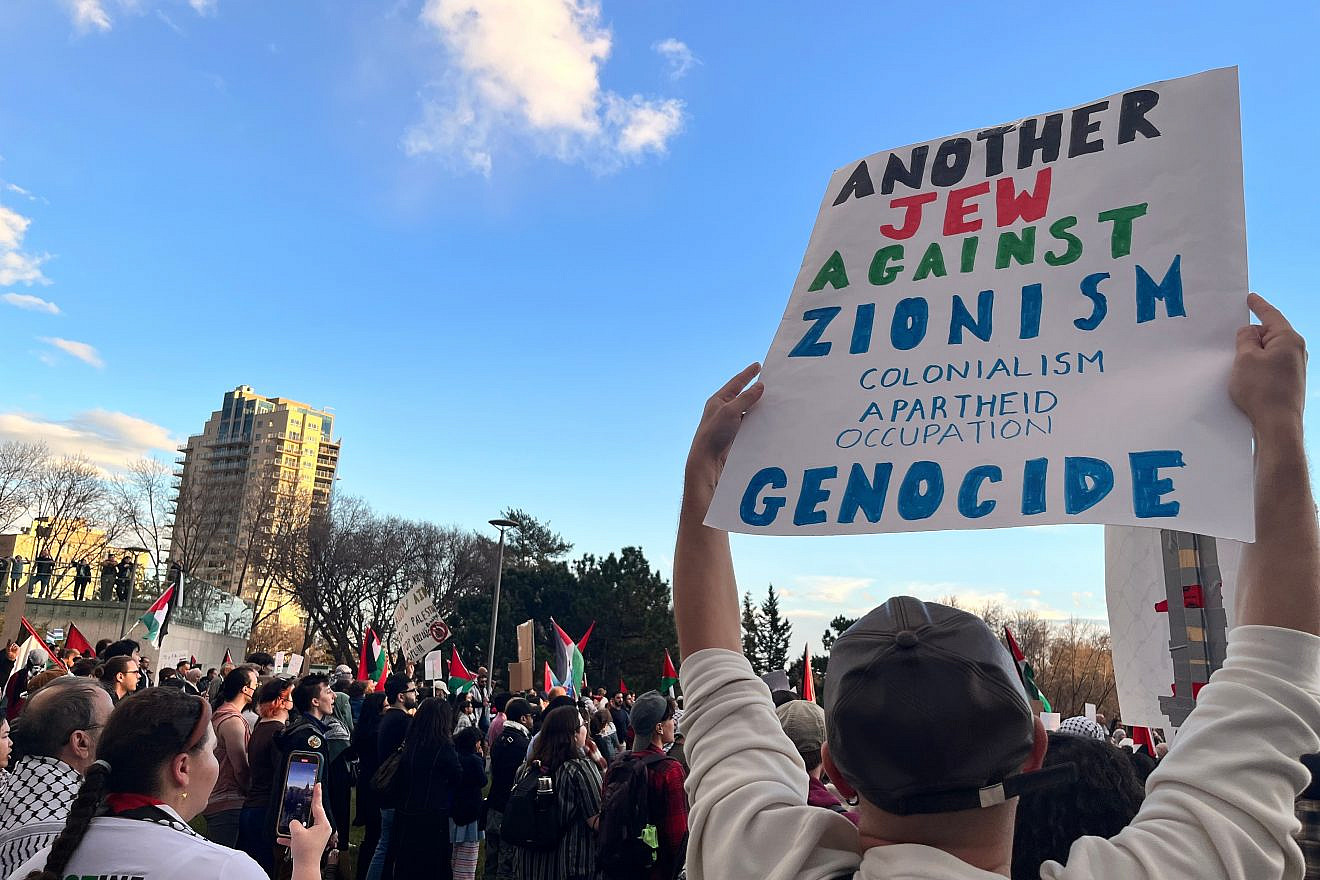
Among the many libels hurled at Israel and the Jewish people since the time of the Soviet Union and particularly since October 7th, is that of “colonizer.” The Soviet Union prompted “Palestinian” narrative, which is so deeply entrenched in the Zeitgeist of today, relies on this libel as one of its central pillars. Israel/Jews/Zionists are construed as white colonial oppressors, while “Palestinians” are portrayed as their oppressed indigenous victims fighting for liberation. Yet since Israel and the Jewish people don’t meet the qualifications to be colonizers, as I have shown elsewhere, the Euro-Arab alliance must invert reality in order to perpetuate their narrative, accomplishing this through colonial-settler inversion. They do this firstly by defining the oppressor-oppressed binary according to the vested interests of colonial-oppressors. Then, secondly, by erasing and rewriting history detached from reality, and finally, thirdly by making suffering and the losing of wars the exclusive property of the oppressed.
The first pillar of colonial-settler inversion used to build the “Palestinian” Arab narrative is in how they define oppressor and oppressed. To this point, Western and Islamic colonizers are so accustomed to the people they conquer not having any kind of sizable force that can rebut them, that to them, anyone with such a force must be a colonizer. Here the strong are defined as those who colonize, and the colonized are defined as the weak. This is how colonizers define the concepts of oppressor and oppressed, construing those they conquer as incapable, by definition, of taking back land and having any agency. This serves as a strategy to ensure that in the imagination of the colonized, decolonization is impossible. To this point, many indigenous peoples who have experienced colonization also assume, de facto, that to be indigenous and colonized equates to lacking a military force able to defend themselves and repel colonial forces. Thus, anyone who has a military force enabling them to decolonize and challenge their colonial oppressors must be colonizers themselves. Such a definition would define any indigenous tribe who was able to retake their ancestral homeland as colonial-settlers, and would subsequently define them as oppressors to the non-native population.
This first pillar of colonial-settler inversion is conveniently applied to Israel, one of the most successful cases of decolonialism. Before the British and the Ottomans colonized Israel, the Arabs had historically been the colonial occupiers of Israel, coming from the Arabian Peninsula. Yet Arabs still occupy Jewish land, are still colonial-settlers, and have tried unsuccessfully to reoccupy all of Israel. Thus, Arab failure to recolonize and reoccupy all of Israel is seen, in light of their colonial definition of oppressor and oppressed, to make Arabs the oppressed rather than the oppressor. The question those who are supposedly decolonialists are not asking is why does colonial society get to define who is an oppressor and who is the oppressed? For once again, the people who are defining these categories, such as the West and Arabs, are themselves colonial-settlers.
A concrete example of this point is Israel’s victory in the 1967 war, in which it reconquered the heart of the historic Jewish homeland. An unlikely victory, multiple Arab nations attacked Israel to wipe it off the map and to recolonize Jewish land. Despite all odds, Israel won, and the Arabs who started the war lost (a war which was undesired by Israel), and in this process Judea, Samaria, and Gaza came under direct Israeli control even while the Arab colonial-settlers remained living there. For so-called “moderates,” this historical event is often seen as the event in which Jews/Israel were transformed from victims into oppressors.
But why does an indigenous population reconquering the heart of its own historic territory make that indigenous population into the oppressor and the colonial-settler into the victim? Particularly when that act of reconquering came as an act of self-defense in a war it did not start, but which was started by the colonial-settlers.
If the Lakota tribe in modern day South Dakota were to declare the Rose Bud reservation as an independent sovereign state completely politically severed from the United States and then subsequently reconquered land that was historically Lakota land, let’s say the Black Hills, but that reconquered land was currently occupied by colonial-settlers, would that somehow make the Lakota the oppressor, and somehow transform the European colonial-settler into the victim? According to the first pillar of colonial-settler inversion, if it were applied consistently, it would make the Lakota into the colonizing oppressor, which is absurd.
Yet is this not the colonial definition of oppressor and oppressed applied to Israel’s reconquering of Judea, Samaria, and Gaza? Does it not create a narrative in which the oppressed indigenous people are never allowed the agency to undo the wrong done to them? In other words, the notion that an indigenous people reconquering territory which is rightfully theirs somehow transforms them into oppressors, while it transforms the colonial-settlers into victims, is itself a tool of the colonialists, both Arabs and Europeans. By creating such definitions, colonizers create a situation in which the colonized can never win, and if the colonized do somehow win, the colonizers rewrite acts of justice to be acts of injustice, making themselves into victims in an attempt to reassert their colonial hegemony.
Colonial-settler inversion shields the real colonizers from accusations of colonialism. Thus, the indigenous population of Jews coming back to Judea and Samaria are construed as “settlers,” and the non-indigenous population of Arabs is categorized as the “occupied.” Calling Judea, Samaria, and Gaza the “Occupied Palestinian Territories” is an act of this colonial-settler inversion, and as such it is an absurd act of injustice. It is the perpetuation of the notion that if you steal indigenous land, it is now yours, and if those indigenous people regain some kind of agency within their land which was stolen from them, those who stole the land are now considered the “occupied,” the wronged. Given whose land it historically is, Judea, Samaria, and Gaza should rather be called “Occupied Jewish Territories,” just as “American” land should be called “Occupied First Nation Territories.” The Palestinian narrative assumes and is built on this act of colonial-settler inversion, and we must recognize this and call it out for what it is: namely colonial anti-Zionism. The Palestinian narrative that claims victimhood, which claims to be oppressed, is built on a sort of inversion of victimhood from the European Christian and Islamic Arab traditions, in which the European Christian and Islamic Arab peoples persecuted Jews as their victims and yet construed Jews as their own persecutors. The unspoken mantra was the enemy of the Jew is the victim of the Jew. In a sense, the Palestinian narrative is a continuation of the historical inverting of the situation of the Jewish people through the centuries. Throughout this history in both Christian Europe and the Islamic world, Jews were construed as oppressors so that whoever their enemy was, their enemy was always seen to be their victim. Today’s “Palestinian” narrative is simply the continuation of this trope fed by streams of history and culture from Islam and Europe.
Now, of course, this definition of oppressed and oppressor alone does not ensure the viability of colonial-settler inversion. In order for it to be a convincing narrative, the second aspect of colonial-settler inversion, which serves as the edifice of the “Palestinian” narrative, must be present, namely, the erasure and replacement of history. This is why the “Palestinian” narrative must erase Jewish indigeneity to the land of Israel, calling it “Palestine” instead of by its much older name “Israel”; it’s why it denies the Jewish Temple ever existed, or sometimes claims that today’s Jews are not the real Jews. Often this last type of historical revision is conducted by supersessionist “Palestinian” Arab Christians claiming they are the real Jews and “the Jews” or “Zionists” are actually Europeans with no historical connection to the land. It’s why Jewish history, its birth and sustained connection to the land of Israel, becomes erased and is replaced with a history of a “Palestinian” people who were supposedly always in the land, while either the Jews were never in the land, were briefly in the land as conquerors and then ousted, or again the “Palestinians” were the real Jews described in the Bible. This erasure and fabrication of history often draws on Christian replacement theology in which God’s covenant with Jews or the “old Israel” is revoked and transferred to a “new Israel.”
This kind of revisionist history must ignore substantial archaeological consensus, as well as literary evidence, such as the fact that terms like “Palestinian” and “Palestine” never appear in the Bible, a collection of books that every scholar agrees was primarily written in Israel and in the Hebrew language, which is still spoken and written today in that very land.
It must also ignore linguistic evidence such as the reality that Hebrew is an indigenous Canaanite dialect, whereas Arabic is indigenous to another land. Also in need of ignoring is the fact that when talking to Western audiences “Palestinians” claim they are descended from the Canaanites, but when not addressing Western audiences (and even sometimes while addressing the West) they claim they are Arabs from outside the land, claims which are backed up by the immigration records of the last 200 years; ignored too must be the historical reality that no one until the 1960s used the term “Palestinian” as an ethnic term. Until then it was only used as a geographical term.
The third pillar of the colonial-settler inversion narrative is twofold; it is the assumption that those who lose wars are the oppressed and the allocation of suffering as the exclusive property of the oppressed. But recognizing the realities of colonialism does not suddenly mean that all those who lose wars are automatically the colonized, or good or oppressed. Despite this, there is a tendency among some to think that losing wars or battles somehow equates to being oppressed and good. Certainly some who lose wars are oppressed and good, but not all. That logic leads to some absurd conclusions: If the Nazis lose, does that suddenly make them the good guys and an oppressed people? No, the answer is no. Just because the Allies ended up having the stronger military does not automatically mean the Axis powers were the oppressed or the good guys.
Yet whether or not someone ignores basic moral logic so they can answer yes to the above question, so that the Nazis suddenly are oppressed and good as a result of losing, one needs to admit that in the sense of existence, the situation “Palestinian” Arabs are in is a much more powerful position than the Nazis were. Namely, in the battle for existence, the Nazis were much less powerful than the Arabs. In the “all those defeated are oppressed/good” schema, the “Palestinian” Arabs fit that schema much less than the Nazis would. Because unlike the Nazis, the “Palestinian” Arabs have outlasted the Nazis by decades, whereas the Nazis were defeated in a mere 6 years of war, the “Palestinian” Arabs have continued to fight, not being finally and completely defeated after 78 years. By that logic, the Left would have to admit “Palestinian” Arabs are more powerful than Nazi Germany, not really defeated, and thus not oppressed and not good.
What about suffering? Does it automatically place one on the right side of history? In other words, is suffering the exclusive property of the oppressed and colonized? The answer is no, and to this point, suffering also does not negate one’s colonial-settler status; rather, one might expect that in a decolonial situation that is somewhat successful, there indeed might be some suffering on the side of the colonial-settlers. This does not, however, turn the colonial-settlers into victims. Such a framing privileges the colonializer and disadvantages the colonized seeking to maintain the status quo. When decolonization achieves some success, colonial settlers may experience suffering. But that suffering does not result from decolonization itself, but from the settlers’ refusal to participate in the process, their insistence on remaining on land that is not theirs, and their determination to preserve the inferior status of the colonized people whose land they continue to occupy.
Moreover, think about Nazi Germany or Imperial Japan during World War II; did they not suffer in the midst of their wars against their neighbors and against the Jewish people? Of course they did. But that suffering was brought on themselves through their own evil actions. Should sympathy for their suffering somehow erase the evil they were committing, the very evil that was the cause of their own suffering? Should such sympathy lead someone to side with Nazi Germany rather than Jews or the Allies? Of course not!
If Arabs had either accepted a two-state solution and thus gotten an Arab colonial-settler state, there might have been less suffering on their part. If they had willingly participated in the process of decolonization, in the process of putting to right wrongs that they had done, and had willingly participated in that process through making amends and repartitions by going back to their own indigenous lands, in ending their colonial-settler occupation, or at the very least in recognizing their guest status in the land, there would have been, in all likelihood, a lot less suffering on their part. However, this isn’t a hypothetical since the two million Arab citizens of Israel today have indeed had a lot less suffering because their ancestors participated in Israel’s decolonial process rather than fighting it. Suffering is what happens when decolonization is resisted by the colonizers.
Some might respond that if suffering is the result of decolonization, then we should simply refrain from doing it. Yet, suffering is an unavoidable part of life. To maintain the status quo of suffering, as it exists now in an unjust system, in order to avoid any future suffering created as a result of justice being implemented, is simply to privilege and prefer suffering that is a result of injustice, oppression, and colonization over and against suffering that is a result of justice, standing up to oppression, and decolonization. Since suffering is inevitable, we must either choose the suffering that comes from acting justly in truth, or we must choose the suffering that comes from continuing to choose injustice and falsehood. Which suffering do we prefer? That is what we must decide.
Now there you have it: these three pillars we have briefly touched on come together to create colonial-settler inversion, forming the essence of the “Palestinian” narrative of victimhood. If we who are committed to reality are going to successfully go on the offense and unveil the evil they wish to hide, then we need to recognize that one of their biggest tools used in their propaganda and in their controlling of the narrative is this colonial-settler inversion. Until we do so, we will fail to deconstruct their propagandic narrative of lies.


