

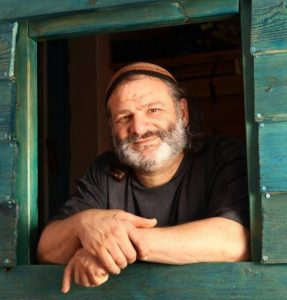

The nascent Sanhedrin issued a formal ruling this week, asking the Holy One, Blessed be He, to remove hostile forces from the Jewish people and the Land of Israel, reveal the Mashiach (Messiah), rebuild the Beit HaMikdash (Holy Temple), and restore prophecy to Israel. The written ruling, dated 6 Menachem Av, 5786, follows a session the court’s members described as several hours long, during which two of the judges argued against moving forward before ultimately joining the majority.
The Sanhedrin operates on the premise that a rabbinical court has the standing to issue a psak, a binding halachic ruling, and that, in matters concerning the fate of the Jewish people, a court above is bound to follow the ruling of a court below. Not every rabbinic authority accepts that the modern Sanhedrin carries this power. One member interviewed after the session acknowledged as much directly: “Not everybody accepts that. But the fact is that they have made rulings which have had very serious ramifications around the world.”
The Written Ruling
The Sanhedrin’s secretariat released the written ruling, translated here and divided into its component sections.
Background: The ruling opens by noting that the court heard a presentation from Rabbi Chaim Sasson on a request attributed to the Lubavitcher Rebbe, Rabbi Menachem Mendel Schneerson, who is said to have urged the chief rabbis of Israel to convene a beit din (rabbinical court) and rule that the Messiah come immediately. Rabbi Schneerson, known to hundreds of thousands of followers simply as the Rebbe, led the Chabad-Lubavitch movement from 1951 until his passing in 1994. He built Chabad from a single Brooklyn headquarters into a global network of emissary families stationed in nearly every country on earth, dedicated to Jewish education and outreach regardless of a Jew’s background or level of observance. He answered tens of thousands of letters personally, gave audiences to heads of state and ordinary Jews alike, and was widely regarded, even by rabbis outside Chabad, as one of the most consequential religious leaders of the twentieth century. In his final years, he spoke openly and often about the imminence of Mashiach, urging Jews everywhere to increase in Torah study and good deeds to hasten the redemption, a call many of his followers believe was itself a form of prophecy.
The text also references similar rulings previously issued by Rabbi Mordechai Eliyahu, of blessed memory, and Rabbi Yeshua Ben Shushan, of blessed memory, both of whom served as chief rabbis of Israel. The court states that during its deliberations, it weighed the risks and opportunities, and the factors that delay or accelerate the commandment to build the Temple.
First resolution: removing hostile forces The first resolution addresses removing hostile forces. The ruling states: “The court rules that every kind of erev rav [the ‘mixed multitude,’ a term for corrupting elements within the nation], every kind of Amalekite, every kind of Ishmaelite, every kind of traitor of every stripe, and all the forces of evil shall leave the Jewish people and the Land of Israel. And just as the court below has ruled, so we ask that the court above rule the same, and so may it stand.”
Second resolution: the revealed kingship of Heaven, Mashiach, and the Temple The second resolution asks for the revealed kingship of Heaven, Mashiach, and the Temple: “the revealed and powerful kingship of the Holy One, Blessed Be He, in mercy and in joy, upon every member of the Jewish people, upon every family, every community, every tribe, and the whole Jewish people, upon the righteous among the nations and the sons of Noach, and upon the entire world.” It continues: “The court asks that the Holy One, Blessed Be He, reveal our righteous Mashiach. The court asks that the Holy One, Blessed Be He, remove and erase every obstacle so that we may build the Beit HaMikdash.”
Third resolution: the return of prophecy The third resolution asks “that the Holy One, Blessed Be He, restore prophecy to the Jewish people, and guard the prophets from all those who seek to harm the prophets of Israel.”
The Talmud in Yoma 9b and Sanhedrin 11a states that once the last prophets — Chagai, Zechariah, and Malachi — died, the ru’ach hakodesh (divine spirit) of classical prophecy departed from Israel, though a lesser echo called a bat kol, a heavenly voice, continued to be heard. The Mishnah in Sotah 9:12 lists prophecy among a series of losses tied to the destruction of the First Temple, alongside the Urim veTumim, the breastplate oracle the High Priest once used to receive divine answers, which the Talmud in Yoma 21b says never functioned the same way once the Second Temple stood. The rabbinic explanation for why prophecy ceased centers on exile and the diminished presence of the Shechinah (Divine Presence): the Talmud in Berachot 3a and elsewhere ties the fullness of prophecy to Israel dwelling securely in its land under God’s manifest closeness, a condition exile by definition disrupts.
The return of prophecy is treated in Jewish sources as one of the fixed markers of the messianic age itself, not a separate development from it. The clearest biblical source is Joel: “And it shall come to pass afterward, that I will pour out My spirit upon all flesh; and your sons and your daughters shall prophesy, your old men shall dream dreams, your young men shall see visions” (Joel 3:1). The Rambam, in Mishneh Torah, Hilchot Melachim 12:2, places the return of prophecy among the changes that arrive with the messianic era, alongside the rebuilding of the Temple and the ingathering of the exiles, treating it as a restoration of the conditions that made prophecy possible in the first place rather than a new gift. This is precisely the sequence the Sanhedrin’s ruling follows; its petition places the return of prophecy in the same breath as the rebuilding of the Beit HaMikdash and the revelation of Mashiach, treating all three as parts of a single, connected restoration rather than as separate requests.
Closing: The document closes by repeating the formula that just as the court below has ruled, the court above should rule the same, “and so may it stand,” and notes that the full court blessed Rabbi Yehoshua Friedman, known as the Nazir, on his return to the court’s deliberations, “to add from his Torah and wisdom to the discussions of the court.” It is signed by the court’s secretariat, “with the blessing of the complete redemption, in mercy, in the revealed and powerful kingship of Hashem, may He be blessed.” A recording of the session, released separately, shows the resolutions being put to a vote in real time, with the language of the final petition ultimately drawing on the second paragraph of Aleinu, that every knee shall bow and every tongue swear loyalty, and that all the world accept the kingship of Heaven.
Behind the Ruling
Rabbi Josh Wander, a member of the Sanhedrin who took part in the session, described the deliberations in an interview afterward. He said the topic came to the court through a Chabad rabbi among the judges, who recounted that during the tenures of Rabbi Mordechai Eliyahu and Israel’s other chief rabbi in the early 1990s, the two men traveled to meet the Lubavitcher Rebbe several times, and on each occasion the Rebbe told them to convene a beit din and rule that Mashiach must come immediately. “It’s not clear to me whether that ever happened,” Wander said. “It seems to me that it did not happen at the time, for whatever reasons.”
Wander said he and another rabbi on the court dissented during the session, though the rest of the judges supported moving forward. “By speeding things up, we also risk making things a lot worse in the short term, and much more painful,” he said. “Hashem has created this process so that it should happen at a slow pace, so that it should not be too painful for the Jewish people. And if you speed it up more than it’s supposed to be sped up, that can have all sorts of ramifications.”
The discussion turned directly to October 7. “That was a huge jump in the geula [redemption] process,” Wander said. “It caused Jews around the world to be introspective about themselves, their backgrounds, their religion, and their God, and brought many people to teshuva [repentance]. But on the other hand, this was an extremely painful period, both October 7 and the aftermath, and the hostages and everything.”
Wander also raised the state of Jewish leadership in Israel today. “We have no Jewish leadership today,” he said. “What we have is American leadership — American agents across every branch of authority. On the political level, American agents pursue their own interests. On the legal level, American agents. On the military level, American agents give Israel a green light to wage war in a way calculated so that we don’t fully win.”
Asked how the court settled on requesting the process unfold gradually rather than all at once, Wander offered a parable he attributed to Rabbi Nachman: a king sentenced his son to be killed under a massive boulder, then regretted the decree and ordered his servants to break the boulder into gravel and throw the fragments at his son instead, fulfilling his word without causing the harm he had originally intended. “So it was basically painless,” Wander said, “and that was his way of doing what he said he was going to do, but in a way that was merciful.”
Wander said the three resolutions were understood by the court as stages rather than a single request. “It’s not just about Mashiach,” he said. “It’s about stages that have to happen before, including getting rid of our enemies.” He added a note of caution for readers who might expect an easy process: “If this has the effect that we hope it has, or believe it has, you should buckle up, because things are going to get really rough very soon.”
The court’s underlying premise, that its ruling below binds a ruling above, rests on a foundational Talmudic source: Tanur shel Achnai, the Oven of Achnai, in Bava Metzia 59b. Rabbi Eliezer disputes a point of law with the other Sages and calls on Heaven to prove him right; a carob tree uproots itself, a stream reverses course, the walls of the study hall lean inward, and finally a Voice from Heaven declares that the law follows Rabbi Eliezer. Rabbi Yehoshua stands and answers, “Lo bashamayim hi,”It is not in Heaven” (Deuteronomy 30:12), meaning that once the Torah was given at Sinai, the authority to rule on it belongs to human courts, not to Heaven directly, even against a heavenly voice. The Talmud then relates that Rabbi Natan later met Elijah the Prophet and asked what God did at that moment. Elijah answered that God laughed and said, “Nitzchuni banai, nitzchuni banai,” “My children have defeated Me, My children have defeated Me.” This is the single clearest source for the idea that a human court’s ruling binds Heaven, and it is almost certainly the text underlying the Sanhedrin’s own formula that “just as the court below has ruled, so may the court above rule the same.”
A second major source is the fixing of the calendar. In Rosh Hashanah 25a, Rabban Gamliel, as head of the court, accepts flawed testimony about the sighting of the new moon and sets the date of Yom Kippur accordingly, even though Rabbi Yehoshua calculates that the witnesses could not have been telling the truth. Rabban Gamliel orders Rabbi Yehoshua to appear before him carrying his staff and money on the day Rabbi Yehoshua’s own calculation says should be Yom Kippur, forcing him to publicly submit to the court’s authority over the calendar. The Sages record this as proof that the human court’s declaration of the new month is binding even in Heaven, and that is the framework by which Jewish holidays are fixed to this day.
A third example is Honi HaMe’agel in Taanit 23a. During a drought, Honi draws a circle, stands inside it, and tells God he will not move until rain falls, invoking the merit of being “like a son of the house” before his Father. When a light rain falls, he says it isn’t enough and demands rain of blessing; when the rain becomes a flood, he demands it stop. Shimon ben Shetach, head of the court at the time, criticizes Honi’s audacity but concedes that God treats him the way a father indulges a demanding child. The Talmud elsewhere in this tradition summarizes the principle as “tzaddik gozer, VeHaKadosh Baruch Hu mekayem” — “a righteous person decrees, and the Holy One fulfills it” — a phrase the Sages root in Job 22:28, “You will decree a matter, and it will be established for you” (Iyov 22:28).
Hasidic folklore extends this considerably. Rabbi Levi Yitzchak of Berditchev is remembered for literally putting God on trial, a din Torah, on behalf of the Jewish people, demanding an accounting for their suffering. Stories are also told of the Baal Shem Tov and later Chassidic rebbes issuing decrees that were said to avert plagues or expulsions, framed by their followers as instances of a tzaddik‘s word binding the heavenly court. Pulsa deNura falls into the same category from the opposite direction; it is a ritual of formal rabbinic condemnation, invoking a court’s authority to hand a person over for heavenly judgment rather than to request a heavenly blessing.
The precedent for all of this goes back further than any court; it goes back to Abraham himself, standing before God over the fate of Sodom and Gomorrah. God tells Abraham He intends to destroy the cities, and Abraham does not submit; he argues. “Will You also destroy the righteous with the wicked? Perhaps there are fifty righteous within the city; will You also destroy and not spare the place for the fifty righteous that are in it? That be far from You to do after this manner, to slay the righteous with the wicked, that the righteous should be as the wicked, that be far from You; shall not the Judge of all the earth do justly?” (Bereishit 18:23-25). God doesn’t rebuke him. He negotiates down from fifty to forty-five, to forty, to thirty, to twenty, to ten, conceding ground at every turn. Tanur shel Achnai establishes the legal mechanism, Honi establishes the intimacy of a child before a father, and Levi Yitzchak of Berditchev’s din Torah echoes Abraham’s own language of demanding justice, but Abraham is the source. He is the first Jew, and he is already arguing with God before there is a nation, a Sanhedrin, or a Temple to argue on behalf of.
Wander’s parable of the king and the boulder points to a related principle: the tradition treats decrees of good and decrees of evil differently. The Talmud states the rule in Yevamot 49b and again in Berachot 7a: a prophet who foretells something good must see it come to pass, and if it doesn’t, that’s grounds to question whether he was a true prophet. But a prophet who foretells something evil is not disqualified if the calamity fails to happen, because God may relent out of mercy. The Rambam codifies this directly in Mishneh Torah, Hilchot Yesodei HaTorah 10:4. The clearest biblical example is Jonah at Nineveh. Jonah is sent to declare “Yet forty days, and Nineveh shall be overthrown” (Jonah 3:4), the city repents, and the destruction never comes. Jonah is not thereby proven a false prophet, because the doom he announced was conditional on the people’s behavior, not an unconditional decree.
The theological basis for the asymmetry is spelled out by Jeremiah in the passage of the potter: “At one instant I may speak concerning a nation, or concerning a kingdom, to pluck up and to break down and to destroy it; but if that nation turn from their evil, because of which I have spoken against it, I repent of the evil that I thought to do unto it. And at another instant I may speak concerning a nation, or concerning a kingdom, to build and to plant it; but if it do that which is evil in My sight, that it hearken not to My voice, then I repent of the good, wherewith I said I would benefit them” (Jeremiah 18:7-10). The passage is symmetric on its face; good can be withdrawn too if a nation turns evil. The rabbinic principle narrows this in practice: withdrawing a decreed good requires the recipient to actively turn wicked, while a decreed evil can be averted by mere repentance or the intervention of mercy, a much lower bar. That asymmetry is why the Sages could say a doom prophecy failing to materialize proves nothing, while a promise of good failing to materialize is a real problem.
By framing its request entirely in the language of blessing — the destruction of enemies, the revelation of Mashiach, the rebuilding of the Temple — the Sanhedrin is asking Heaven for exactly the category of pronouncement that, once made, the tradition says must stand. The lo bashamayim hi principle gives the court’s ruling the standing to bind Heaven, the Rosh Hashanah precedent shows that a court’s declaration fixes reality even against contrary evidence, and the rule that good decrees cannot be revoked without cause means that, according to the sources the Sanhedrin itself is invoking, this ruling was never meant to be reversible. The written ruling is expected to be distributed by the Sanhedrin’s secretariat, along with explanatory videos in Hebrew, English, and Spanish.
