

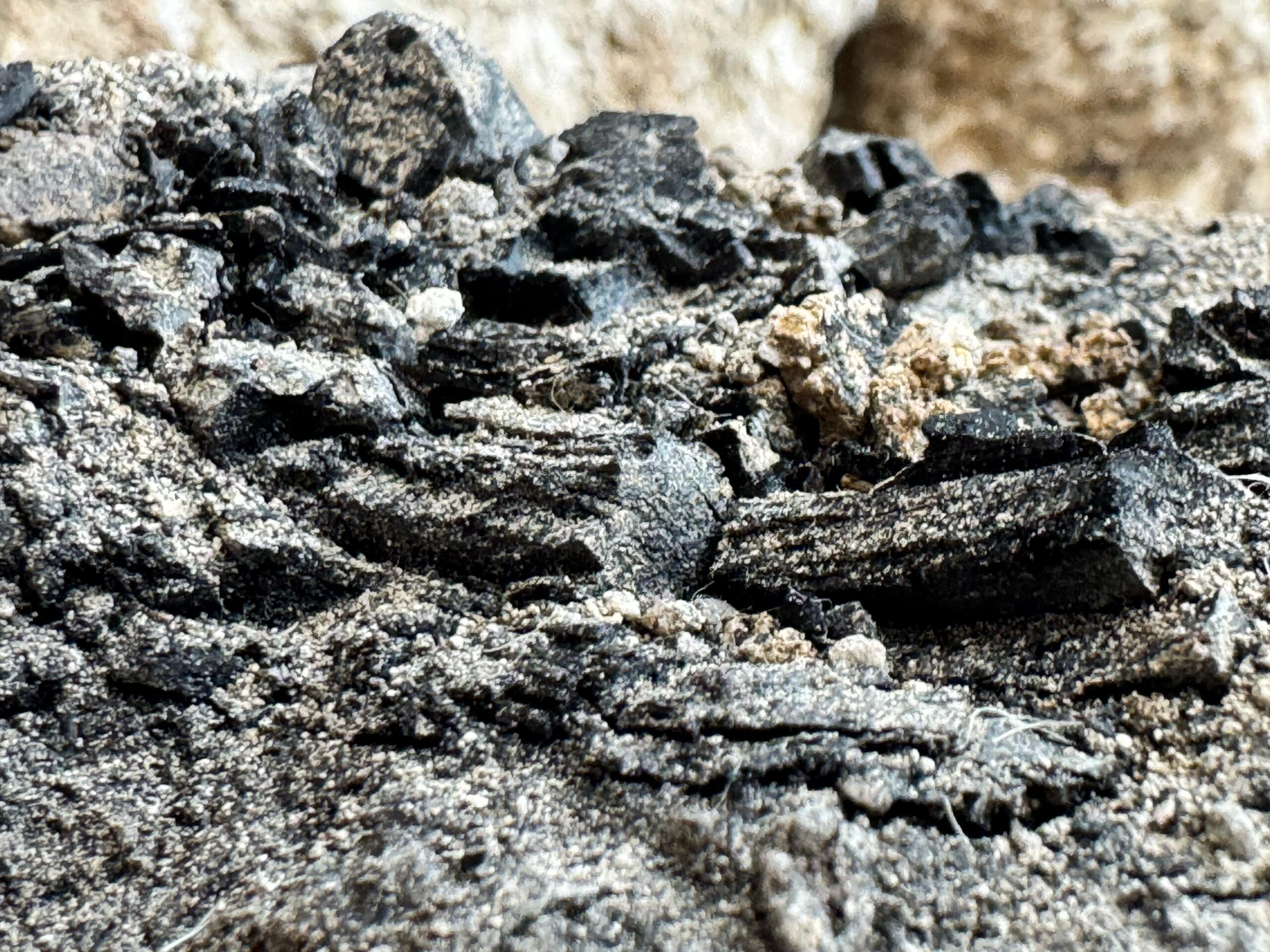
Charred beams pulled from the earth in Jerusalem’s City of David are forcing archaeologists to rewrite their timeline of the First Temple’s destruction — and offering the most tangible physical evidence yet of the catastrophe the Bible describes in stark, unflinching detail.
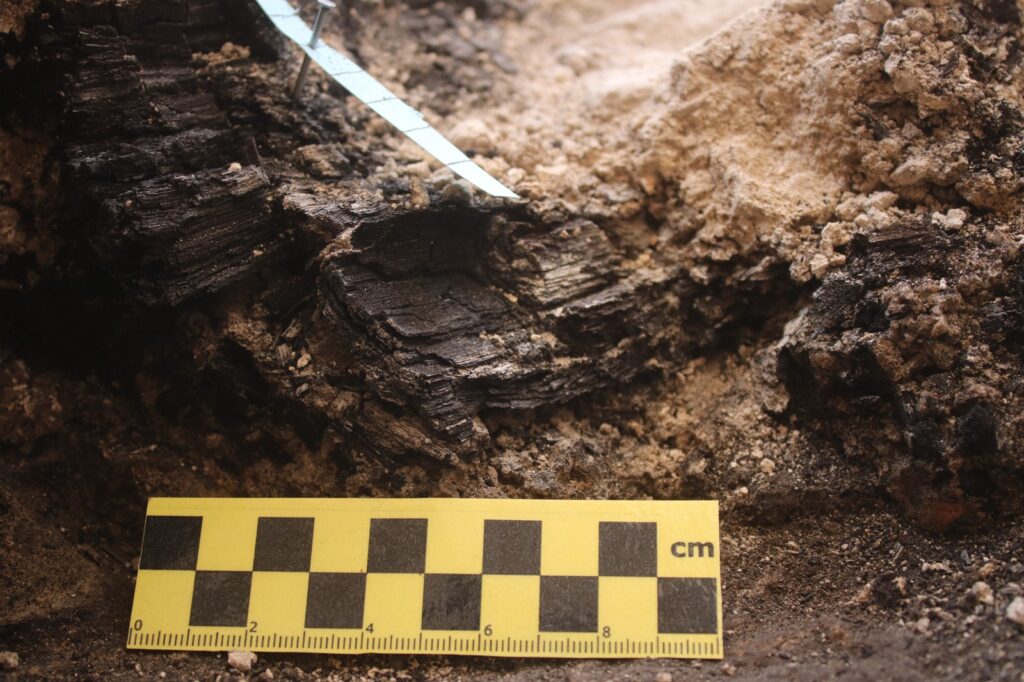
Excavators working the Givati Parking Lot dig, a joint project of the Israel Antiquities Authority and Tel Aviv University inside the Jerusalem Walls National Park, uncovered massive wooden beams burned when Nebuchadnezzar’s Babylonian army destroyed the First Temple in 586 BCE. The beams once formed the roof of an inner courtyard in a First Temple-period building. When the structure collapsed in the fire, the beams fell to the floor — and there they stayed for roughly 2,600 years, preserved by an unlikely agent: melted plaster.
“The beams appear to have served as the roof of an inner courtyard in a building from the First Temple period,” said Excavation Director Efrat Bocher. “During the destruction, they collapsed onto the floor. We believe that the plaster cladding of the building’s walls, melted by the fire, covered the charred wooden beams, and ultimately enabled their exceptional preservation.”
The find carries scientific weight beyond its emotional impact. Dr. Johanna Regev of the Israel Antiquities Authority, who is studying the beams, said their growth rings offer a level of precision rarely available to archaeologists working in Israel. “It is very rare in Israel to find wood with such a large number of growth rings,” Regev said. “Here, in the City of David, we found thick beams with many rings, offering significant research potential — with more growth rings enabling higher dating resolution. Until now we could date finds within a range of hundreds of years. Now we can attain much greater precision, narrowing the dating range down to as little as ten years.”
The book of Kings records the moment Nebuzaradan, captain of the Babylonian guard, set the city ablaze:
“And he burned the house of the LORD, and the king’s house, and all the houses of Jerusalem, and every great man’s house burnt he with fire” (II Kings 25:9).
The beams recovered in the City of David are the physical residue of that verse. Fire consumed the Beit HaMikdash — the Temple — and the homes surrounding it, and for nearly three millennia the evidence lay buried beneath the plaster that sealed it.
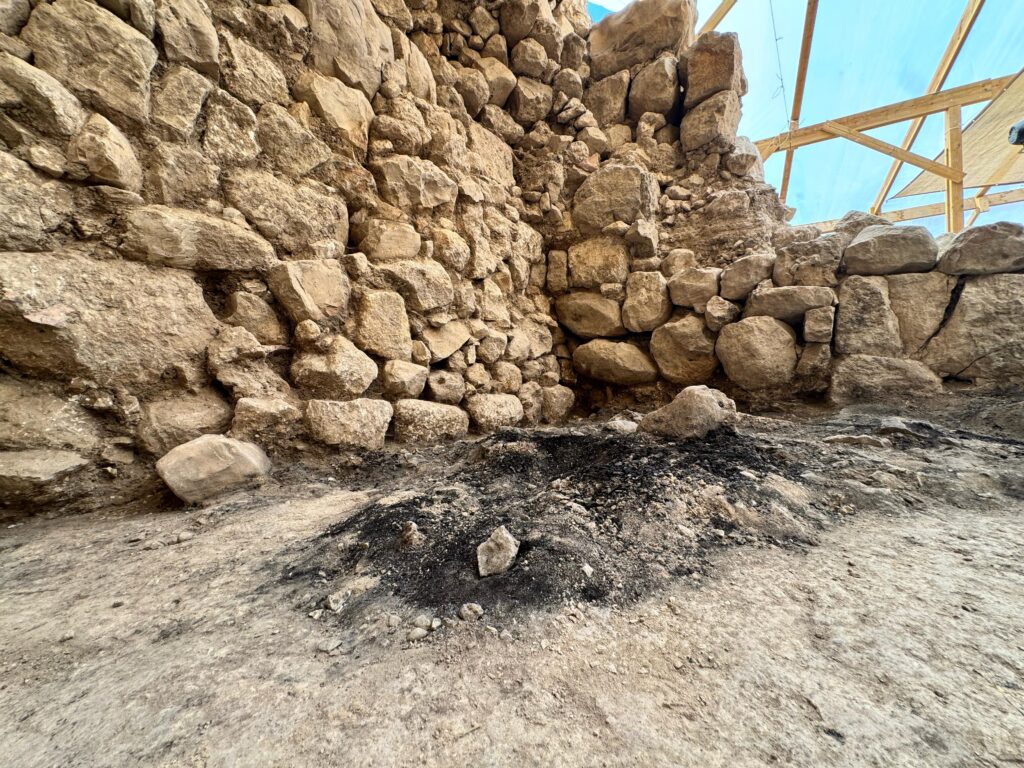
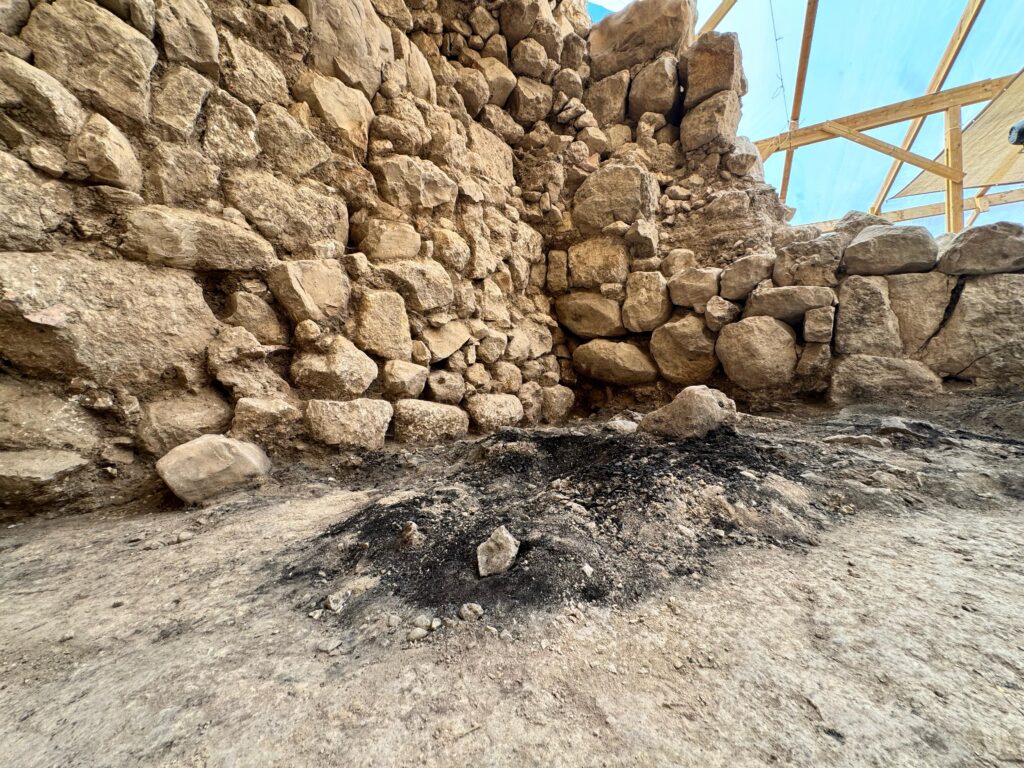
Dr. Yiftah Shalev, who co-directs the excavation with Prof. Yuval Gadot of Tel Aviv University, argues the ruins were not simply abandoned but deliberately preserved by the generation that returned to rebuild. “The concept of a landscape of memory is familiar from many cultures around the world,” Shalev said. “Preserving memory is a human need, seeking to preserve what once existed. Here we see it in its clearest form: a deliberate choice to leave ruins in place as a testament to the destruction and build the new layer over them.”

Excavation director Efrat Bocher. Photo: Koby Harati for the City of David and the Israel Antiquities Authority.
The timing of the announcement is deliberate. “We are just before Tisha B’Av,” Bocher noted, referring to the fast day that mourns the destruction of both Temples. “This discovery makes you feel that you are witnessing the very moment of destruction, the moment when it all happened. It’s deeply moving.”
Israel’s Minister of Heritage, Amichai Eliyahu, framed the find as confirmation written in the ground itself. “Jerusalem’s soil continues to provide tangible evidence of the city’s ancient past,” Eliyahu said. “The wooden beams burned in the destruction of the First Temple stand as a powerful reminder of the Jewish people’s presence in Jerusalem some 2,600 years ago. On the eve of Tisha B’Av, this discovery underscores that our connection to Jerusalem is rooted not only in faith, but also in history, archaeology, and collective memory. It is our responsibility to continue uncovering, preserving, and passing this heritage on to future generations.”
A second set of beams, and a far less careful custodian
The City of David discovery stands in sharp contrast to the fate of another set of ancient timbers — ones that may trace back to Solomon’s Temple itself, and that today sit exposed under a tarpaulin beside the Sha’ar HaRachamim, the Golden Gate, on the Temple Mount.
The late Dr. Gabriel Barkay, who directed the Temple Mount Sifting Project, documented the beams’ history for Breaking Israel News. The 1927 earthquake collapsed the roof of the Aqsa Mosque, and the beams removed during repairs were examined at the request of the Waqf by Robert W. Hamilton, the British Mandate’s director of antiquities. Hamilton identified most of the beams as dating to the eighth-century Umayyad period; the finest specimens were sent to the Rockefeller Museum in Jerusalem, where they remain on display.
The rest of the beams, Barkay said, were less fortunate. Some were stored beneath the Temple Mount in what is known as Solomon’s Stables. “When that area was turned into the Marwani Mosque, the beams were moved and many of them disappeared,” Barkay said. “The leftovers were put in the outer courtyard next to the Golden Gate.” Others were sold off entirely. “They were sold as scrap wood,” Barkay said. “It is quite possible that some ended up as firewood.”
Some of the timbers made their way to the town of Ofra in Samaria, where Israeli botanists carried out Carbon-14 testing in the 1970s. Most turned out to be cedar of Lebanon, with some cypress mixed in. The results were extraordinary. One cypress beam dated to roughly 630 BCE — about 2,600 years old, felled some 50 years before the First Temple’s destruction. One oak beam dated even earlier: 2,860 years old, cut down around 880 BCE, squarely within the First Temple period.
Barkay raised the likely explanation. “It may be that these beams were used in al-Aqsa Mosque as a secondary use,” he said. “It is possible that when al-Aqsa was first built, the builders used materials that were on site from the destroyed Jewish Temples.”
The Israel Antiquities Authority sought to preserve the beams roughly a decade ago, but the Waqf asserted ownership and blocked the effort. Some of the timbers stored beside the Golden Gate have reportedly been burned since. Barkay did not soften his assessment of what that represents. “It is a very sad situation when antiquities of this importance are destroyed,” he said. “Past experience has shown that the Waqf does not care about the antiquities of any civilization but their own. And here we see that they don’t even care to preserve artifacts from their own history.”
He went further, pointing to the removal of more than 400 truckloads of earth from the Temple Mount by the Waqf using heavy machinery. “They showed a barbaric approach,” Barkay said. “These artifacts are important for the history of all of humanity and civilization. We see here, as in other nations, that the Muslim attitude towards history and the past is entirely lacking tolerance and respect. This is a war of civilization; the Islamic civilization against all others. It is, quite simply, a cultural intifada.”
Two sets of beams, two outcomes. In the City of David, Israeli archaeologists carefully excavated, dated, and publicized wood that survived the Babylonian destruction — treating it as sacred evidence of a nation’s history. Beside the Golden Gate, timbers that may share that same origin sit under a tarp, treated as garbage, some already reduced to ash a second time. The verse from Kings describes a fire that Babylon set in 586 BCE. The beams at Sha’ar HaRachamim suggest that for some of Jerusalem’s Temple wood, the burning may not yet be finished.