



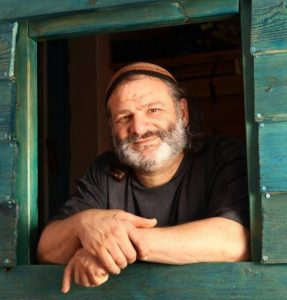
A Jerusalem-area synagogue lecture hall filled this week for a talk billed on YouTube as “The 2026 Jewish DaVinci Code — Locating our Divine Heritage Today,” delivered by Rabbi Harry Moskoff, author of The Ark Report and founder of a Jewish heritage research project that has spent two decades tracing the fate of the vessels removed from the Second Temple. Moskoff told the audience the timing was deliberate, delivered on the eve of Shiva Asar B’Tammuz, (the 17th day of the Hebrew month of Tammuz), the fast marking the Roman breach of Jerusalem’s walls that opens the Three Weeks of mourning for the Temple’s destruction. “This subject is very consequential now, more than ever before,” he said. “There’s more impact… It’s more consequential now than ever before, as you’ll see why.”
Moskoff, who moved to Israel from Toronto twenty years ago, framed his research as investigative rather than purely academic. “I really have — it’s not just a theoretical academic approach, I have that too — but I’m coming in from a very Jewish, Bible perspective,” he said. “This is something that’s really hands-on. I’ve seen for myself. I’ve been there myself. Gotten into trouble a couple of times.” He added, with a laugh in his voice, “Every investigative archaeologist worth their salt gets close to, not arrested, but takes some chances. You have to be able to do that.”
He was careful to draw a line between the project and Israeli politics. “None of my projects are politically motivated,” he told the room. “None of the things we’re going to mention are sponsored by Likud or Lapid or whoever, or Bennett; definitely not Bennett. What I do is essentially Israel advocacy through media, investigative journalism, films, and biblical archaeology.”
The vessels’ documented road from Jerusalem to Constantinople
Moskoff traced the keilim, the vessels of the Temple, among them the menorah and the incense altar, through what he said is a well-documented path after the destruction in 70 CE, citing the ancient historians Josephus and Procopius of Caesarea. “All of the historians agree on this,” he said of the vessels’ four centuries in Rome. “We have Procopius, we have Theophanes, all the sources are in the book. Yes, it’s widely accepted that, up until modern times, the theologians and academics all agreed that it was taken, until it was put in the Nea Church. From there, that’s where there’s a bit of a question.”
He described Vandal forces sacking Rome and carrying the vessels to Carthage, and the Byzantine general Belisarius later moving them to Constantinople after conquering North Africa. From there, he said, Emperor Justinian grew fearful of keeping them. “One of his Jewish ministers told him, ‘Listen, you’re about to lose your empire, you’re about to lose your fortune, and become ill because you have the Temple items. Everything happened; Rome was destroyed because of it, and Carthage was destroyed. Now it’s your turn.'” Moskoff said Justinian sent the vessels back to Jerusalem around 542 CE to the Nea Church, whose ruins he noted still stand today. “It’s right where it should be,” he said. “It’s right at the end of the Cardo. Archaeologists testify in many ways [that] that’s where it was. It was huge.”
A farmer, a cave, and a story kept for a lifetime
Much of the lecture centered on a story Moskoff said first drew him into this research fifteen years ago, drawn from Ruchoma Shain’s memoir All for the Boss. He described a Jewish farmer who, in 1929, fell with an Arab laborer into a hidden chamber roughly ten to fifteen feet deep. “He sees that there are many of the actual, holy artifacts belonging to the Temple, He recognizes them, and he sees them.” Moskoff said the two men fought over the discovery and the Jewish farmer survived, then covered the cave, made a map of his property, and carried the secret for months before traveling to New York to consult a Chief Rabbi in Poland (the Chofetz Chaim) through intermediaries. The rabbi’s verdict, as Moskoff related it: “Yes, actually that really is the spot, you found the spot of the Temple. But it’s not the time to reveal it yet. Not only that, but the farmer himself will forget the whole thing happened. You won’t be able to tell anybody until the farmer passes away, then it will come up again.”
Moskoff said he eventually located the cave himself using landmarks passed down through family accounts and has since produced a short documentary, also titled The Ark Report, featuring Knesset member Danny Danon. “For two thousand years, believe it or not, this place — there’s nothing built on it,” he said. “It’s really something special.”
He described the site as caught between two owners. “That particular parcel of land was bought by a company called Extell Developments,” he said, adding that part of the surrounding land remains held by the Greek Orthodox Patriarchate, which he said has been selling property across Israel because “they get no money from Greece, so they are completely broke.” He said his team is preparing geological testing of roughly a dozen caves in the area, ranging from five to fifteen feet deep, and that the Israel Antiquities Authority is aware of the effort. “I’m making it public officially, like, starting now,” he said. “It doesn’t have to be a secret anymore.”
The professor locked in a room at St. Anne’s
Moskoff said the smaller ritual vessels were moved in 614 CE to the Church of St. Anne in Jerusalem’s Muslim Quarter, and told a story about a Hebrew University numismatics professor he identified only as “Yakov,” hired after the 1967 war to appraise a coin collection at the church. Locked alone in a room to work without distraction, Moskoff said, the professor found a hidden door, descended a staircase, and came upon a chamber containing ancient objects bearing Hebrew inscriptions. “He says to himself — he actually wrote this in his memoir — ‘Oh my god, these are Temple items. The Temple items are in Jerusalem.'” Moskoff said a monk discovered him minutes later and had him removed. Months afterward, when the coin collection was stolen, and police asked the professor to return and assist, he refused a further assessment. “He writes, quote, ‘They’re the biggest bluffers in the world,'” Moskoff said, noting the profanity of the original remark had been softened for print.

The Vatican’s basements
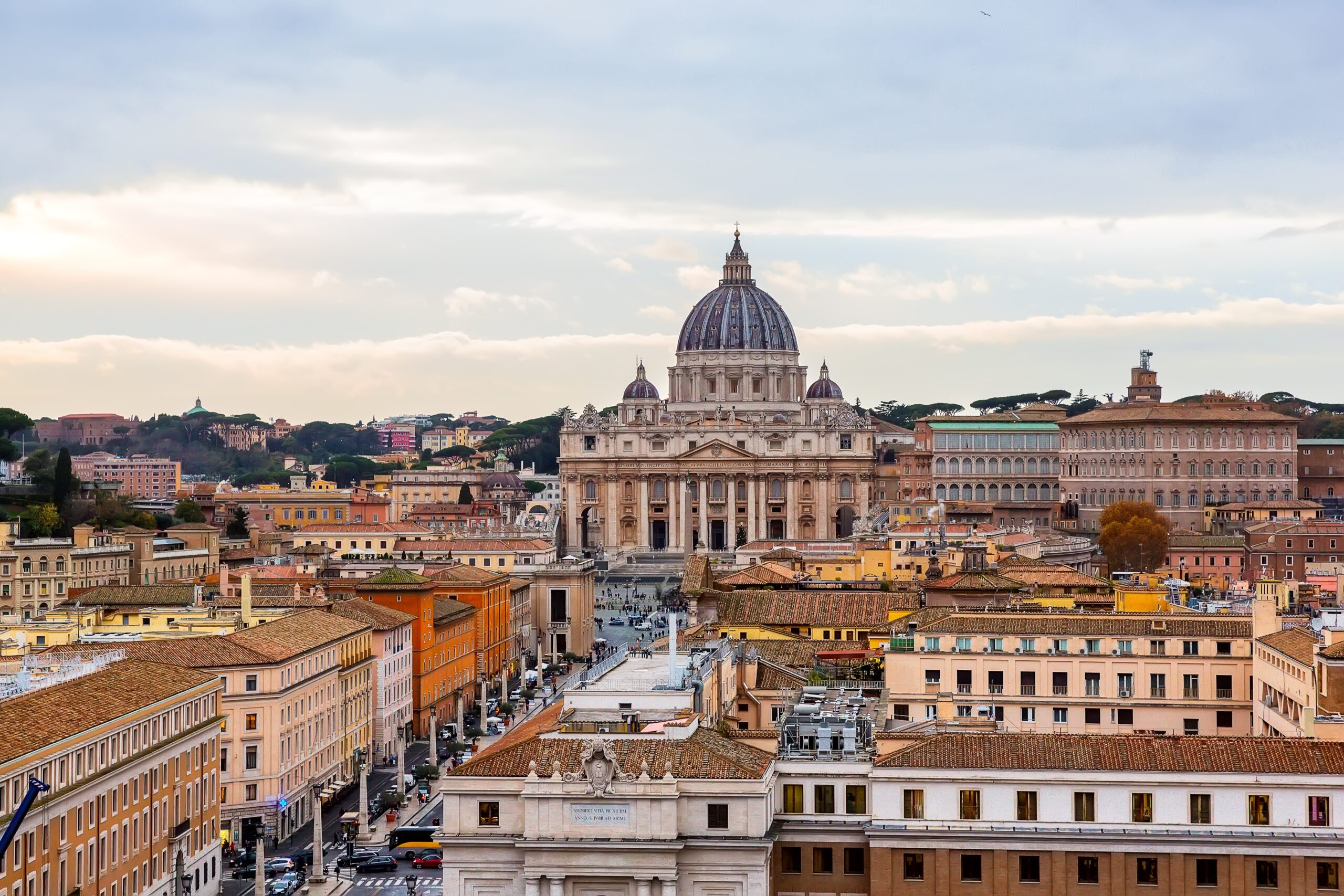
Moskoff described decades of contact with Vatican officials over what he believes is a much larger collection held underground. “For centuries and centuries, the Vatican has always said, ‘We don’t have anything.’ But very recently, since I’ve been there, they neither confirm nor deny that they have it. They’re much more careful,” he said. He argued Israeli intelligence likely already has a clear picture of the Vatican’s holdings. “We have technology. Israel has a satellite, the Mossad, for God’s sake. We could find out if we want to. But the government of Israel actually already knows what’s there.”
To illustrate that claim, he recounted the story of a French-born Jewish physician who, decades ago, was reportedly offered a look at Temple relics inside the Vatican by a friend whose father was a senior Vatican official, on condition of conversion to Christianity. Moskoff said the man ultimately declined to convert or to view the items on his rabbi’s advice, but was told what awaited him: “The golden headplate of the High Priest, they have at least one, pretty much for sure, maybe two, They have the parochet, standing in a glass, vacuum-sealed case, with a tear in it. You have part of a Torah scroll.” Moskoff said the man later briefed senior Israeli officials, including then-president Shimon Peres, on what he had been told. “Everything I quote, my wife was there; everything is there. That’s what he said. Large items, small items.”
Asked directly whether the menorah is more likely to be in the Vatican or in the Jerusalem-area cave, Moskoff didn’t hedge. “I can say the menorah in the Vatican is almost a hundred percent,” he said. “The one in the cave, I would imagine, also, unless it got lost on the way. If I were to say pick one or the other, I would say it’s in the Vatican and not in the cave.”
Where the Ark itself is, in his view
On the Ark of the Covenant, Moskoff said his research holds that it never left the Temple Mount. “The Ark itself never moved, for two thousand seven hundred years,” he said. “It’s actually in a chamber, a real room, with the same sanctity as the Holy of Holies, directly underneath.” He placed the site southwest of the Dome of the Rock rather than beneath it, a position he said is shared by other researchers he works with, though he acknowledged it isn’t universal. “There are different theories,” he said, “but my theory holds up through the Mishnah, other writings — biblical, historical, archaeological, topographical.”
A synagogue on the Temple Mount, and the Abraham Accords
The lecture closed on the Temple Mount itself, which Moskoff said has become part of active diplomatic discussion tied to a possible Saudi accession to the Abraham Accords. He said officials have floated building a small synagogue on the Mount’s eastern side, near the Golden Gate, an idea he attributed to Chief Rabbi Mordechai Eliyahu in the 1990s, as a step toward broader public and Saudi acceptance of a Jewish presence there without touching existing Muslim structures. “There’s been four or five synagogues, believe it or not, on the Temple Mount over the centuries since the destruction,” he said. “That lasted fifty years, twenty years; people don’t realize that, but it’s actual fact.”
Pressed on when such a structure might be approved, Moskoff didn’t offer a timeline. “I don’t know the answer to that question,” he said. “It’s a great question, I wish I knew. It depends on a variety of factors, all of which are out of my hands.”