

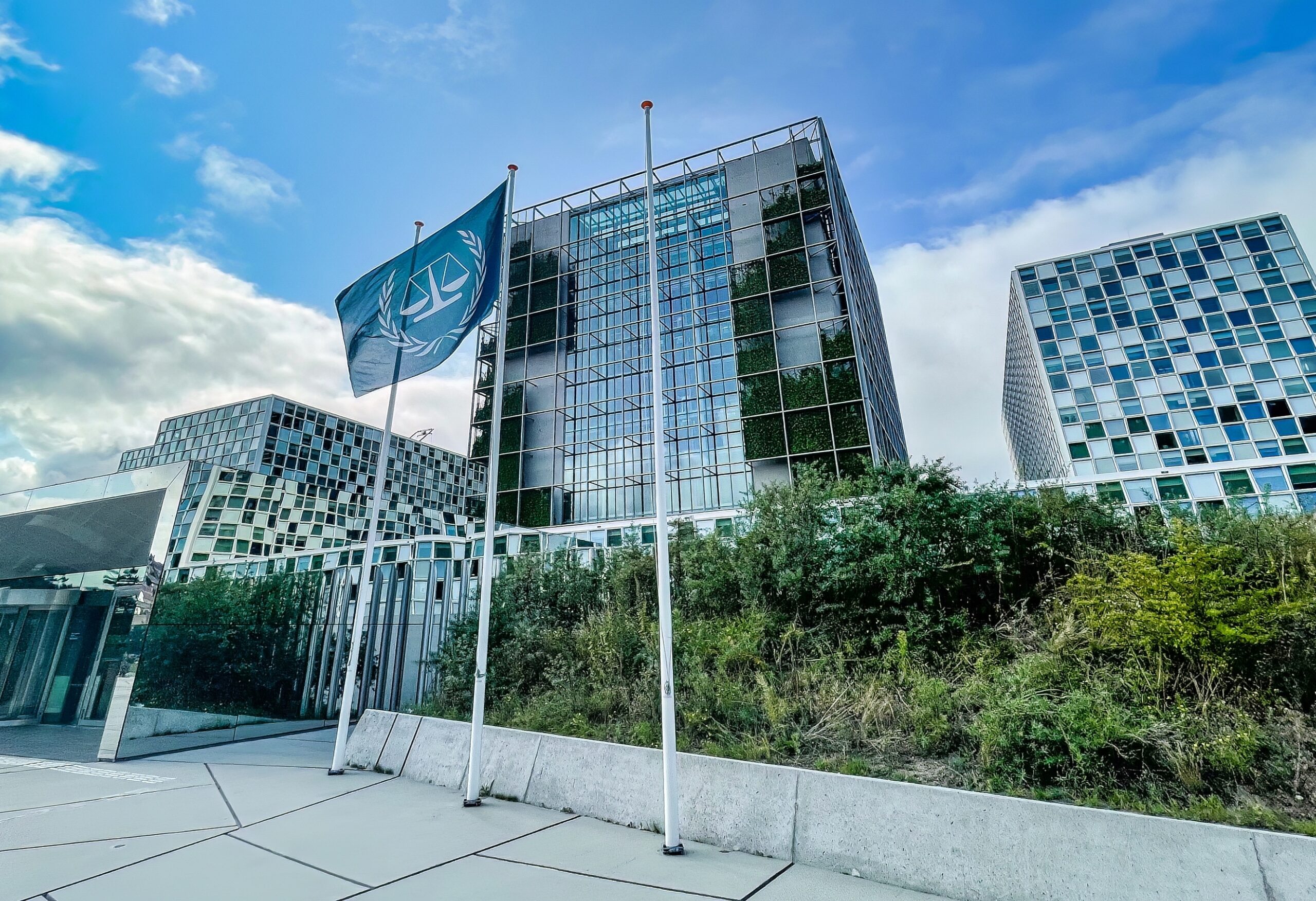
Secretary of State Marco Rubio announced Monday that the United States is launching a sweeping diplomatic campaign to dismantle the International Criminal Court, calling the tribunal a direct threat to American sovereignty and vowing to use every tool available to shut down its ability to operate.
The State Department said the campaign will feature a whole-of-government response, including visa revocations and travel bans for ICC personnel, expanded sanctions on the court and affiliated organizations, and diplomatic pressure on allied nations to withdraw from the court entirely. A senior State Department official said no diplomatic option is off the table. Rubio laid out the case in a Wall Street Journal op-ed, writing that the United States is launching a diplomatic campaign built on a simple message: sovereign states over globalism, and that those who benefit from American security cannot stand idly by while those who provide it are targeted.
In a video message released alongside the announcement, Rubio said Americans have governed themselves as a free and sovereign people for 250 years, choosing their own leaders and standing for judgment before a jury of their peers. He said the ICC now threatens that system directly, warning that Border Patrol agents, Marines, and federal prosecutors could all face prosecution by foreign judges thousands of miles away for doing their jobs. He said the ICC is waging a war on American sovereignty, in his words, “not with bullets or missiles, but with statutes and compacts.” He closed the video with a direct warning: “If they believe they can deprive us of our sovereignty, we will teach them the full meaning of American resolve.”
Neither Washington Nor Jerusalem Ever Signed On
The single fact that undercuts the ICC’s entire claim of authority over both the United States and Israel is this: neither country ever joined the court. The ICC was established in 2002 by the Rome Statute to prosecute genocide, war crimes, and crimes against humanity, and it claims jurisdiction only when a member state is unable or unwilling to prosecute such crimes itself. The United States has never ratified the Rome Statute. Israel has never ratified it either. Both countries maintain functioning, independent military and civilian justice systems fully capable of investigating their own personnel, which is precisely the condition under which the ICC’s own founding treaty says it has no business getting involved.
Israel has gone further, rejecting the court’s jurisdiction outright and arguing that the Palestinian Authority’s ICC membership cannot manufacture jurisdiction over Israeli citizens who never consented to it, a position rooted in the explicit terms of the Oslo Accords. The court has no army, no police force, and no enforcement mechanism of its own. It depends entirely on the voluntary cooperation of member states to execute even a single arrest warrant.
A Pattern of Targeting Americans and Israelis, Not War Criminals
The ICC’s record over the past two decades shows a court that has repeatedly aimed its limited resources at the United States and Israel while steering clear of regimes that commit atrocities on a far larger scale. In March 2020, ICC prosecutors opened an investigation in Afghanistan that explicitly included American troops and intelligence officers, despite the fact that the US military and Justice Department have their own robust systems for investigating and prosecuting misconduct by service members.
The court’s most brazen move came in November 2024, when then-chief prosecutor Karim Khan sought arrest warrants against Prime Minister Benjamin Netanyahu and then-defense minister Yoav Gallant over Israel’s military campaign against Hamas in Gaza. These came alongside warrants for Hamas terrorists Yahya Sinwar, Mohammed Deif, and Ismail Haniyeh. The warrants against Netanyahu and Gallant were issued weeks after Trump’s reelection. Notably, even Khan’s own application did not charge Israel with genocide, since genocide is a legally distinct charge from war crimes or extermination and requires proof of specific intent to destroy a people, a standard the prosecutor’s own filing did not attempt to meet.
That distinction matters because the genocide label has been repeated so often in activist and academic circles that it has taken on the appearance of settled fact. It is not. Belgian philosopher Maarten Boudry, writing after describing the social pressure inside European universities to endorse the genocide charge, called the accusation a claim that defies logic and evidence. A war fought against a terrorist organization that embeds itself in hospitals, schools, and civilian homes, that started the war with a massacre of 1,200 people on October 7, 2023, and that continues to hold hostages more than two years later, is not genocide. It is self-defense against an enemy that has made Gaza’s civilians into human shields by design. The ICC’s own prosecutor understood the distinction well enough not to charge it. The activists calling it genocide anyway are not making a legal argument. They are making a political one.
The Court That Cannot Police Itself
While Khan pursued Netanyahu and Gallant, the court’s own house was collapsing around him. Khan was accused by a female staffer of non-consensual sexual contact, including an incident on a foreign trip in which he allegedly asked her to lie down with him in a hotel room. He took a voluntary leave of absence in May 2025 as the allegations mounted, and a second woman came forward months later with similar accusations. A United Nations investigation into the claims found that the prosecutor had committed serious misconduct, and in June 2026 the court’s own oversight body formally suspended him and referred him for removal, the first time in the ICC’s history a chief prosecutor has been suspended by its governing body.
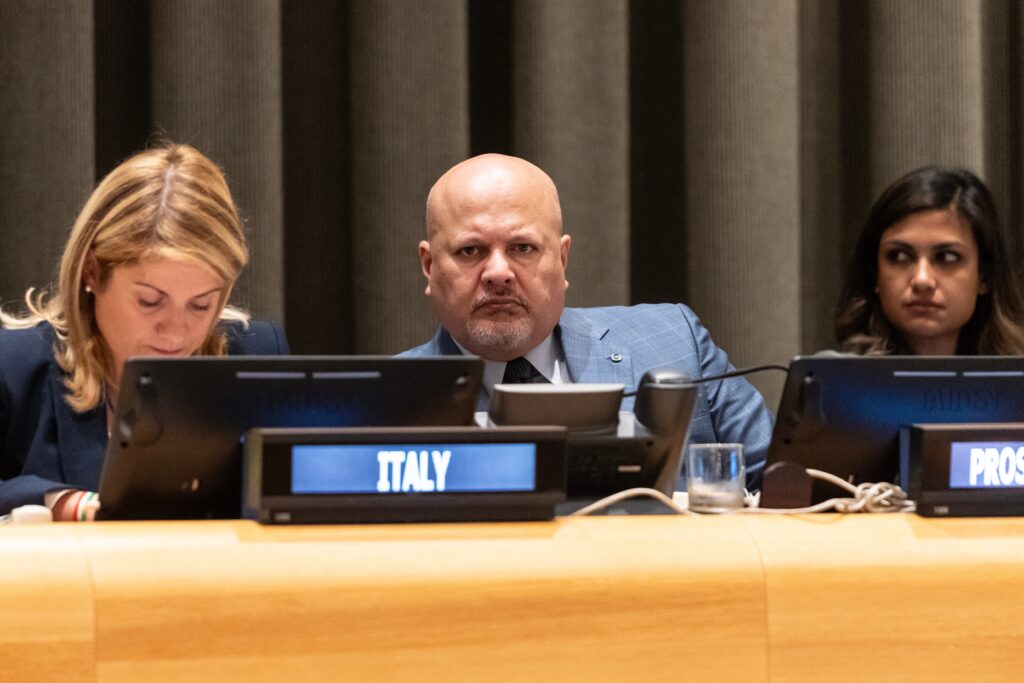
The timing is not incidental. Reporting has since shown that Khan moved to finalize the arrest warrants against Netanyahu within days of the misconduct allegations surfacing, raising serious questions about whether the case against Israel’s leadership was driven by law or by a prosecutor scrambling to control a personal scandal. Three ICC judges have separately sued the Trump administration over the sanctions imposed on them, an unprecedented spectacle of sitting judges suing a sovereign government while their own chief prosecutor stood accused of abusing a subordinate.
This is the institution demanding that American Marines and Israeli soldiers answer to its judgment.
Global Accountability or Global Overreach
Rep. Ilhan Omar called the campaign reckless and said the ICC exists precisely to ensure that perpetrators of the gravest crimes cannot escape justice, arguing that the United States should join the court rather than attack it. That view treats the ICC as a neutral instrument of justice. The record tells a different story: an unelected body of appointed officials, financially and structurally unaccountable to the nations whose citizens it seeks to try, led until last month by a man found to have committed serious misconduct against his own staff while building a case against the democratically elected leaders of the one country in the Middle East that answers to its own courts, its own press, and its own voters.
The United States and Israel are not defying international law by refusing to recognize the ICC’s authority over their citizens. They are declining to submit their sovereignty and their soldiers to a court that never had jurisdiction over them in the first place, and that has now shown it cannot even govern itself. Dismantling that court, brick by brick, is not an attack on international justice. It is a refusal to let a broken institution wear justice as a mask.