

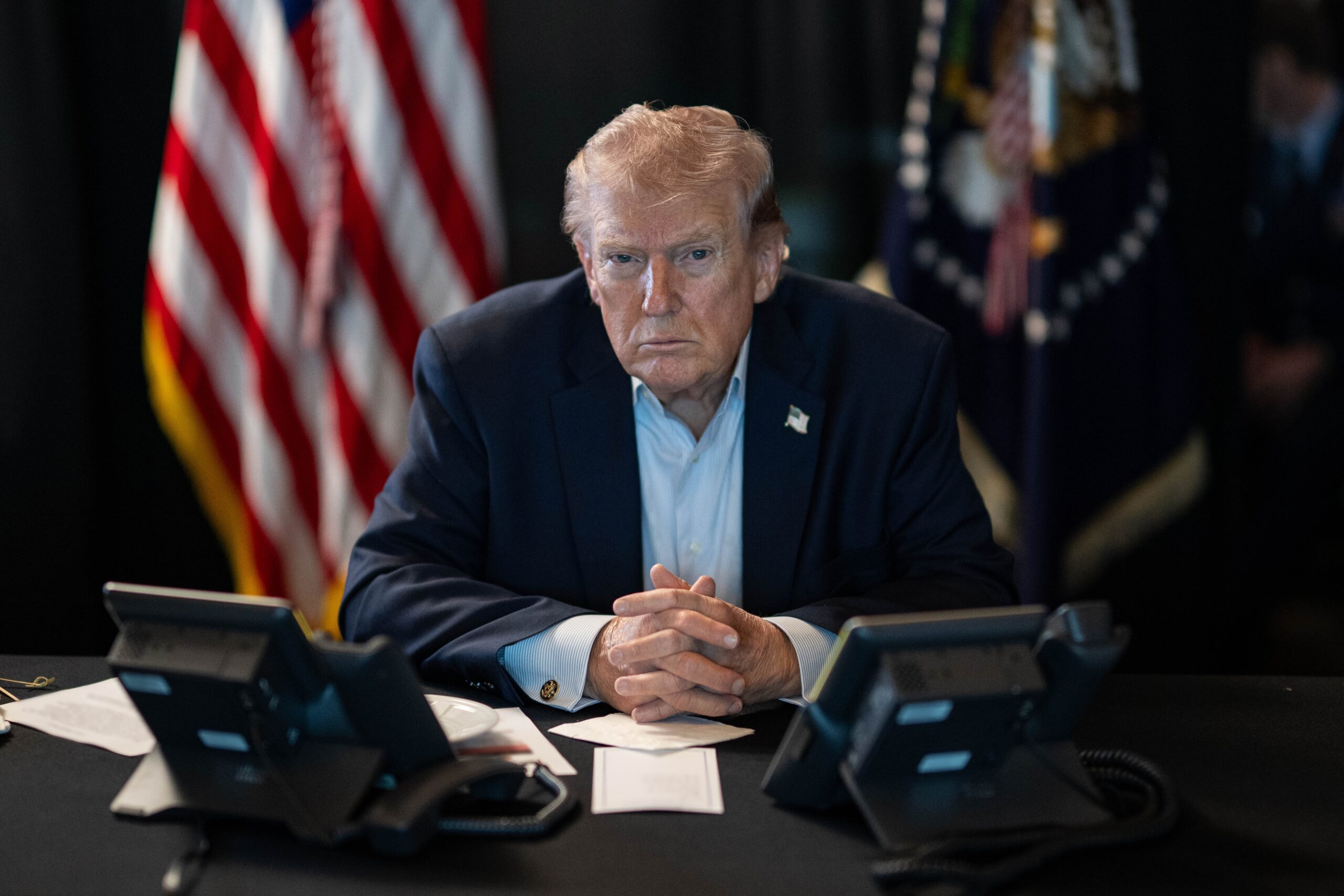
Israel handed the United States a specific warning this week: Iran has devised a new plot to kill President Donald Trump. Two sources familiar with the matter confirmed the intelligence transfer to CNN, adding a fresh layer of danger to a ceasefire between Washington and Tehran that is already coming apart at the seams.
One source said the warning arrived this week and concerned a defined plot, distinct from the steady flow of general threat intelligence the US has been receiving for weeks. American officials have not independently vetted the Israeli report, and two sources said the US was not tracking this particular plot before Jerusalem raised it. Some officials suggested the timing may be one input among several shaping Trump’s decision on whether to escalate US military action against Iran.
Israel’s role in the current warning
The Wall Street Journal first reported the Israeli intelligence, which two sources told CNN concerned a specific, newly devised assassination plot rather than the broader chatter US agencies have monitored in recent weeks. The White House declined to comment directly on the Israeli warning, instead pointing reporters to Trump’s own recent remarks on Iranian threats against his life.
“They want to take out the US leader: me,” Trump told reporters this week. “I’m on whatever list. I saw this morning I’m on every single one of their lists. And so far, I guess I’ve been a bit lucky, but maybe that doesn’t last very long. These are evil, sick people. And we have to root out that cancer.”
Trump separately said he had recently learned of a new list ranking him as Iran’s top assassination target, though it was not confirmed whether this referred to the same Israeli intelligence.
Some officials inside the American intelligence community remain cautious about the source. One official told CNN the Israeli report is viewed in part as an attempt to influence Trump’s calculus on Iran, and noted that skepticism toward Israeli reporting exists within parts of the community. Israeli Prime Minister Benjamin Netanyahu has been openly skeptical of Trump’s diplomatic track with Tehran and has clashed with the administration over Israeli operations in Lebanon that complicated the talks. The two leaders spoke by phone this week, and Netanyahu is expected in Washington soon.
Israeli intelligence has tracked Iranian intentions toward Trump for years, and Jerusalem has repeatedly been the first to surface threats that later shaped American policy.
A pattern of Iranian threats against Trump
The current warning is part of a much longer record. The US government has said for years that Iran may seek to kill Trump in retaliation for the January 2020 strike he ordered that killed Qasem Soleimani, commander of Iran’s Islamic Revolutionary Guard Corps Quds Force.
In 2022, the Biden administration publicly warned Iran against attacking American citizens after the Justice Department disclosed that a member of the Revolutionary Guard Corps had plotted to assassinate John Bolton, Trump’s former national security adviser. Then-national security adviser Jake Sullivan stated plainly that an attack on any American citizen, current or former official, would bring severe consequences from Iran. Two years later, during Trump’s 2024 campaign against Kamala Harris, the Biden administration issued a quieter warning to Tehran, making clear that an attack on Trump himself would be treated as an act of war.
At the funeral this week for Iran’s slain Supreme Leader, Ayatollah Ali Khamenei, killed in a US strike at the start of the current war, mourners carried banners reading “We Will Kill Trump,” and other posters called for Trump and Netanyahu to be killed together. Khamenei’s son and successor, Mojtaba Khamenei, has not appeared in public since the strike that killed his father, but posted a vow of vengeance: “This vengeance is what our nation is demanding, and this must definitely be done.” In separate remarks aired on Iranian state television, he added, “We pledge to take revenge for the pure blood of you and all the martyrs of these two wars from the criminal and disgraceful killers.”
We pledge to avenge your pure blood and the blood of all the martyrs of these two [recent] wars by taking revenge against the criminal, disgraceful murderers. This vengeance is what our nation is demanding, and this must definitely be done.
— Ayatollah Mojtaba Khamenei (@MKhamenei_ir) July 11, 2026
Trump’s response and the limits of retaliation
Trump answered the threats in characteristically blunt terms on Truth Social, writing that 1,000 missiles were “Locked and Loaded and aimed at the Islamic Republic of Iran, with thousands of more to immediately follow,” should Iran act on any plot against him. He said orders were already in place for the US military to “completely decimate and destroy all areas of Iran” for a full year if necessary.
US President Donald Trump shared a post on his social media platform Truth Social, "The Islamic Republic of Iran has asked us to continue “talks.” We have agreed to do so, but the United States has stated to them, in no uncertain terms, that the Cease Fire is OVER! Thank you for… pic.twitter.com/ZTYzCvk9B4
— United News of India (@uniindianews) July 10, 2026
Legal and national security specialists note that no formal mechanism exists for automatic retaliation. Garrett Graff, author of a history of federal continuity-of-government planning, said the United States has never activated a technical “dead man’s switch” and that presidential succession is governed by the 25th Amendment and the Presidential Succession Act of 1947. Under that framework, Vice President JD Vance would immediately assume the presidency and full command authority if Trump were killed, and would decide independently how to respond. Graff said Trump could still leave lawful standing instructions to a successor, but that any claim of an automatic launch order triggered by his death would raise serious legal questions.
The Treasury Department added new pressure of its own this week, sanctioning Ali Ansari, an Iranian financier accused of managing assets tied to Khamenei and other regime figures. Treasury Secretary Scott Bessent said the department would keep using every available tool to isolate Iran’s leadership from the global financial system. Iranian Foreign Minister Abbas Araghchi called the sanctions a violation of last month’s memorandum of understanding, writing that Iran had kept its word while the US Treasury had not.
A ceasefire under strain
The renewed threats against Trump have emerged alongside the collapse of the 60-day ceasefire that had halted direct fighting between the US and Iran. Iran’s Revolutionary Guard Navy closed the Strait of Hormuz this week after firing a warning shot at a vessel it said had strayed from an approved route, reviving the shipping disruptions that sent oil prices climbing at the start of the war. Despite the resumption of strikes, American officials say technical talks with Iran continue quietly, with Oman mediating and Washington and Tehran still working toward a nuclear agreement by mid-August.
Israel’s warning this week landed at the exact moment the ceasefire had begun to fracture. While Trump weighs how far to go against Tehran, Iran’s new leadership is publicly promising blood for blood.