



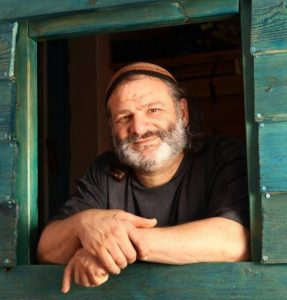

Every year, the United Nations General Assembly passes a stack of resolutions condemning Israel that dwarfs its condemnations of every other country combined. Diplomats call it disproportionate. Israeli officials call it obsessive. Rabbi Mendel Kessin, in a Torah lecture delivered this week, called it inevitable — and said the mechanism behind it was set in motion four thousand years ago, long before there was a General Assembly to convene.
Kessin’s lecture laid out what he described as the four hanhagot, the governing behaviors through which God directs history. He argued that understanding them explains not only ancient events but the daily news cycle, including why the community of nations cannot stop itself from turning on the Jewish people the moment it unites.
Why, of all the nations on earth, does hostility toward the Jewish people surface every time the nations of the world come together?
Kessin explained that when the nations gather, they become hostile towards the Jewish people. This hostility has its root in Babel. After the Flood, mankind had one language and one culture, and God had given that unified mankind a second chance to carry out its purpose after Adam and Noah had each in turn forfeited theirs. Instead, humanity built a tower to make war on God. At that point, Kessin said, the task passed to a single man, Abraham: “So God said, enough is enough. I’m now going to take the hanhagah away from mankind and give it to this one guy who seems to be promoting the belief in me. His name is Abraham Avinu.”
But a lone monotheist standing against a unified human race would not survive long. “They’re going to kill Avraham,” Kessin said of the rest of mankind. “He’s only one guy… So I have to now — and this is where you begin to see the hanhagah of yichud — I have to keep Abraham alive against the other people, because ultimately they’re going to try to destroy Avraham, which is exactly what we call antisemitism.” God’s solution, in Kessin’s telling, was to split mankind into seventy nations and confound their languages, so that instead of uniting against Abraham, they would turn on each other. “Nations are always warring with each other,” he said. “They fight each other because they want land, they want tribute, they want money. So while they’re fighting each other, Avraham will survive.” He traced the pattern forward through Jewish history: “Christianity was killing Jews in Europe, so the Jews ran to the Middle East. Then, when you had Islam killing — and I’ll explain that — Islam killing Jews, so they ran back to Europe. So the Jews are always caught in the middle, and that’s how they survive.”
That, Kessin argued, is the key to the modern era. As the world approaches what he called the Messianic era, the original purpose of the division into seventy nations has run its course. “As we come near to the end of time,” he said, “the Jews have done the tikun, or almost all of the tikun. It’s no longer necessary to keep the nations split, because there’s no point. The Jews did the tikun, so they’re not going to kill the Jews. It’s already done.” So God, in his account, reverses the very split He created: “I don’t care if the nations come together as one. So what? It’s already done. So guess what — I want them to be as one.” Kessin located the mechanism in the founding of the United Nations itself: “Voila, as they say in French — the United Nations. Now you know why there’s a United Nations, because the original division of mankind into nations was to allow the Jews to survive, Abraham to survive. But after four thousand years, the tikun is done. So there’s no more point in allowing the nations to be divided. I can now bring them together.”
But when nations that were separated specifically to keep them from uniting against the Jewish people finally do come back together, Kessin said, the old instinct reasserts itself, and he did not soften the point: “God knew that and that’s why he split the nations, so they can fight each other and not fight the Jews. And what do they do? They come and they issue resolutions against the Jews. I think like eighty percent of all the resolutions of the General Assembly is against Jews, which is exactly why God split them in the first place.” He pointed to the second chapter of Psalms, written a thousand years before the UN Charter was signed, and read it as description rather than metaphor: “Why do the nations excite, right, on Jews and on the Messiah? Why? Because that’s what happens when they get together and sit down in one building — get the Jews.”
“Why do the nations rage, and the peoples imagine a vain thing? The kings of the earth set themselves, and the rulers take counsel together, against the LORD, and against His anointed” (Psalms 2:1-2).
Kessin read this as a description, not a metaphor. The nations gather, and the gathering itself produces the hostility. He noted that the overwhelming majority of General Assembly resolutions condemning any single country are directed at Israel, a pattern he described as the direct continuation of the dynamic that began at Babel. Splitting the nations protected Abraham by keeping them occupied with each other. Reuniting them, in his telling, removes that protection and lets the old target reappear.
“I’m not going into the origin of antisemitism,” Kessin said, “but you always see antisemitism when there’s a unification of nations. Never fails.”
Kessin situated this within a larger structure he called the hanhagot, the acts through which God runs history. The first, hanhagat hakiyum, is the fixed order of nature itself — the laws of science, he said, exist only because every one of them, down to the reason there are three hundred thousand species of beetle, serves the ultimate purpose of creation. The second, hanhagat mishpat, is strict justice: reward and punishment, opportunity and suffering, meted out in proportion to human choice. Kessin argued that this second hanhagat explains why God cannot simply reward good deeds in this world — a reward given immediately would destroy free will, since no one would ever choose to sin again if virtue were paid out on the spot. The third hanhagah, which Kessin said operates above strict justice, is God acting as rofeh, healer, guaranteeing that creation reaches its tikun, its rectification, regardless of whether any individual generation deserves it. It is this third hanhagah, he said, that kept the line of the covenant alive through Adam’s failure, through the Flood, through Babel, and down to Abraham — and it is this same guarantee, he argued, that is now visible in the geopolitics of 2026.
Kessin’s argument was that the persistent isolation of Israel at the UN, the disproportionate resolutions, and the diplomatic pressure Israel faces whenever the international community closes ranks are not a modern anomaly to be explained by politics alone. They are the resurfacing of a pattern set at the Tower of Babel, arriving on schedule as the nations of the world do exactly what they were separated to prevent them from doing: standing together, and finding the same target they were kept apart to avoid.
The numbers from this past year make Kessin’s point better than any commentary could. In 2025, the General Assembly adopted fifteen resolutions targeting Israel and only eleven addressing the entire rest of the world combined — every other conflict, dictatorship, and war crime on earth put together did not draw as much of the Assembly’s attention as the one Jewish state. When the Assembly voted this month to endorse an ICJ advisory opinion demanding Israel bow to the UN’s own bureaucratic authority in Judea and Samaria, it passed by a lopsided 139 to 12. This came after President Trump delivered a genuine peace agreement, and the Security Council itself passed Resolution 2803. The war in Gaza had ended. Hostages were coming home. And still the Assembly could not resist one more resolution demanding that Israel answer to a body that has spent decades manufacturing legal theories against the only democracy in the Middle East.
This is theater, and everyone in that room knows it. UNRWA, an agency that Israel has documented as employing Hamas operatives — some involved directly in the October 7 massacre — was rewarded with a mandate renewal instead of being shut down. The same Assembly that cannot condemn Iran’s nuclear program with any urgency found time to pass a resolution reasserting that Israel is an “occupying power” in its own biblical heartland. There is no “West Bank.” There is no “occupation.” There is Judea and Samaria, the land God promised Abraham and his descendants, and every UN resolution that pretends otherwise is not a neutral legal document — it is a vote against the covenant itself, cast by the reassembled nations exactly as Kessin described.
The Trump administration has been more willing than any before it to say this plainly, and Israel should not mistake polite European abstentions for goodwill. A body that produces more condemnations of one small country than of every dictatorship, terror regime, and aggressor state on the planet combined has disqualified itself as a moral authority. It has confirmed, instead, that it is functioning exactly the way the Sages would recognize: the nations, gathered together, doing what the nations do.