




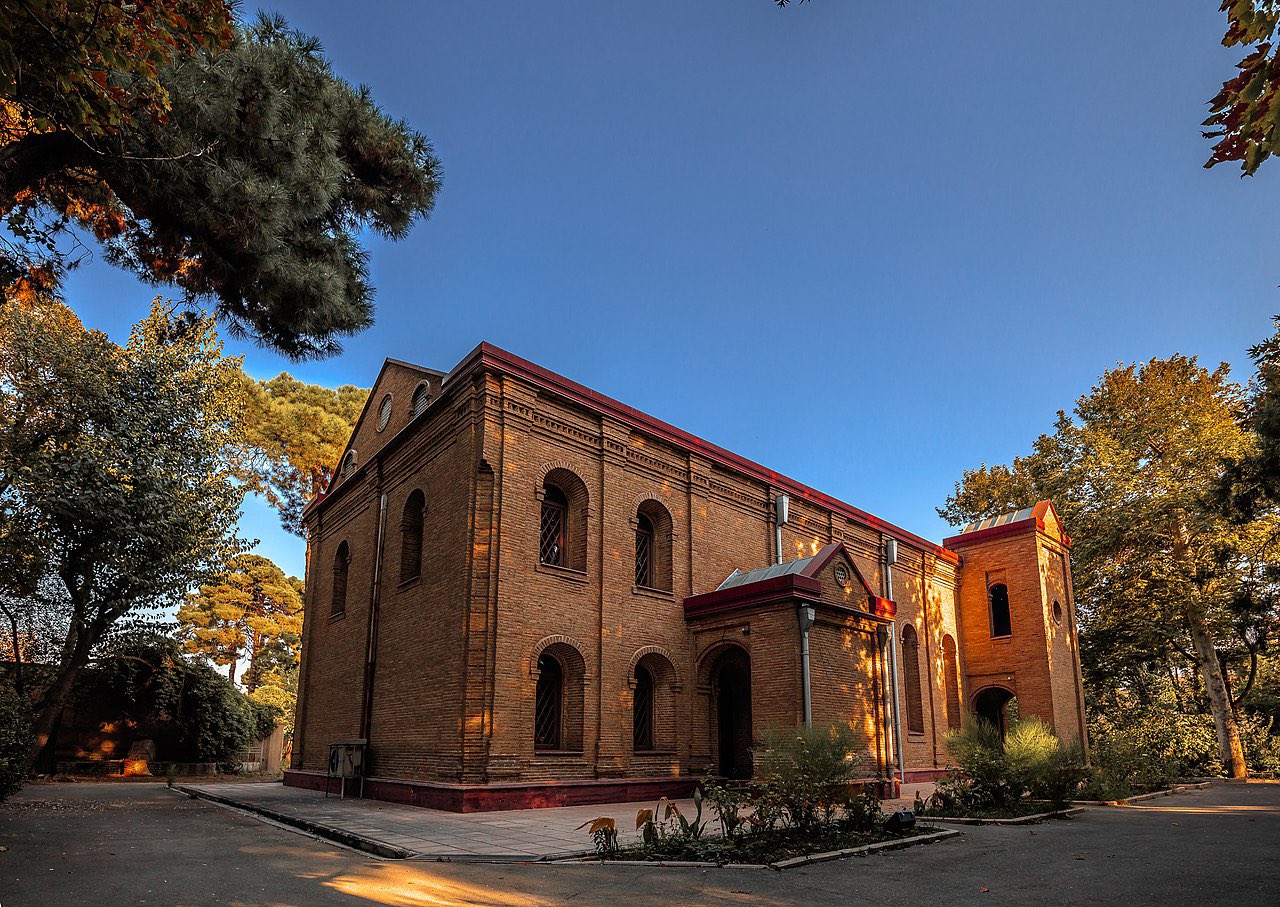
The Islamic Republic of Iran is preparing to confiscate St. Peter Evangelical Church in Tehran, the country’s oldest Protestant church, and expel the 20 families who have lived on its historic compound for years. The move, confirmed by church leaders, human rights monitors, and multiple international outlets this week, marks the most significant assault yet on what remains of organized Christian worship inside the Islamic Republic.
St. Peter’s, also known locally as the Qavam Church after its address on Si-e-Tir Street, was founded in 1876 by American Presbyterian missionaries on land granted by the Qajar monarch Naser al-Din Shah. For nearly 150 years it has served Tehran’s Armenian and Assyrian Christian community. Iranian security forces are now moving to end that history.
IRAN IS CONFISCATING THE ST PETER’S CHURCH COMPLEX IN TEHRAN, EVICTING 20 CHRISTIAN FAMILIES & FORCING THEM INTO POVERTY.
— The Aramaic Wire ܣܘܪܝܐ (@AramaicWire) July 4, 2026
Third worldists on X love to tell you how much the IRGC protects Christians.
Their silence is deafening as Iran moves to confiscate this Church in Tehran.… pic.twitter.com/8ojzWkaPQB
Sasan Tavassoli, a U.S.-based minister with ties to the Presbyterian Church in Iran, described the moment regime agents delivered their message to the congregation. “Six security forces went into the church and sat through a session, saying they wanted to ‘identify’ people,” Tavassoli told Iran International. “They said they’ll return later to evacuate those living on the premises and take over.”
Tavassoli told The Free Press the officials made their intentions unmistakable. “I will tell you the literal words they used,” he said. “We were concerned about America all these years. America came. They slapped us on the face. We slapped them on the face back. And then America withdrew. So we are no longer afraid of America.”
That statement, church leaders and analysts say, is the key to understanding the timing of the seizure. The Evangelical Church of Iran’s diaspora synod, in a letter signed by Executive Secretary Sargez Benyamin, stated plainly that the regime’s calculus has shifted since the recent memorandum of understanding between Tehran and Washington. “The regime is no longer afraid of the international community,” the letter read.
Authorities have already seized a 10,000-square-meter garden belonging to the church. A new deed has reportedly been issued in the name of Iran’s Islamic Revolutionary Guard Corps, and four IRGC officials now occupy the land. Church members and employees who have lived and worked on the property for decades are now legally classified as trespassers on what was, until recently, their own land.
The confiscation is being carried out through the Execution of Imam Khomeini’s Order, known as EIKO, an economic institution under the direct authority of the Supreme Leader. EIKO is enforcing a ruling issued by a Revolutionary Court in 1998, nearly three decades ago, which ordered the entire ten-acre compound, including two schools and dozens of homes, transferred into regime hands. EIKO has already carried out the confiscation of Assyrian Presbyterian churches in Tabriz and Mashhad, along with an Assemblies of God church in Gorgan and a retreat center in Karaj.
St. Peter’s is not an isolated case. In the early hours of June 4, EIKO bulldozed the Evangelical Church of Mashhad, Iran’s second-largest city, calling the building “abandoned” after regime officials had emptied the congregation years earlier and left the structure to decay. According to individuals with ties to the church who spoke to The Free Press, Iranian authorities have already set their sights on two more Tehran properties: Emmanuel Church in the north of the city, and a former Christian retreat center called the Garden of Evangelism.
The World Council of Churches called the Mashhad demolition a matter of “profound sorrow and deep concern” and demanded Iran “immediately halt any actions that could lead to the confiscation, transfer, demolition or repurposing of church properties.”
Nadine Maenza, co-chair of the Anti-Defamation League’s Task Force on Middle East Minorities and a former chair of the U.S. Commission on International Religious Freedom, called for a coordinated international response. “As Iran threatens to confiscate St. Peter’s Evangelical Church in Tehran, one of the last remaining historic Protestant churches in the country, and reportedly warns worshippers and church leaders with imprisonment if they refuse to leave, the entire international community must respond with clarity and resolve,” Maenza said. “The seizure and demolition of churches are part of a broader pattern of systematic repression against religious minorities, including Christians, Baha’is, Jews and Sunni Muslims.”
Rev. Johnnie Moore, a fellow Task Force member and former USCIRF vice chair, framed the seizure as evidence of weakness rather than strength. “A regime that must bulldoze churches and seize the sanctuaries of peaceful congregations is not displaying its strength but confessing its fear — fear of a faith it cannot license, a conscience it cannot conscript, and a people it cannot control,” Moore said. “The Protestant Christians who now gather in living rooms and basements under threat of years in prison are among the most courageous people anywhere on earth, their quiet endurance a standing rebuke to every claim the Islamic Republic makes for its own legitimacy.”
Renowned Iranian human rights lawyer Shirin Ebadi, writing on her Telegram channel, tied the St. Peter’s seizure directly to the regime’s long campaign against Christian converts. “The Islamic Republic first considered worship in Persian a threat,” Ebadi wrote. “Then it closed Persian-speaking churches. Then it prosecuted Christian converts for their faith and worship. Now the scope of the pressure has gone beyond converts and has reached historical properties, old churches, and even the places where Armenian and Assyrian citizens live.”
Beni Sabti, an Iran researcher at Israel’s Institute for National Security Studies, told The Jerusalem Post the timing reflects the regime’s alarm over rising conversion rates. “There are many reports from private eyes that much more people are converting to Christianity, especially to Protestant versions, and trying to get out of Iran by that excuse, and also just running away, escaping this ideology and Islam,” Sabti said. “Even if they stay in Iran, they want some kind of better life in their values, so they convert much more in recent years.”
Iran ranks tenth on Open Doors’ 2026 World Watch List of countries where Christians face the worst persecution. Earlier this year, the United Kingdom-based monitoring group Article 18 reported that Iranian security forces killed at least 19 Christians during nationwide anti-government protests, with the killings concentrated on the evenings of January 8 and 9. The protests began in December 2025 and continued into February. The U.S. State Department, in a statement posted to its Farsi-language account on X in December, said it was “deeply concerned by reports and videos showing that peaceful protesters in Iran are facing intimidation, violence, and arrests,” adding, “Demanding basic rights is not a crime.”
Four Decades of Institutionalized Repression
The assault on St. Peter’s did not emerge in isolation. According to a detailed account published by the monitoring group Article 18, the persecution of Iran’s Persian-speaking Christian community has been built, deliberately and systematically, over nearly four decades under the leadership of Supreme Leader Ali Khamenei.
The pattern began early. About a year after Khamenei became Supreme Leader, Pastor Hossein Soodmand, a Muslim-born convert to Christianity, was tried and executed in Mashhad on apostasy charges. His death in December 1990 was the first documented execution of a Christian convert since the 1979 revolution, and it set a precedent that shaped the behavior of Iran’s underground church for decades. Formal apostasy prosecutions have grown rarer since then, but the same objective is now pursued through vague national security charges such as “acting against national security” or “propaganda against the state.”
The regime moved next against the written word. In February 1990, authorities raided and shut down the Bible Society of Iran in Tehran, ending the legal printing of Persian-language Bibles. Every year since, Iranian Christians have been arrested for printing, storing, or distributing Bibles and Christian literature. Courts routinely cite the possession of Scripture as evidence of national security crimes.
Church buildings across Iran, in Ahvaz, Abadan, Arak, Shiraz, Isfahan, Shahin Shahr, Hamedan, Kermanshah, Mashhad, Gorgan, Sari, Rasht, Karaj, Urmia, Tabriz, and Tehran, have been confiscated by order of Revolutionary Courts and handed to EIKO or the Foundation of the Oppressed, another economic arm of the Supreme Leader’s office. Some buildings were demolished. Others were converted to secular use. Congregations were barred from holding services in Persian, the language spoken by the vast majority of Iranians, and were restricted to members of the recognized Armenian and Assyrian minorities, a rule designed to exclude converts from Islam entirely.
The 1990s brought a darker chapter still. At least four Protestant pastors, Hike Hovsepian-Mehr, Mehdi Dibaj, Tateos Mikaelian, and Mohammad-Bagher Yousefi, were killed in what became known as the Chain Murders, carried out under the justification of Khamenei’s doctrine of “cultural invasion,” or tahajom-e farhangi, meaning the alleged infiltration of Western and un-Islamic values into Iranian society. United Nations Special Rapporteur Abdelfattah Amor concluded in a report to the UN Commission on Human Rights that the killings were intended “to eliminate, at least in part, the leadership of the Protestant community within Iran and to compel them to abandon the conversion of Muslims.”
In October 2010, Khamenei addressed a mass gathering in Qom and named house churches, alongside the Baha’i faith, as instruments of a foreign campaign to weaken Islam from within. “They attempt, by various means, to undermine the foundations of religious belief, especially among the younger generation, from promoting moral permissiveness to spreading false mysticism, promoting the Baha’i faith, and expanding networks of house churches,” Khamenei said. Within two months, the regime launched its first large-scale coordinated arrests of Christians, during Christmas week of that year.
The families being evicted from St. Peter’s, the converts hiding in basements across Tehran, and the pastors who have already given their lives for the right to worship, stand in a line stretching back to every persecuted community the Bible describes. Their persecutors change their names across the centuries. Their fate does not.
