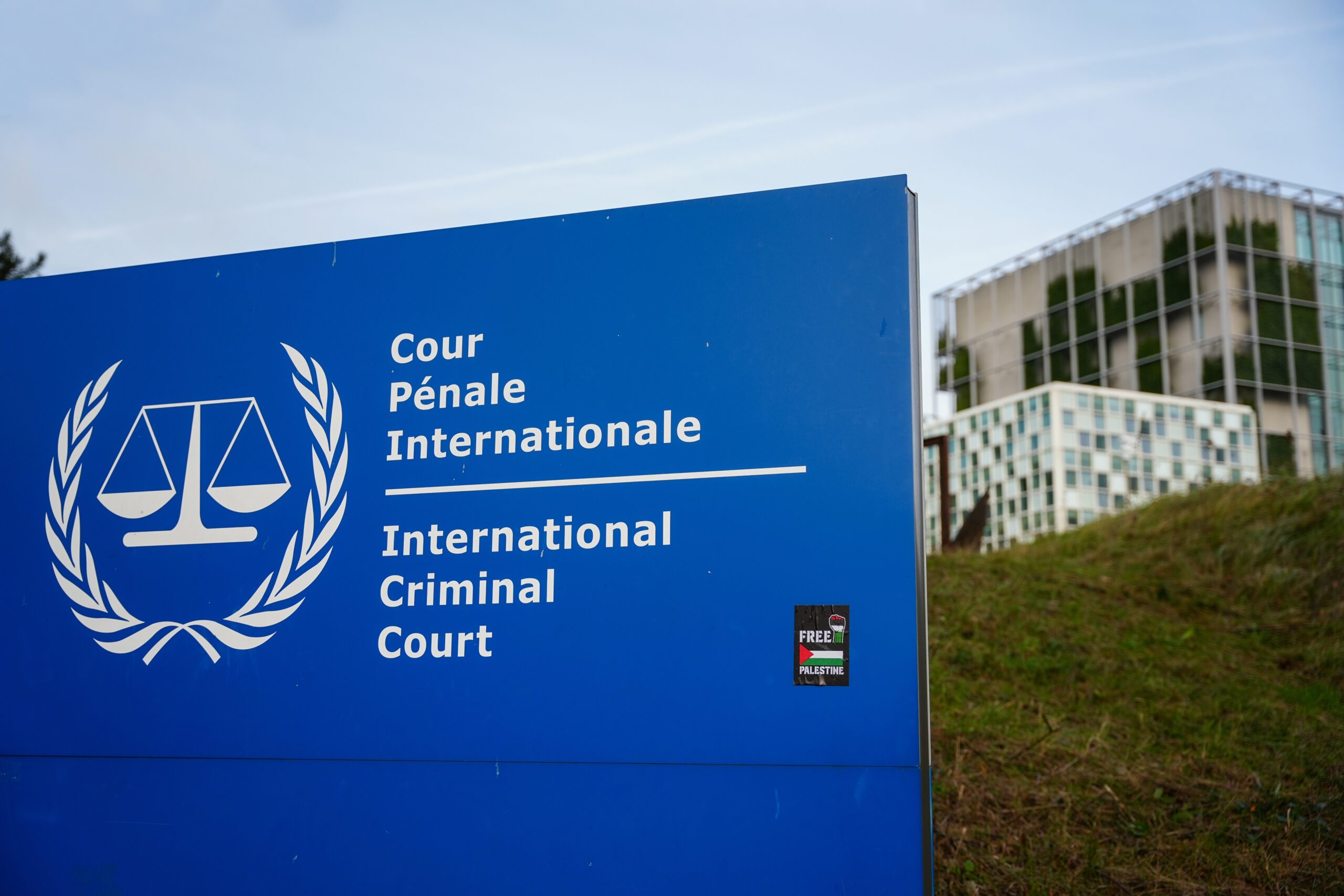
Three judges of the International Criminal Court filed a lawsuit in a Manhattan federal court this week, suing President Trump and his administration over sanctions that have frozen their bank accounts, cut off their credit cards, and barred them from entering the United States. The judges—Kimberly Prost of Canada, Solomy Balungi Bossa of Uganda, and Reine Alapini-Gansou of Benin—claim the sanctions are illegal, unconstitutional, and designed to intimidate the court’s judiciary. The Trump administration says it is defending American sovereignty. Given what has emerged about the ICC in recent months, the administration has a point.
The Lawsuit
The three judges filed their complaint in the U.S. District Court for the Southern District of New York, challenging Executive Order 14203, signed by President Trump in February. The order invokes the International Emergency Economic Powers Act (IEEPA) and declares a national emergency arising from what Trump called “illegitimate and baseless actions” by the ICC targeting both the United States and Israel.
The executive order authorized asset freezes and travel bans against ICC officials involved in investigations of American or allied personnel who never consented to ICC jurisdiction. Eight ICC judges were designated under the order, along with the ICC Prosecutor, both Deputy Prosecutors, and three Palestinian human rights organizations.
The judges describe the sanctions as a “financial death penalty.” According to the lawsuit, Judge Prost is confined to cash transactions when she travels outside the European Union or Canada, her Amazon, Google, and Expedia accounts have been shut down, and she has been barred from speaking engagements at Harvard University and Columbia University. Judge Bossa has lost access to her personal Google email account. Judge Alapini-Gansou can no longer use her French bank credit card for basic expenses and says she no longer feels safe walking to the courthouse.
“Targeting international judges for carrying out their judicial duties is an unprecedented attack on judicial independence,” said James Goldston, executive director of the Open Society Justice Initiative, which is representing Judge Prost.
The White House rejected that framing entirely. “The Administration will continue to vigorously defend the President’s actions—protecting the national security and foreign policy of our country first and foremost,” a White House official said. A State Department official added that the ICC continues to “present a threat to our sovereignty and our national interests. The Trump administration will never allow unelected foreign judges to dictate terms to the United States.”
This is the fifth lawsuit challenging the executive order. Courts have previously found it unconstitutional on free speech grounds for those who provide assistance to the ICC. This is the first time the judges themselves have gone to court.
The Jurisdiction Problem
The ICC’s claim to jurisdiction over Israel and the United States rests on a legal foundation that both countries have categorically rejected. Neither is a party to the Rome Statute, the 1998 treaty that established the court. Neither has ever recognized ICC authority. The court was founded in 2002 with jurisdiction over 125 member states—it has no treaty basis whatsoever to prosecute citizens of non-member states without a UN Security Council referral, and no such referral has been issued for Israel.
The United States enacted the American Servicemembers’ Protection Act in 2002 specifically to protect U.S. military personnel and senior officials against prosecution by international courts to which the United States is not a party. Trump’s executive order explicitly cites that legislation as part of its legal basis.
The ICC and Israel
The proximate cause of the current crisis was the ICC’s November 2024 decision to issue arrest warrants for Prime Minister Benjamin Netanyahu and former Defense Minister Yoav Gallant. The warrants were sought by then-Prosecutor Karim Khan, who alleged war crimes in Gaza. The Trump administration responded by designating Khan himself under the executive order—alongside the eight judges and the Palestinian organizations.
The three judges who filed this week’s lawsuit each served on ICC panels addressing matters related to Afghanistan or Palestine, which is why they were among those designated.
The Scandal at The Hague
The ICC’s lawsuit against Trump landed against a backdrop of serious internal controversy that the court’s defenders have largely preferred to ignore. In May 2025, Prosecutor Karim Khan took a leave of absence amid a UN investigation into allegations of sexual misconduct against him, conducted by the UN’s Office of Internal Oversight Services. The investigation was initially opened in May 2024, reportedly closed, then reopened, and extended for nearly 6 months without resolution. Khan has denied the allegations.
Qatar allegedly promised to “look after” Khan after he issued arrest warrants for Netanyahu and Gallant, according to a witness statement submitted to the FBI, reviewed along with audio recordings by the Wall Street Journal. In November 2025, the Guardian reported that Qatar had allegedly hired a private intelligence firm in Britain to discredit the ICC staffer who accused Khan of sexual assault.
Article 70 of the Rome Statute empowers the court to prosecute individuals for bribery, intimidation, or corrupt influence. The possibility that the prosecutor himself might be implicated in conduct touching on those provisions is a question the court has not publicly entertained.
Khan’s decision to pursue arrest warrants against Israeli leaders was taken shortly after the assault allegations first emerged against him. The timing has raised questions that remain unanswered.
The Biblical Lens
The ICC has issued no warrants for Iranian officials who financed and armed Hamas. It issued no warrants in connection with the October 7 massacre itself until international pressure made ignoring it untenable. Its chief prosecutor stands accused of conduct that, if true, would be prosecutable under the court’s own statute. And its claim of jurisdiction over Israel and the United States rests on a legal theory that neither country has ever accepted.
Three judges in Manhattan argue that Trump’s sanctions are the threat to rule of law. The stronger argument runs the other direction: a court that exempts itself from accountability while prosecuting democracies that never submitted to its authority is the threat. Trump’s sanctions may be blunt instruments. The institution they are aimed at has given the world ample reason to question whether it deserves the deference it demands.