I just got an automated call asking whom I planned to vote for in the upcoming Israeli election. I answered that I don’t know. Then it asked me which parties I am considering. I said I don’t know. The AI pollster thanked me and disconnected the call. Interesting technology. I miss the days of talking to real people, not this way, or text messages with links to click on.
I wonder if my response as “undecided” is factored into the poll, or if I am just considered non-responsive. Surely, if my response is not reflected, the poll is not accurate. This year, perhaps more than most, the undecided vote could be the largest but also surely the most influential. It’s why I am hosting a series of conversations for the “Inspiration from Zion” podcast to explain what undecided voters are thinking and why, and the issues they are considering from all ends of the spectrum.
The most recent conversation of a monthly dialogue provided a clear-eyed look at Israel’s fragmented political landscape, the mechanics of its electoral system, major parties and their leaders, and how current events like the US-Iran memorandum of understanding might shape voter choices.
Israel’s Electoral System
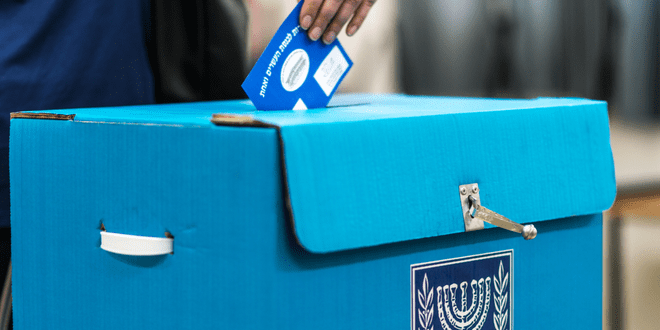
Israel uses a proportional representation system in which voters cast ballots for parties rather than individual candidates in single-member districts. The Knesset (parliament) has 120 seats. A party must receive at least 3.25 percent of the vote, the threshold, to enter parliament. Leftover votes above the amount needed to secure one seat can be transferred via surplus vote agreements between parties.
No single party has ever received 61 seats needed for a majority, so coalition building is essential, often involving complex negotiations among several to ten parties. This system amplifies smaller voices, leading to horse-trading over ministerial portfolios and policies. It can also create instability within the government coalition, as each party wields undue influence that can be leveraged to continue supporting – or, conversely, to vote against – the very government in which it is a member.
Panelists also noted the challenge of “wasted votes” where a person votes for one of many parties that fall below the threshold and do not enter the Knesset.
Overview of Key Parties and Leaders
Panelist Arnie Draiman gave an overview of centrist and center-right parties. He described the alliance of former Prime Ministers Yair Lapid and Naftali Bennett, whose party, Beyachad, or “Together,” is centrist with hawkish security stances, support for the ultra-Orthodox draft, and a preference for consensus on judicial reform. Benny Gantz’s National Unity party shares similar moderate positions. Yisrael Beitenu (Israel Our Home) led by Avigdor Lieberman, appeals to secular and Russian voters with a hard line against ultra-Orthodox exemptions and strong security views. Foreign Minister Gideon Saar’s “New Hope” party was characterized as center-right but more flexible on religious draft issues.
Batya Medad discussed Likud, Israel’s major right-wing party under Prime Minister Benjamin Netanyahu. Though marketed as patriotic and right-wing, she described its policies as centrist in practice. She also covered the religious nationalist parties: Religious Zionism, under Finance Minister Bezalel Smotrich, and Otzma Yehudit (Jewish Strength), led by National Security Minister Itamar Ben-Gvir, both strongly “pro-settlement” and emphasizing Jewish rights, including greater access to the Temple Mount.
Yehuda Poch explained the ultra-Orthodox (Haredi) parties: Shas representing Jews of Sephardic background (from Arab and Middle Eastern countries) which combines religious advocacy with social welfare for poorer communities, and United Torah Judaism representing Ashkenazi Jews of Eastern European background, guided by rabbinic councils and focused almost exclusively on Haredi interests such as draft exemptions and religious observance.
Mark Simanowitz addressed the left-wing and Arab parties. The Democrats (formerly Labor, led by Yair Golan) advocate a two-state solution and social democratic policies. Arab parties include Hadash (communist-leaning, with joint Jewish-Arab members) and Ra’am. An Islamist party led by Mansour Abbas, which has shown willingness to join government coalitions and was part of the previous government.
Rolene Marks profiled the newcomer Yashar party (Upright), founded by former IDF Chief of Staff Gadi Eisenkot. Its platform emphasizes security, Haredi and Arab integration into the IDF, judicial independence, term limits for prime ministers, and national unity while maintaining a Jewish majority. Except for Yashar, all these parties are represented in the current Knesset.
Panelists’ Voting Considerations
In considering whom to vote for, panelists offered candid insights into their decision-making, emphasizing people over platforms, coalition compatibility, and the strength of their voice.
Erica Schachne votes with her heart and avoids parties unlikely to pass the threshold or partner with groups she cannot support. She values formidable leaders with integrity and strong will, naming Bennett, Lieberman, and Eisenkot as appealing.
Yehuda Poch is moderately influenced by polls but avoids wasting votes. He focuses on relative strength within potential coalitions. “My vote is basically narrowed down to one of three parties right now… what difference does my vote make between these three parties? … it’s a matter of relative strength within the coalition.”
Arnie Draiman prioritizes individuals who can represent his voice even in minority positions. “I tend to vote for a person. I want to find the right person I can count on.”
Batya Medad expressed deep disillusionment with Netanyahu. Going against the grain of how most people look at Netanyahu, “People are now listening to me when I’ve said you can’t trust Bibi. That he is not strong, he’s not a patriot, and he’s not on the right.”
Rolene Marks stressed the historic importance of this election and the need for careful coalition choices to restore trust and reduce polarization after the October 7, 2023, Hamas attack and massacre. She highlighted the importance of considering who receives key government portfolios.
Impact of Current Events
The panel discussed the recently signed US-Iran MOU. Many saw it as an attempt to expose Netanyahu’s perceived weakness, potentially eroding his support. Simanowitz noted recent polls showing Likud at 23 seats and Eisenkot rising to second place. Poch suggested Netanyahu’s response to the deal would matter more than the deal itself. Shachne and others emphasized that Israel ultimately “dwells alone” and must rely on strong, principled leadership rather than any single ally.
The recent discussion revealed broad frustration with personality-driven politics, coalition constraints, and the need for course correction. With elections approaching, the panel agreed this vote carries exceptional weight for Israel’s future direction, security, and internal cohesion.
The party that can harness the undecided vote could see a swing toward them of possibly five and perhaps ten percent. It’s the demographic to follow, representing voters from across the political spectrum.