

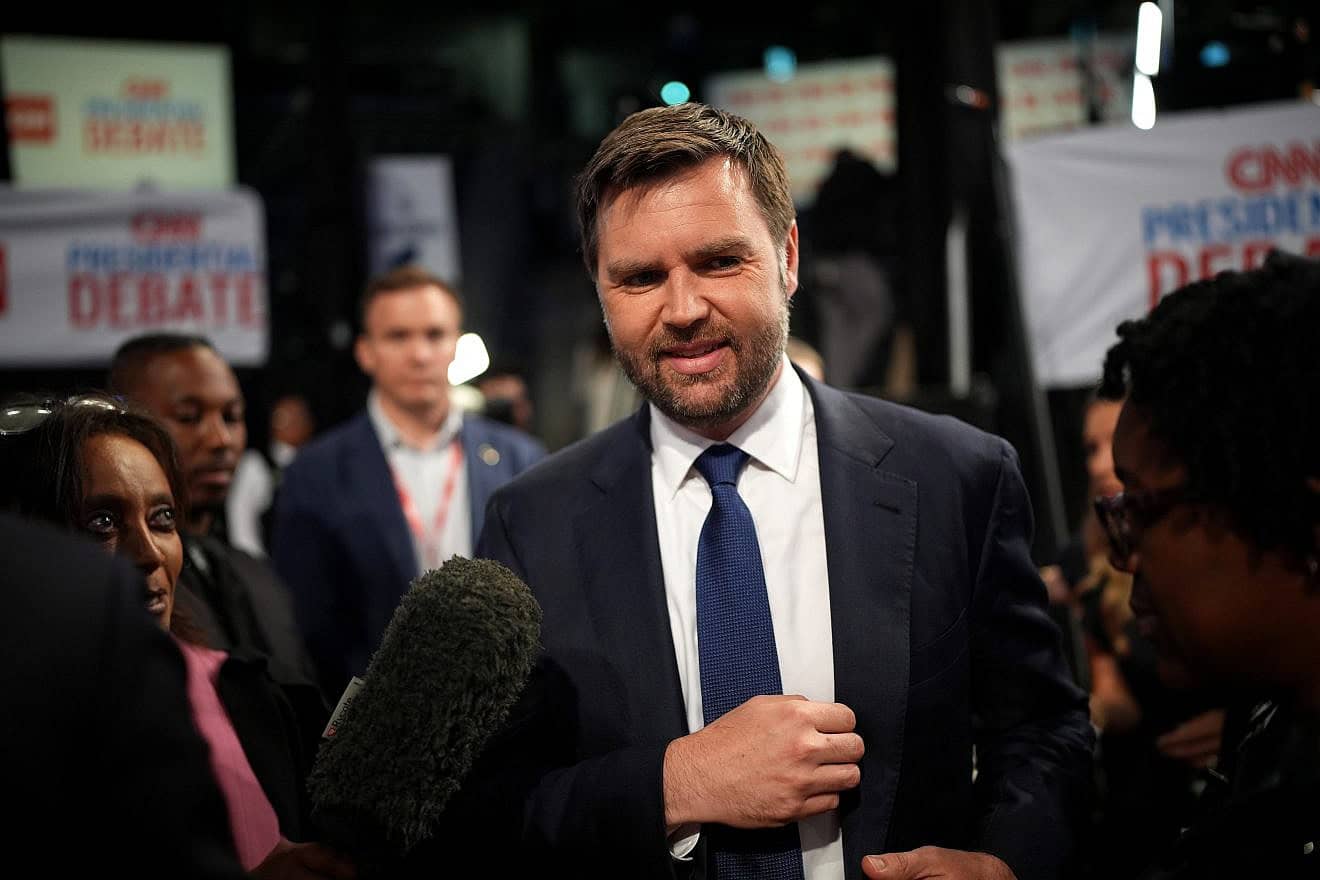
When Vice President J.D. Vance went on television to defend the Iran deal, he made an argument that probably caused millions of Americans to roll their eyes. Every war, he said, ends with a negotiation — just look at World War II.
Rabbi Pesach Wolicki, speaking from Israel this week, had a simple response: World War II ended with unconditional surrender. The Germans didn’t negotiate their way out. The Japanese didn’t negotiate their way out. And the Iranian regime, which just watched the most powerful military on earth bomb their country and then stop short of finishing the job, has every reason to believe they negotiated their way out of this one too.
Wolicki, Executive Director of Israel365 Action, joined John Riley on American Family Radio’s Middle East Report this week to unpack what he sees as a deeply troubling agreement — one that leaves Israel exposed, rewards Iranian obstinacy, and repeats the same fatal mistake the Trump team made with Gaza.
That mistake, as Wolicki describes it, is a dealmaking habit of setting aside the hardest question so that some kind of agreement — any agreement — can be reached. With Gaza, the hardest question was how to actually disarm Hamas. The 20-point reconstruction plan was full of grand promises about a new Gaza, peaceful coexistence, and thirteen countries ready to participate in stabilization. What it lacked was any coherent answer to the one question everything else depended on.
“If you read the Gaza 20-point plan, it does not explain whatsoever how that is supposed to be done,” Wolicki said. “It leaves it deliberately vague. And I say deliberately, because I think we have a pattern here in how Trump’s people — and I think about Witkoff and Kushner, maybe they’re the drivers here — come to agreements. They look at the thorny issues and they say, ‘The most difficult issues — let’s not let those stand in the way of making a deal. Let’s find the things we can agree on and push the hard stuff to a later phase.’ That might work in real estate in New York where these guys are from, but when you’re talking about these terrorist organizations and terrorist regimes, you can’t take the main issue and put it for a later phase, because that later phase — as we saw in Gaza — may never come.”
With Iran, the deferred issue is the nuclear program — the entire reason the war was fought in the first place. It has been pushed into a 60-day negotiating window that begins after sanctions relief has already been granted and Iran has begun selling its oil again. Wolicki sees almost no chance the Iranians give ground now, when they refused to under direct military bombardment.
“If the Iranians haven’t given in until now under immense military pressure, why will they give in after they’ve been given sanctions relief, after they’ve been allowed to sell their oil for a few weeks and started replenishing their funds? As far as they’re concerned, the way they see this war is not that they lost. To them, they were attacked by a far more formidable foe who said he would destroy their regime, and they withstood that pressure. They see themselves as the victors here, and there’s no incentive whatsoever on their part to back off of their positions.”
The piece of the deal that troubles Israelis most, however, is not the nuclear question. It is Hezbollah. Israel has spent months degrading Hezbollah’s capabilities in Lebanon, doing what Wolicki describes as the dirty work that the Lebanese government is either unwilling or incapable of doing itself. Washington is now pressuring Israel to stop.
“Here’s President Trump, at the behest of the Iranians, pressuring Israel to back off of fighting Hezbollah and Lebanon,” Wolicki said. “He’s giving a lifeline to the very proxies that on February 28th he said he was committed to dismantling.”
Prime Minister Netanyahu’s response to the deal was pointed. When Trump announced the agreement and listed Israel among the approving parties, Netanyahu’s office issued an immediate correction. “The first line of that reaction,” Wolicki noted, “was that Israel is not a party to this deal.” It was diplomatic in tone but unambiguous in substance — Israel does not consider itself bound by what Washington has signed.
That position, Wolicki was careful to emphasize, is not a right-wing or left-wing position in Israel. It is the national consensus. “We have them on the ropes,” he said of Hezbollah. “This is the time to drive toward victory.”
None of this, he was quick to add, reflects ingratitude toward President Trump. Israelis, he said, “can only shudder to think of the alternate reality had Kamala Harris won the election.” But gratitude does not require silence about a deal that leaves the Iranian regime standing and its terror network breathing.
When Riley asked Wolicki to speak directly to the Christians who love Israel and are watching all of this with anxiety, the policy analyst gave way to the rabbi.
“Let’s remember that as people of faith, we know that the end of the story is good,” Wolicki said. “Israel will be fine. Israel will succeed. Israel will prosper. Of that, we can be sure.” He reached for the book of Esther and the words Mordechai spoke to his niece when the hour looked darkest: “Success and redemption will come to the people of Israel from somewhere else if you’re not going to be the one to help us.” The help will come. The only question is through whom.
“The guardian of Israel neither slumbers nor sleeps,” Wolicki said. “We’re not worried. Israel is stronger and more independent than it’s ever been. And if we have to go it alone, we will.”
For the Christians listening, he had one piece of advice: pray for America. Because what Israel is fighting on its northern border is not a local conflict — it is the forward edge of a struggle that touches London and Michigan and Nigeria and every place where radical jihadism is on the march. Israel, he is confident, will be standing when that struggle is over. The only question is who will have stood with her.