
For those who work in the Israel space, you’ll often hear: “you can go back one hundred times, and you’ll discover something new every time,” and that is the understatement of the century. Between ancient excavations, Tel Aviv teeming with the latest startups, and welcoming waves of new olim, the country feels perpetually in motion, radically shifting, expanding, and evolving month to month. In the wake of October 7th, those shifts feel more intense than ever. It can be easy to get swept up in the hecticness of a tour or be subdued by the relentless summer sun, and never pause to reflect on all that has happened and all that is still to come.
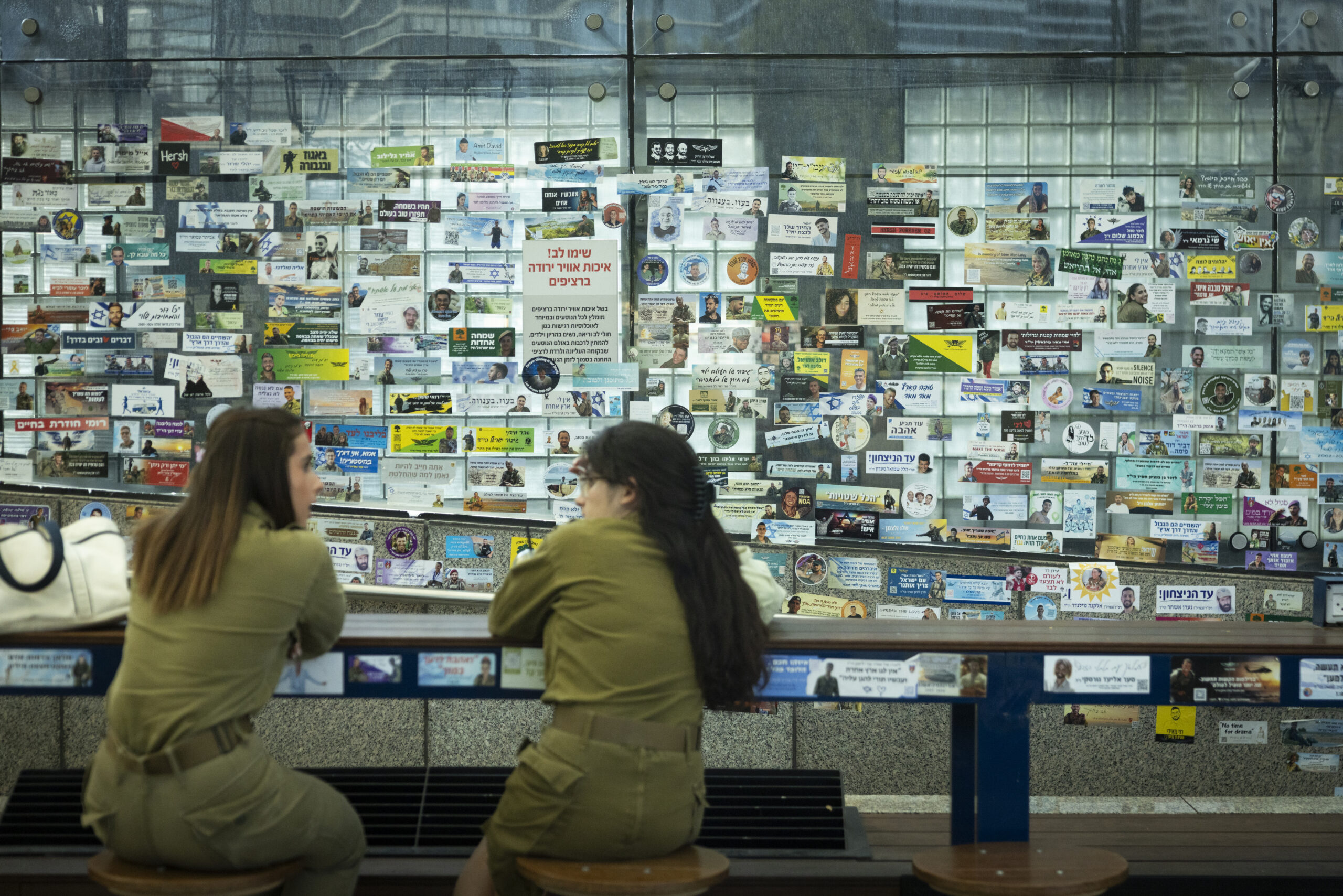
On my most recent trip to Israel this summer, it was like standing in the eye of a hurricane. There was a semblance of calm, even peace, while knowing the winds were raging mere miles away, pulling in every direction at once. Throughout this time with friends, loved ones, and over 100 Christian college students, I caught glimpses of the reality Israelis live with every day: a yearning for life, for healing, and for simpler days, while bearing the weight of lost friends and family and the pain of memorializing a war that is still ongoing. The contrast was painful: faded hostage posters and tattered yellow ribbons, and beside them, fresh stickers commemorating fallen soldiers and victims of terror.
Israelis are most often described as “resilient,” yet that word feels insufficient. It fails to encapsulate the strength and fortitude required to face a unique form of evil and still choose to celebrate life and joy, even in the most uncertain of circumstances. A propensity to not just survive but thrive. And within this lies the understanding that living cannot take place without the act of remembering. I had the honor of fellowing with the Young Women for America bus, joining 17 college students and young professionals traveling throughout the country, many for the first time. Together, we caught a glimpse of that profound strength.
On Saturday night, many of us made our way to the Shuk in Jerusalem to catch a glimpse of the nightlife after Shabbat. As the evening went on, the stalls filled, music blasted, and people danced and sang. It was carefree and joyful, a moment to come together and celebrate the simplest thing there is: life itself.
That celebratory mood came to a screeching halt the next morning as we made our way south to the Nova music festival site, followed by Nahal Oz and Kfar Aza. We walked through the maze of pictures of those who fell at Nova, their memorials covered with notes, trinkets, and tributes. On the bus, the whispers began. “They were just like us.” “We were the same age.” “We were singing and dancing last night, and that’s all they wanted to do.”
We also had the privilege of entering Kfar Aza and hearing from a resident. Our guide led us through what was once a young adult village, now its remains. We walked through charred homes and the remnants of a massacre. As I stepped into Sivan Elkabetz’s home, my stomach dropped. Her shoes were still there, waiting for someone who would never return.
As we filtered out, we sat with our guide. He spoke about the painful struggle of deciding how to honor an unimaginable loss that occurred just paces away. And then he said something that struck each and every one of us: the residents of the kibbutz were beginning to come back, to rebuild their homes and their lives. For many of them to leave would be to let loss win. The only path forward was the determination to choose hope and life.
These contrasting ideas continued throughout the next few days. I attended a friend’s graduation at Reichman University. Graduation is a day usually marked by joy, the feeling of freedom, and relief after years of hard work and sleepless nights. All of those feelings were certainly present but mingled with the pain of empty chairs. Empty chairs for those who had fallen during the last two and a half years. Reichman had lost 19 students and alumni. During the primary service, their names were read, and their photos were projected alongside their position and former field of service. As we moved to the department-specific portion of the ceremony, my friend leaned over to her husband and whispered, “it feels more like a Memorial Day than a graduation.”
Amid joy and accomplishment, grief and memory lingered. Not just in honoring those who had fallen, but in highlighting programs for students suffering from PTSD and the university’s work with reservists to ensure they could still graduate. Ingenuity born from unfortunate necessity. It was a reminder that in Israel right now, even the most ordinary milestones carry the full weight of the extraordinary moment the country is living through.
These are the unique realities you only truly grasp when you actually come to Israel. Describing it is one thing; feeling its weight is another entirely. To sing and shout, share a Shabbat dinner, and then sit, quite literally in the dirt, alongside those who grieve. To witness the radical decision to choose life, pursue joy, and hold onto hope for tomorrow. These are the textures of an immersive trip: a shared meal, then a siren. A joke, a laugh, followed by tears and a heartfelt hug.
Narratives are competing and compelling, but humanity is the true testament of Israel and her people. To see a people dedicated to life, not just that of the living, but to the memory of those taken too soon. To come to Israel is to be challenged in every possible way. For Christians, it stretches us, but it should also inspire us to speak out boldly in the face of evil, to cling to truth in the midst of misdirection, and to be an outpouring of joy and light, because this is what forces darkness to shrink.
Though it may seem daunting, a trip to Israel will change your life. I saw it happen in real time among our participants. An awe of a people so strong yet not hardened or jaded. A burning desire to go home, share, advocate, and tell the story of a nation so deeply misunderstood. Because the world does not lack opinions about Israel. What it lacks are witnesses. Go, and become one.
The writer is the Associate Director of Alumni Engagement at Passages Israel, a Christian organization dedicated to bringing students to Israel and equipping young leaders to support Israel in communities across the United States.