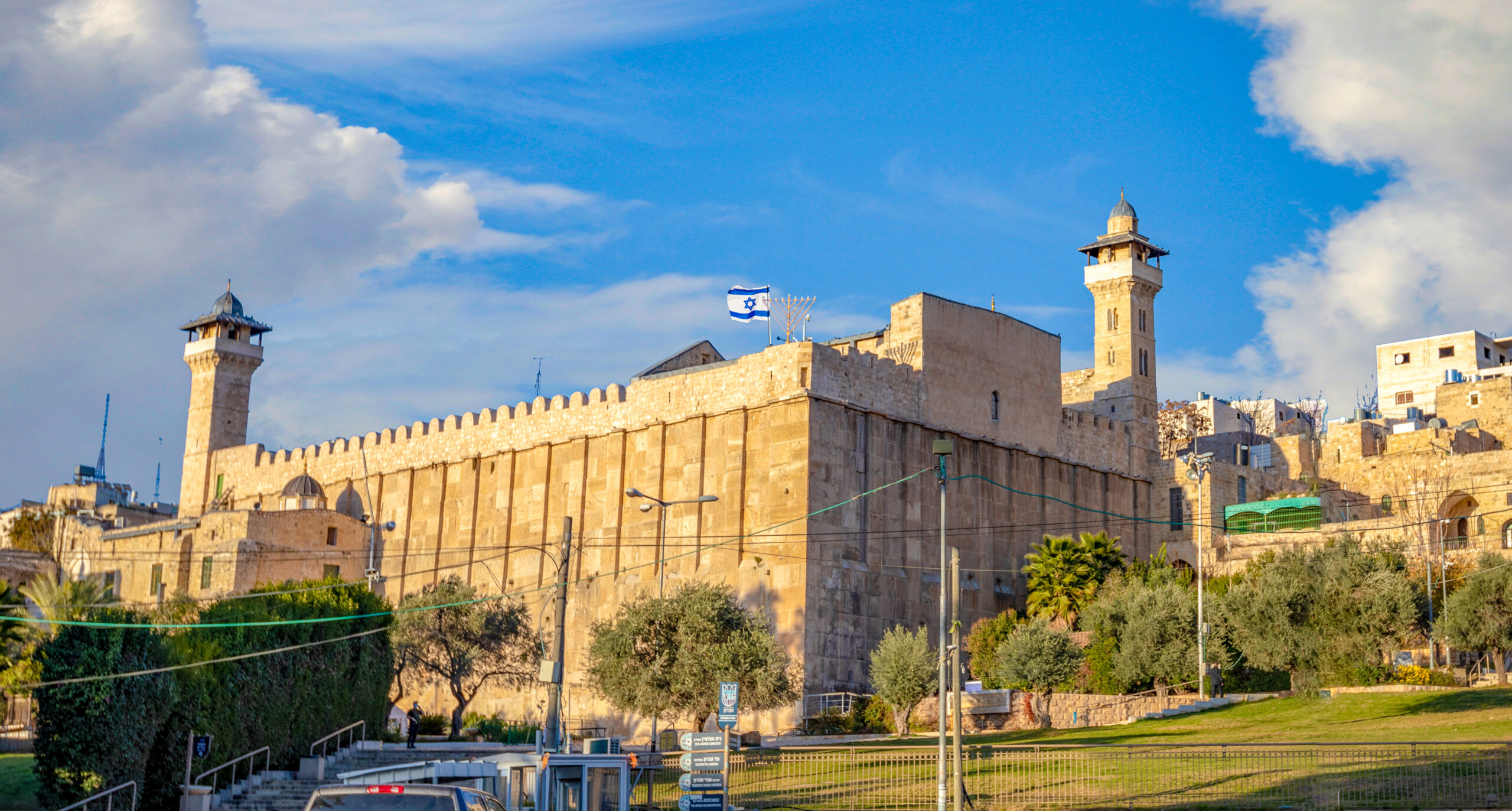
A stunning new archaeological announcement out of Hebron is rewriting what scholars thought they knew about the most sacred Jewish site outside Jerusalem. Israeli researchers have identified a concealed burial chamber inside the Me’arat HaMachpelah, the Cave of Patriarchs, and they are now arguing that King Herod built the entire magnificent complex not only to honor Abraham, Isaac, and Jacob, but to prepare an eternal resting place for himself.
The announcement came in a video interview posted to the C14 YouTube channel, featuring Chaim Shakolnik, district director of the COGAT Archaeology Unit, and Dr. Gershon Bar-Kochva, a researcher at Orot Israel College in Hebron. The two researchers said they came across previously unknown photographs — old images of sections of the underground system beneath the Machpelah structure — taken during the only scientific exploration of the caves to date, conducted in 1919. “We saw photographs that were not known until now,” Shakolnik said, “and we understood that they reveal part of the system that Herod planned and executed when he built this complex.”
What those photographs showed, according to Bar-Kochva, is a tzelal kevura, a small, solitary burial cell, inside the massive enclosure. To identify it, Bar-Kochva turned to comparative architecture in the Hellenistic-Roman world, specifically to the ancient region of Lycia, in what is today southwestern Turkey. There, he found structures that bear a striking resemblance to the Machpelah compound. “Even researchers of the 19th century who studied Lycia noted precincts there that are very similar to the Cave of Machpelah,” Bar-Kochva said. In Lycia, such structures were used exclusively as burial precincts for founding rulers and the aristocracy.
That architectural parallel led Bar-Kochva to a precise classification: the Machpelah is a heroön-temenos, in Greek, a sacred, enclosed precinct (temenos) housing a heroön, a tomb for a founding hero or dynastic ancestor. The structure stands as the largest heroön-temenos in the entire Hellenistic world, at 2,000 square meters. The next largest known example, at Miletus, comes in at 1,400 square meters, a full 600 square meters smaller. “This is the greatest heroön-temenos in the Hellenistic world,” Bar-Kochva stated.
Three separate Carbon-14 tests, conducted by the Weizmann Institute of Science, Oxford University, and Beit Analytix in Miami, have now confirmed with confidence that the structure was built during Herod’s reign. “We say today with more certainty that it was Herod, and not someone before or after him,” Bar-Kochva said, “and that is thanks to three Carbon-14 samples taken from the foundation of the building.” Charcoal embedded in the mortar laid by Herod’s builders was tested independently by each laboratory, and all three arrived at the same dating range: the era of Herod the Great.
That confirmation puts a pointed question squarely before researchers: Herod built the most perfect, most harmonious, most architecturally refined structure of his entire building career, surpassing even the Temple Mount in its ratio of investment, harmony, precision, and unique decorative elements, and he built it here. Why? Bar-Kochva’s answer is that Herod saw himself as a successor to the House of David, chosen by God to continue the royal line. “Herod saw himself as a continuer of the Davidic dynasty. God chose him; that is how he saw himself, and that is the legacy he left behind,” Bar-Kochva said. The perfect heroön-temenos, on this reading, was Herod’s own intended tomb, the greatest dynastic burial precinct in the ancient world, built beside and for the Patriarchs, and ultimately for himself.
That Herod ultimately was not buried at Machpelah — his tomb was discovered at the Herodium fortress south of Jerusalem — only deepens the mystery. The researchers stop short of declaring where exactly within the compound Herod planned his burial, leaving the question open to viewers and future excavation.
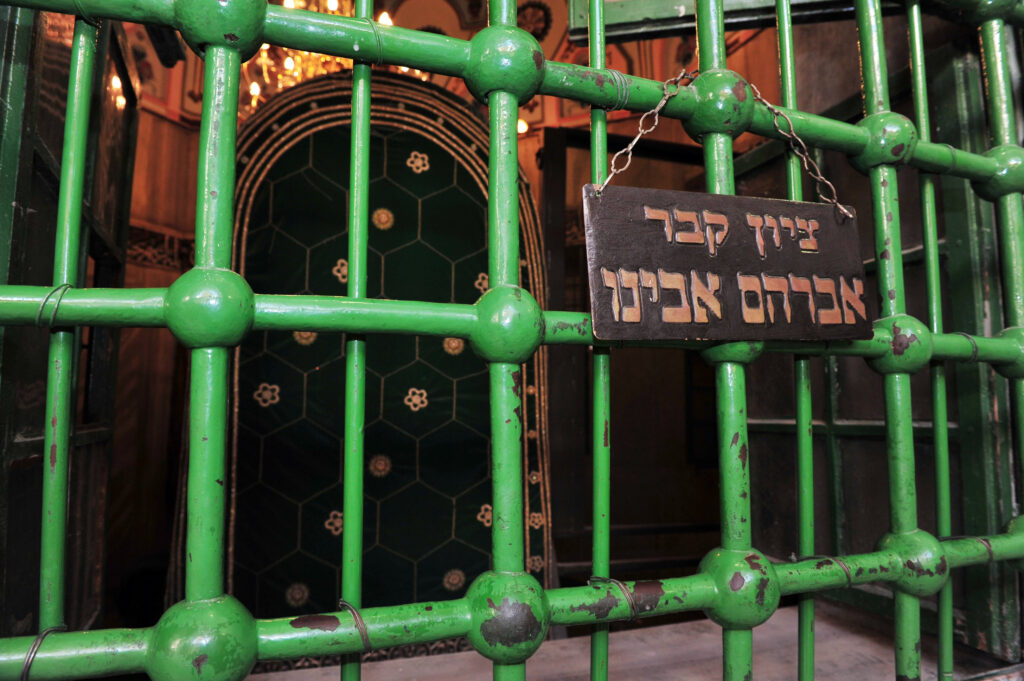
The biblical roots of Machpelah stretch back nearly four thousand years. The Book of Genesis records that Abraham purchased the cave from Ephron the Hittite for 400 shekels of silver following the death of Sarah, the first legally documented Jewish land acquisition in the Land of Israel: “So Ephron’s field in Machpelah near Mamre — both the field and the cave in it, and all the trees within the borders of the field — was deeded to Abraham as his property in the presence of all the Hittites who had come to the gate of the city” (Genesis 23:17-18). It was a transaction conducted publicly, at full market price, with witnesses; a legal act whose permanence the Bible records in precise detail. Abraham, Isaac, Jacob, Sarah, Rebecca, and Leah are all buried there.
The Sages understood that Abraham chose to purchase rather than accept a gift precisely because he foresaw that future generations would attempt to deny Jewish ownership. The purchase at full price, before witnesses, was an act of prophetic foresight. Herod, building two millennia later over those same caves, may have understood the same truth: that the connection between the Jewish people and this ground is not a sentiment but a fact, one that must be built in stone, witnessed, and left for history to judge.
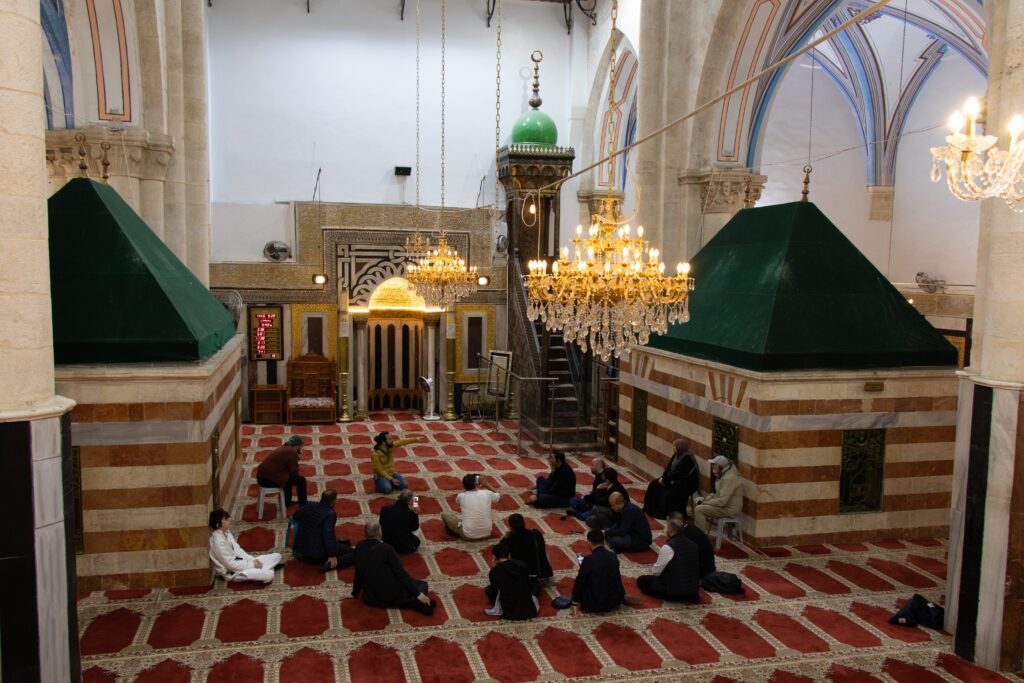
The Machpelah structure remains the only fully intact Herodian building in existence today. The cave beneath it remains inaccessible, controlled by the Muslim Waqf, which bars any archaeological excavation. The secrets locked beneath those stones, including, perhaps, the burial cell that Herod prepared for himself, remain sealed. But the photographs that resurfaced, the Carbon-14 tests, and the architectural parallels drawn from across the ancient Mediterranean have now opened a new chapter in understanding what Herod built, and why.