We are the most resourced generation of Bible readers in history, and one of the least literate. Translations multiply, study apps proliferate, every verse sits a thumb-tap away in a dozen languages. And still, by nearly every measure, the church’s grasp of its own Scriptures keeps thinning. The crisis is real, and it is not, at root, a crisis of access. We have never had more help. We have rarely understood less. Two things solved this problem for me, and they can for the church too.
I know the condition from the inside, because I lived in it for years. I grew up an active, committed evangelical—charismatic, earnest, and knowing that I had to read my Bible or starve spiritually. But reading it was no pleasure. It was the spiritual equivalent of eating my vegetables: undertaken in small forkfuls. Eventually, embarrassed enough by not knowing if I had read through all of it, I resolved to go through a one-year Bible reading plan. It took me two and a half years.
As the son of a traveling minister, I also felt I had heard every teaching under the sun at least once. And I had been truly blessed to hear countless hours of biblical preaching from many of the greatest expositors in an astounding breadth of church traditions. There seemed to be nothing more to be squeezed out of the biblical message, but to attempt to live it.
Therefore, in my early twenties, the experiential side of faith captivated me. I led worship in the era of pioneering artists like Delirious? and Jason Upton, when a handful of us were, in effect, dreaming up Bethel Music before Bethel existed—long, spontaneous, live sets in which we sang, at great length, of how much we loved God. But a quiet sentence from the Bible teacher Derek Prince began to nag at me and would not let go: you will never love God more than you love His Word. I knew it was true and I could feel the gap. We sang our love for God by the hour. I did not love His Word remotely as much, and Prince’s line kept pricking a conscience I would rather have left alone.
Two changes closed that gap. They are the same two changes I believe the wider church now needs.
The first was the demolition of a wall that limited my biblical world to a quarter—the theological Berlin Wall running between Malachi and Matthew, between what Church tradition has called the “Old Testament” and the New. That wall is built by supersessionism, the assumption that the church has replaced Israel and that the later revelation overrides the earlier. Its damage is subtle but total. As theologian R. Kendall Soulen has argued, once you read replacement into the New Testament, the Hebrew Bible quietly ceases to be normative for shaping Christian convictions. It becomes prologue—background, shadow, a problem to be solved by the “real” revelation that follows.
And so we learn to read the Bible backwards, projecting our assumptions about the New Testament onto the Hebrew Scriptures. We assume our church tradition knows what Paul really meant, and we let those replacement assumptions define what Jesus and God really meant to say, overriding everything in the Bible that came before. Never mind that God’s statements at the beginning of the Canon make that idea an impossibility (Malachi 3:6; Deuteronomy 13).
Scripture was not written to be read backwards, and it does not reward the attempt. Read forwards, in the order and in the Jewish world that Jesus and the Apostles knew, the Bible begins with Moses, followed by the Prophets and the Writings of the Hebrew Bible, and only then arrives at the apostolic witness of the New Testament (see Luke 24:44). And every writer of those Books, old or new, was Jewish. (The latest scholarship even leans toward Luke being Jewish.) The Bible is a completely Jewish book, and reading it from a Jewish perspective is simply not optional.
That is the foundation on which everything stands. When I started from the beginning with a Jewish perspective, a strange thing happened: the supposed contradictions between the Testaments dissolved. When a passage seemed to pit Jesus or Paul against Moses, I had been trained to ask, “Where does the New Testament cancel the Old?” Reading forwards, the question inverted: “What did this mean to a first-century Jew who held the Torah as the Word of God which could not be cancelled?” The tension was almost always in my question, not in the text. So the task was never to make the New Testament override the Old, as though we were doing Muslim theology, where the later abrogates the former. Jesus expressly prohibits this idea:
“Do not think that I have come to abolish the Torah or the Prophets; I have not come to abolish them but to fulfill them. … Therefore whoever relaxes one of the least of these commandments and teaches others to do the same will be called least in the kingdom of heaven” (see Matthew 5:17–19).
Our work, therefore, is to discover an interpretation where God’s Word does not contradict itself. The Bible is a single coherent whole, Genesis to Revelation, and it reads as one only when we get rid of replacement theology. This theology smuggles itself in under the honorable term “fulfillment theology,” but fulfillment in Jesus’s mouth means the opposite of abolition (He says so in the next breath).
The second change was a matter of practice rather than theology, though the two turned out to be inseparable. To evangelical, non-denominational ears, the word liturgical sounds stale, the very opposite of living faith. It is not. What I had lacked was not sincerity but structure: a systematic, cyclical, year-after-year passage through the Scriptures themselves. Here, the Jewish people have something the church has largely forgotten: the strength of reading the Torah, the foundation of the entire Bible, straight through every single year, portion by portion, week by week. I began to follow the weekly Torah Portion, watching how each portion aligned with the teaching of Jesus and the Apostles, and the New Testament I thought I knew began to open as if for the first time.
It was, I admit, frightening at the outset. To ask whether some long-held assumptions of church tradition could really have been wrong is no small thing. But on the far side of that fear, I found my biblical faith stronger, more whole, and more committed to Jesus than ever before. And, almost to my surprise, I fell in love with the Bible. For the first time, Derek Prince’s proverb no longer accused me.
Encouragingly, a recovery of the Torah cycle is now stirring across the Christian world. It needs to go much further. For the crisis of biblical literacy will not be solved by more access. It will be solved when we learn to take its Jewish essence seriously, to take down the wall between the Testaments, and to read the whole of Scripture forwards—systematically and liturgically—as the single, coherent message it has always been.
—
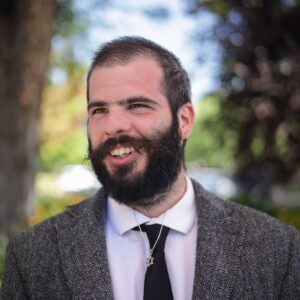
John Enarson is an Evangelical educator, creative director, and author of the forthcoming book “Jesus and the Temple Mount.” Born in Sweden, he has lived in the Middle East for nearly 30 years. He is a member of The Society for Post-Supersessionist Theology and serves as Christian Relations Director at Cry For Zion (cryforzion.com), where he works to make complex biblical topics and history accessible to a wider audience. He welcomes input and questions about his articles at j.enarson (at) gmail (dot) com.