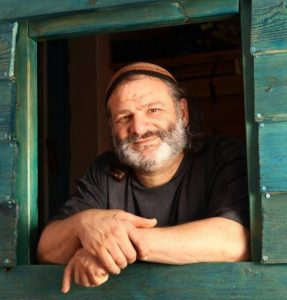

Yonatan Azulay grew up in Rio de Janeiro. His family had built a good life in Brazil : a kosher home, synagogue on Shabbat, summer camps, the whole thing. When he told people he wanted to move to Israel, a rabbi he respected pulled him aside and warned him: Israel is complicated, he said. There are many kinds of Jews there. You might lose yourself.
Yonatan came anyway. “In Brazil they warned me I might lose myself in Israel,” he said. “Instead, I found myself.”
Mordechai Wolfson grew up in Toronto, in a strong and comfortable Jewish community. He had never experienced antisemitism — not really, not personally. He had no obvious reason to leave. Then, at sixteen, he went on a summer program in Israel. He saw soldiers. He visited the places he had read about in the Bible his whole life. He went home to Canada knowing he wasn’t going to stay there.
“Generations of Jews dreamed of reaching Israel,” he said. “Many never had the opportunity. Countless sacrificed for that dream. When I came home from that trip, I already knew I wanted to study in Israel and eventually stay.”
Then there is Joanna Naaman, who grew up in France, in a small town near Paris. When she was seven years old, after a classroom lesson on world religions, three classmates followed her out and started hitting her. She was the only Jew. A few years later, after a history lesson on World War II, a girl came over and told her: “Hitler would have killed you, but not me.” Joanna moved to Israel as soon as she finished university. She didn’t need more reasons.
These are not tragic stories. They are stories of people who heard a call and answered it.
The Prophet Isaiah did not describe a single dramatic ingathering. He described something more like a steady stream: “From the east I will bring your offspring, and from the west I will gather you” (Isaiah 43:5). One by one. Young people packing bags and boarding planes, leaving families and familiar streets, stepping off into a country where they don’t yet speak the language or understand the culture, and building a life there anyway.
Every generation reads those words as a promise. This generation is watching it happen in real time.
But the gap between prophecy and reality is where the difficulty lives. Mordechai came back from a year of combat in Gaza not to his parents’ home but to a shared apartment. While his fellow soldiers reunited with families who had been counting the days, he came back to an empty room. Joanna had her French university degree rejected by Israeli authorities and had to complete a graduate degree all over again, in a language that wasn’t her native one, while raising children without her family nearby.
Nobody told these young people it would be easy. It wasn’t. That’s not the point.
There is a word in Hebrew for what Yonatan, Mordechai, and Joanna did: aliyah, literally “ascent” — the act of leaving the country where you were born and immigrating to the Land of Israel. Jews have used that word for this journey for centuries, because it has always been understood as more than a change of address. It is a spiritual act. A choice. An ascent.
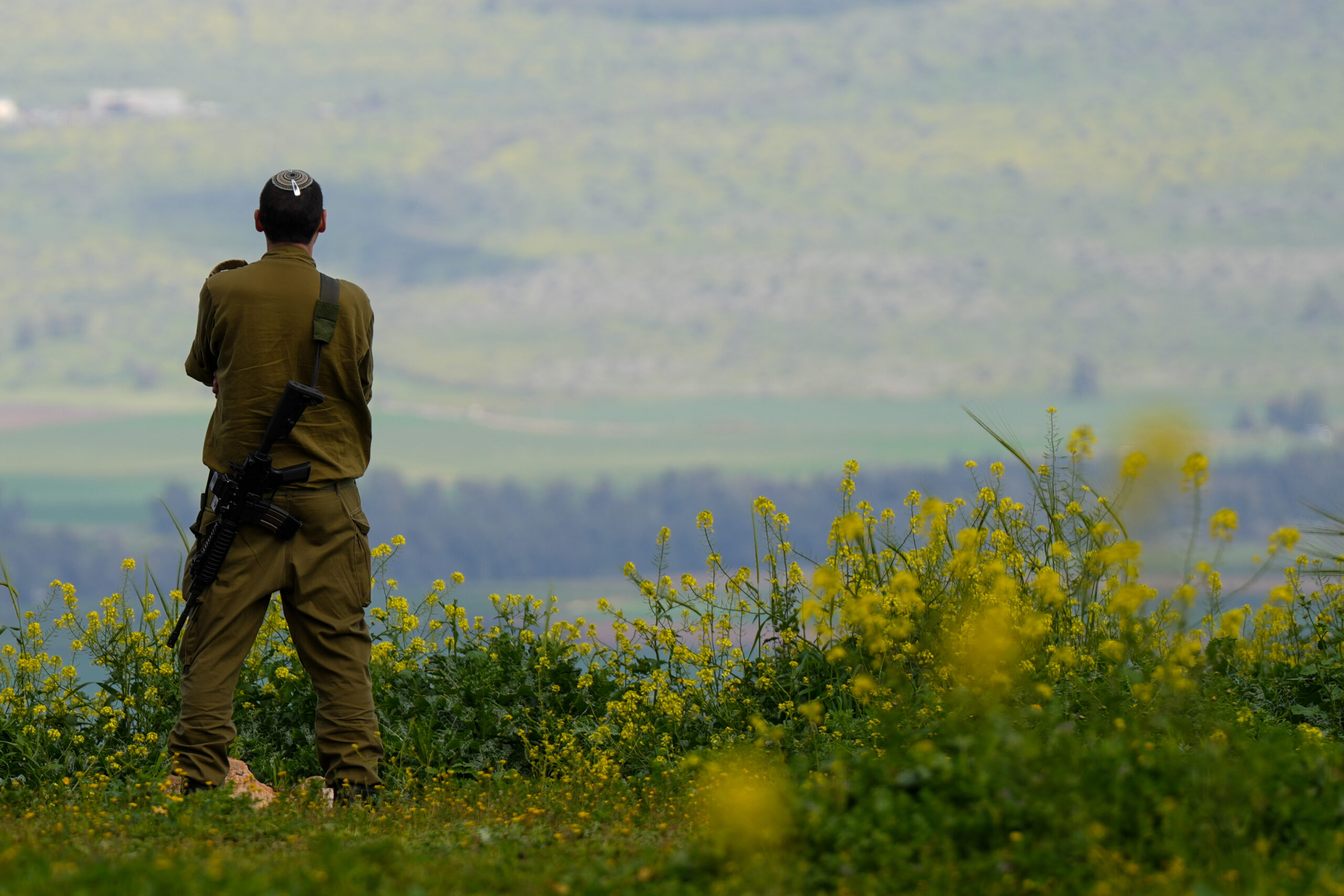
Beit Daniel, a residence for lone soldiers in Bet Shemesh, was built for young men who make the same kind of choice — except that they don’t just immigrate. They enlist. They come from America, Canada, England, Australia, and South Africa, leave everything behind, and serve in the Israeli army with no family nearby. No parents to pick them up from the bus on Friday. No one who will notice if they seem quieter than usual.
Beit Daniel changes that. Five floors, sixty-eight apartments, a dining hall, stocked refrigerators, and rabbis and mentors who know every soldier by name. When a soldier finishes a week on the front and steps off a bus, there is someone waiting. There is a room with his things in it. There is a Shabbat table — a Friday night dinner, the Jewish weekly gathering that has held families together for three thousand years — where people will ask how he’s doing and actually mean it.
One mother put it simply: “It is reassuring to know that our son is being looked after. Nothing can replace a parent’s love and support, but this does as much as they can. It helps a mom sleep and breathe a little bit easier.”
Forty soldiers are living at Beit Daniel right now. Twenty-eight more are waiting to move in.
The Bible describes the moment God brought Israel out of Egypt as being carried on eagles’ wings (Exodus 19:4). That image captures something true about how a people is sustained — not by willpower alone, but by being held up, by something larger bearing the weight alongside you. These young men got on a plane and chose to serve a country that wasn’t yet fully theirs. Our job is to make sure that when they land, there is a home waiting.
Beit Daniel is that home.