




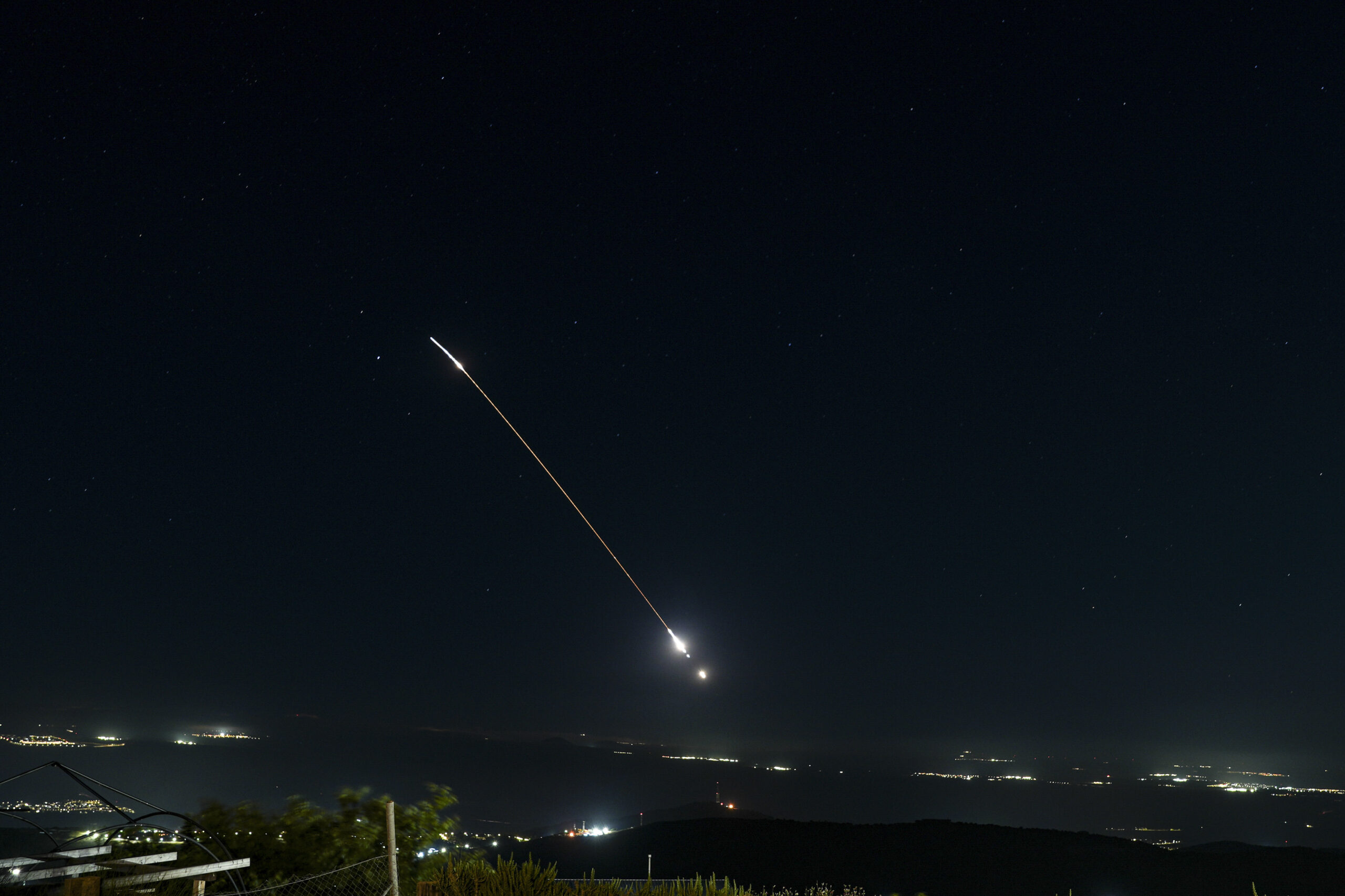
When Iran launched ten ballistic missiles at Israel Sunday night, retaliating for an Israeli strike on a Hezbollah command center in Beirut, the Islamic Republic’s parliament spokesman posted a threat on X: “Watch the sky of the occupied territories tonight.” He was not wrong about the sky. But Iran may have chosen the worst possible night on the Hebrew calendar to press its war against the Jewish people. Sunday night was the 23rd of Sivan, the exact date, 2,383 years ago, on which the Persian Empire’s decree to annihilate the Jews was reversed, turned upside down, and transformed into the occasion for Jewish triumph over their enemies.
It is no coincidence that the Hebrew calendar allows a student of Jewish history to ignore.
The Book of Esther records the moment precisely. After Haman’s genocidal decree had gone out to all 127 provinces of the Persian Empire, Mordechai and Queen Esther drafted a counter-decree and dispatched it from the royal court at Shushan. The scribes were called, the horses were sent, and the new order went out to every corner of Persia. The result is captured in a single Hebrew phrase that became one of the most theologically loaded in all of Jewish literature: V’nahafoch hu, “and it was turned upside down.”
“On the day that the enemies of the Jews hoped to prevail over them, v’nahafoch hu, it was turned upside down, and the Jews prevailed over their enemies.” (Esther 9:1)
V’nahafoch hu is not merely a historical account of what happened on a single day in ancient Persia. The Sages understood it as a governing principle of Jewish existence: those who construct the machinery of Jewish annihilation have a persistent tendency to be destroyed by it themselves. Haman built a fifty-cubit gallows specifically to hang Mordechai the Jew. He was hanged on it himself. His ten sons were executed alongside him. The decree meant to erase the Jewish people became the occasion for their salvation and the destruction of their would-be killers. The inversion was total.
The 23rd of Sivan is the hinge on which that inversion turned. Kabbalistic and Hasidic tradition treats this date as a day of unusual spiritual access, a moment when negative decrees can be nullified, when what was written against the Jewish people can be rewritten. The scribes were summoned on this day to write whatever Mordechai commanded. Tradition teaches that this gives the day a quality of reshut haketiva, the authority to write and request from God, and that the gates of heaven are particularly open to petitions for national and personal salvation.
Iran is not a modern nation that happens to be in geographic conflict with Israel. It is the direct cultural and territorial inheritor of ancient Persia, the same empire from whose capital, Shushan (Susa), Haman’s original decree went out. The Iranian parliament has called for Israel’s destruction in explicit terms. Its Supreme Leader has made the elimination of the Jewish state a cornerstone of the Islamic Republic’s founding ideology. Its proxies, such as Hezbollah, Hamas terrorists, and the Houthis, have been built, funded, and armed toward that singular purpose. When Iran fires missiles at Israel, it is doing precisely what Haman did: issuing a decree of annihilation against the Jewish people from the geographic seat of ancient Persia.
Rabbi Mendel Kessin, who has taught extensively on the Purim narrative as a template for the current war with Iran, has noted that Haman chose the fourteenth of Adar to execute his plan because that was the month of Moshe’s death, and he thought it boded ill for Israel. He failed to account for the fact that it was also Moshe’s birthday. The day Haman calculated as the most dangerous for the Jewish people became the day of their greatest salvation. “The nature of the day,” Rabbi Kessin explained, “is when evil is revealed to be good.”
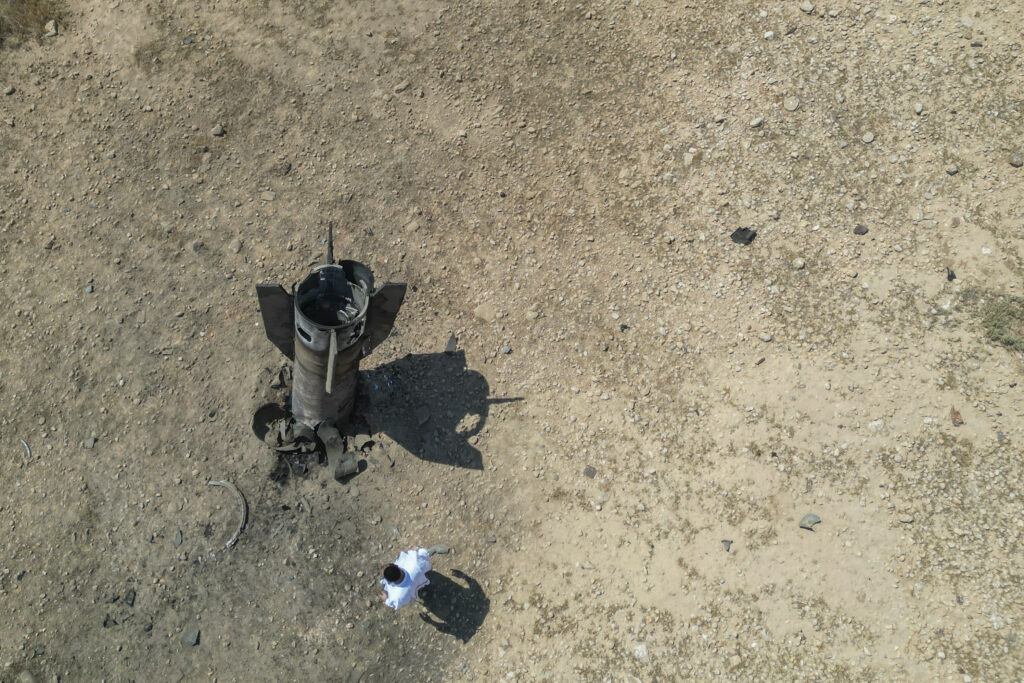
The same pattern is asserting itself now. Iran chose the 23rd of Sivan to launch its barrage. The IDF intercepted all ten missiles. Israel then struck back inside Iran, hitting approximately fifteen targets, including Mehrabad International Airport in Tehran, a UAV storage facility, and facilities in Isfahan, Karaj, and Tabriz. A second wave targeted an Iranian petrochemical complex in Mahshahr. What Iran sent toward Israel did not land. What Israel sent toward Iran did.
V’nahafoch hu. The phrase written into the Book of Esther is not a museum piece. It is a live description of how Jewish history operates. Those who dispatch decrees of destruction against the Jewish people do not get to choose how the story ends. The 23rd of Sivan is the day Mordechai picked up the pen. Iran picked up its missiles on the same date. History suggests that Iran, like Haman before it, has badly miscalculated which direction this will turn.
