
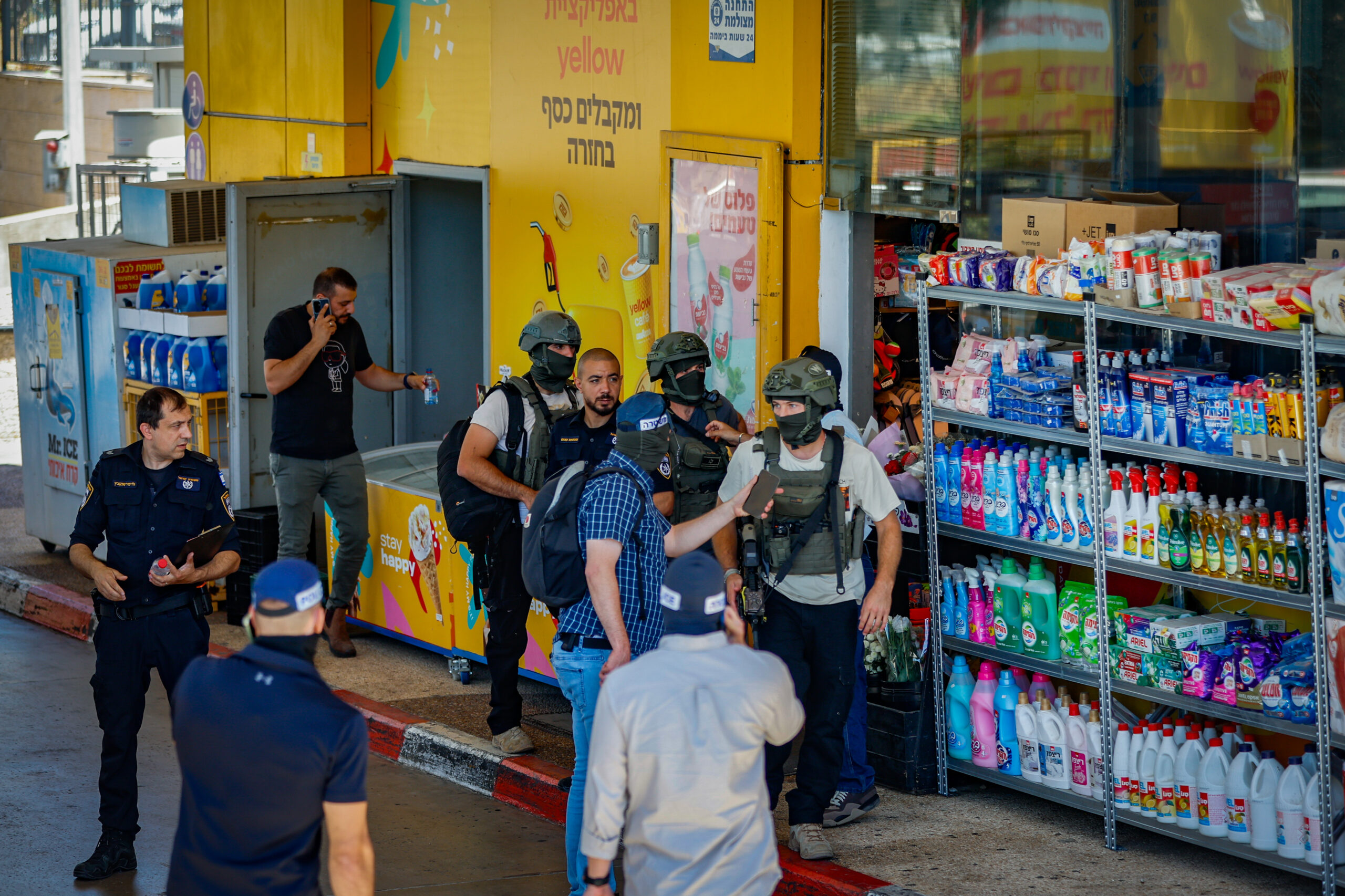
On a quiet Sunday morning, an Arab Israeli terrorist drove out of Tayibe armed with a makeshift submachine gun and went hunting. By the time police shot him dead near a quarry on the outskirts of his town, one Israeli husband and father was dead, five others were wounded, and three communities north of Tel Aviv had spent five hours barricaded in their homes. It was, said one 40-year resident of the area, unlike anything he had seen in four decades of living there.
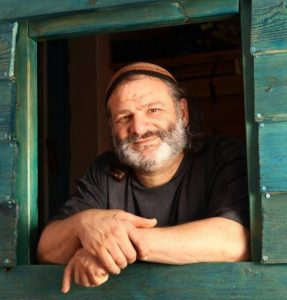
The slain Israeli was Master Sgt. (res.) Haim Kalomiti, 55, a married father of three from Tzur Natan who stepped out to engage the terrorist and shield his neighbors. He served in the IDF’s Ephraim Regional Brigade as a regional defense soldier, a reservist whose mission was to protect his community. He died doing exactly that.
When the attack began, Kalomiti did not stand idly by. He ran toward the gunfire. That is not merely heroism in the modern secular sense; it is the fulfillment of a biblical obligation that the Jewish people have carried for three thousand years. The question that his death forces onto the table is whether the State of Israel is fulfilling that same obligation toward the communities on its front lines.
The attack began at approximately 10:30 a.m. when Omar Yassin, an Israeli citizen in his 20s, left Tayibe in a vehicle with Israeli license plates, armed with a Carlo submachine gun. He opened fire on civilians at a gas station near Kochav Ya’ir, wounding two men in their 30s, one seriously. He then drove to Tzur Yitzhak, where he shot at the community’s security post, wounding a 31-year-old man and a 61-year-old woman. He continued to Tzur Natan, where he wounded the community’s security coordinator and a civilian woman before opening fire on a vehicle on a road outside the community, killing Kalomiti. He then drove to the nearby community of Sal’it, opened fire at the entrance, and fled when the local security chief shot back. Police caught up with him at 11:03 a.m. and shot him dead.
Police initially said Yassin acted alone. They later arrested a second suspect, also a man in his 20s from Tayibe, who admitted involvement in the attack while seeking help to hide from law enforcement. When detectives moved to arrest him, he tried to stab them with a glass bottle.
The Drom HaSharon Regional Council said that Kalomiti “was killed while going out to save lives and worked extensively for the security of the State of Israel.” Prime Minister Benjamin Netanyahu’s office said he “engaged the terrorist and courageously defended the residents of Tzur Natan from the despicable terrorist who embarked on a murderous shooting spree.” Netanyahu held a security assessment following the attack.
Hila Hakmon, head of the Kochav Ya’ir local council, did not mince words. “Unfortunately, the changes in the security elements over the past two years are relatively marginal,” she told Army Radio. “We got some kind of funding from the army, but it’s a drop in the bucket compared to what is needed here, and the proof is what happened today.”
Sunday’s attack did not occur in a vacuum. The day before, a suspected car-ramming attack took place at the Efrat Junction in Judea and Samaria. The picture that emerged was complicated: the IDF confirmed that prior to the incident, dozens of Jewish rioters had blocked roads in the area, forcing Palestinian cars to turn around and throwing rocks at vehicles. As drivers fled, one rioter was struck and lightly wounded. The suspected terrorist was apprehended and taken in for questioning. Army Radio reported that security forces present during the rioting made no effort to stop it and were seen speaking with the rioters without making arrests. The IDF did not cover itself in glory at Efrat Junction.
But the broader context of violence in Judea and Samaria goes far beyond any single incident. According to figures published by Hatzalah Yehuda v’Shomron (Rescuers Without Borders), Palestinian terrorists targeted Israeli Jews in Judea and Samaria at least 5,051 times in 2025 alone. Twenty-four Israelis were murdered. More than 400 others were wounded. The breakdown is staggering: 3,299 instances of rock-throwing, 458 firebomb attacks, 655 attempts to blind drivers with laser pointers, 286 explosive attacks, and 19 shootings. These figures do not include the hundreds of additional attacks on IDF soldiers and security personnel during ongoing counter-terrorism operations in Palestinian Authority-controlled towns. The data was cross-checked against official Israeli security agency figures.
On June 1st, two Israeli teenagers were wounded, one seriously, when a Palestinian terrorist rammed them with his vehicle at the Gush Etzion Junction, just over half a mile north of Efrat. Yisrael Ganz, head of the Binyamin Regional Council and chairman of the Yesha Council, called it a reminder “that the real threat in Judea and Samaria is subhuman individuals who deliberately target young girls and innocent civilians.” He called on Israel to continue “the fight against terrorist infrastructure, its financiers and its inciters until a clear victory is achieved in Judea and Samaria.”
Five thousand and fifty-one attacks. Twenty-four dead. The roads of Judea, Samaria, and central Israel run with Jewish blood, and the communities defending themselves are doing so with what Hakmon described as a drop in the bucket. Haim Kalomiti heard the shooting and went out to fight. His country owes his memory, and the living who remain on those front lines, far more than marginal security improvements and official condolences.