

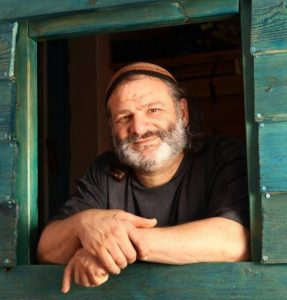
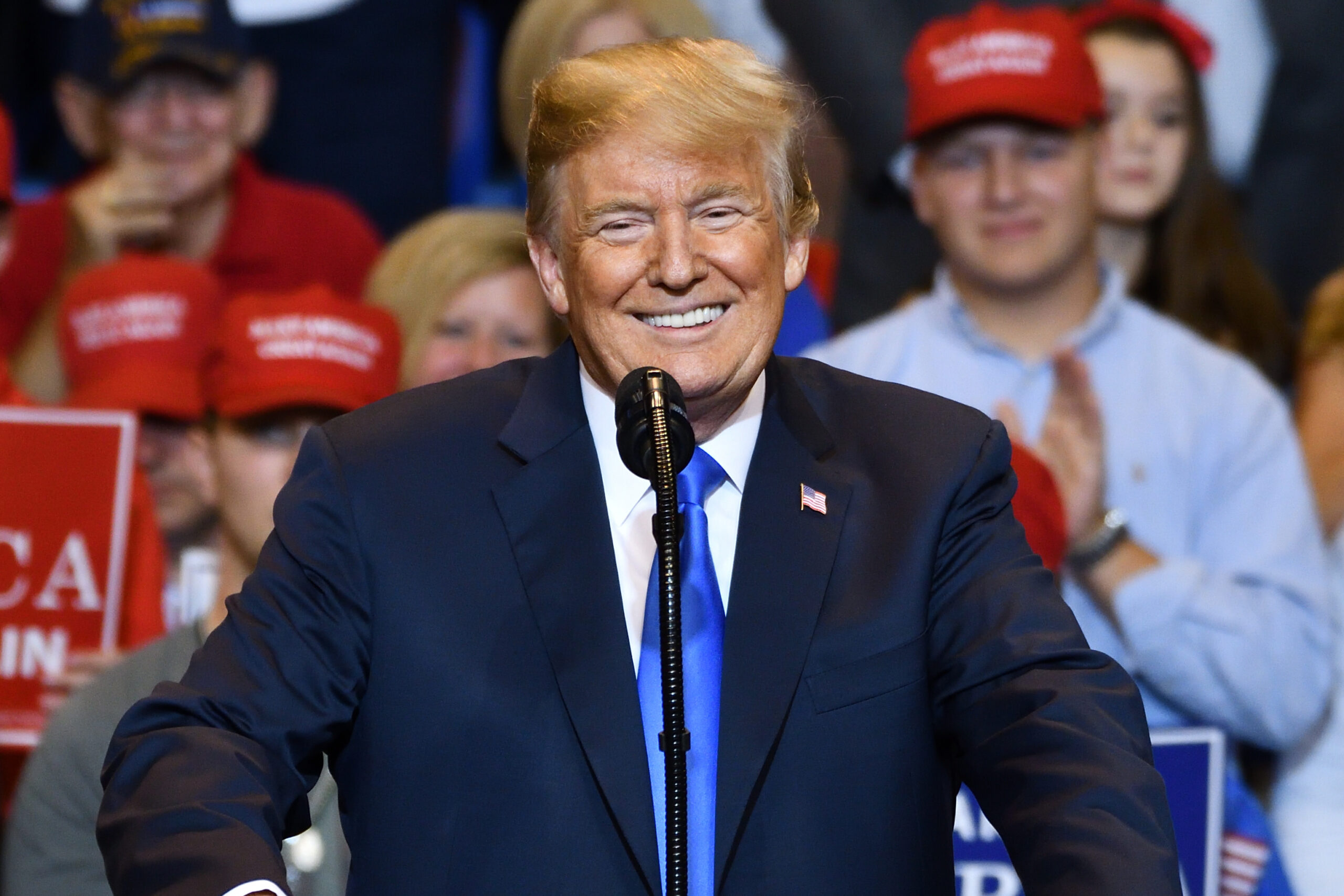
The headlines seem to contradict themselves from week to week. Trump is going to war with Iran. Trump is negotiating with Iran. The messianic process is accelerating. The messianic process appears to have stalled. For anyone paying attention to both current events and the theological framework that Rabbi Mendel Kessin has spent decades building, the whiplash can feel disorienting.
That disorientation, Rabbi Kessin says, is by design.
In his most recent shiur, the internationally renowned Torah thinker and lecturer addressed head-on what he called the “roller coaster” quality of current events — and offered what he believes is the key to understanding it all: the special anhagos, or divine behaviors, that operate at the end of time, which are categorically different from how God has conducted history throughout the preceding millennia of exile.
“The behavior that God does at the end of time is different in certain ways than what he does during the ensuing 5,700 years,” Rabbi Kessin told his audience. “That’s why it looks so bizarre — because we are now at the end of time.”
The Joy That Is About to Be Lost
Rabbi Kessin opened with a deeply personal observation. He had been davening in a shul where the prayer, he said, was genuinely elevated — and in that moment, something struck him.
“I had a spontaneous feeling where I felt the joy of God,” he said. “God has incredible joy. Why? Because all these Jews are gathered together to pray to him, and they were very sincere about their prayer. You could see on their face the level of intensity — the emunah, the belief in God, the trust in God, and perhaps I would even say the love for God.”
What made this moment theologically significant to Rabbi Kessin was not the prayer itself, but the contrast it implied. The angels in heaven praise God continuously — but their praise, he argued, is not truly free. When a being directly perceives the awesome majesty of the Divine, it has no real choice but to offer praise. “When a person looks at something which is awesome, you give praise to that being. How mighty and awesome and magnificent is that being? And they’re so overwhelmed by his majesty that they just open up in prayer and praise.”
The Jews in that shul, by contrast, cannot see God. They believe in God. They come from the darkness of exile, from a world that offers no obvious evidence of His presence — and yet they pray with their whole hearts. That, Rabbi Kessin said, is the source of a unique divine joy that will not exist forever.
“After the Messiah comes, there’s no more free will where we worship him in darkness even though we don’t see him. God won’t have this joy — because nobody has free will. Whatever happens to that joy? Once the Messiah comes, the grand experiment of mankind worshiping God is over for all eternity.”
Two Problems No One Is Talking About
This leads to what Rabbi Kessin described as twin concerns that shape everything happening right now — two theological problems that God, so to speak, must solve before the redemption can be complete.
The first is the problem of entry. Not every Jew who has lived through history has accumulated the spiritual merit required to enter Olam HaBa, the World to Come. There is a threshold. And at the moment the Mashiach arrives, that threshold becomes fixed. “Unfortunately, right now, there are many people that may not get into — at least the way it stands at the time that the Messiah will come,” Rabbi Kessin said. “That’s the first concern.”
The second problem is equally striking: even those who do enter, enter at whatever level of reward they have accumulated. Once the messianic era begins, the opportunity to grow — to earn merit through free choice exercised in the darkness of exile — disappears entirely. “Whatever reward I get is fixed forever, and I can no longer advance. In many ways, that’s incredibly tragic.”
These are not abstract theological puzzles. Rabbi Kessin argued they are the engine driving the strange and often painful events of our time.
God’s Unconventional Solutions
To address the first problem — ensuring that as many Jews as possible cross the threshold into Olam HaBa — Rabbi Kessin described a range of divine mechanisms, some familiar and some surprising.
Suffering (yisurin) is the most direct method, he explained: “With the yisurin you can undo a great deal of the sins that you’ve done, which you can’t get into the future world with. So they have to be removed, and suffering removes them.”
But God, Rabbi Kessin said, has more creative tools as well. He offered a striking example: the stock market. “Why is there a stock market? God — that’s an incredible way to make sure a guy either is punished or rewarded in one day, and he doesn’t have to wait a whole generation. A guy can put money in a stock market, make a million dollars in one day if he picks the right stock — which God will make sure that he does.”
God can also, Rabbi Kessin explained, lower the bar of entry for particular individuals. “Imagine New York City — they need engineers, so they give an exam, and if you want to work for the city, you have to pass with an 80. Let’s assume people take the test and 50% get a 70. So they lower the bar.” In the same way, a Jew who does no mitzvos but is proud to be a Jew, who believes in the message the Jewish people carry to the world — even that person may be granted entry into the World to Come, albeit at a lower level of reward.
“It happens far more often than we would believe,” Rabbi Kessin said. “Somebody will say, ‘Okay, I want to donate to this shul, a mikvah’ — that’ll get them into, even without mitzvos. It won’t be the same, of course, as somebody who engages in mitzvos, but it will get him in.”
The Test of the End of Days
To address the second problem — elevating the reward level of Jews before the final door closes — God employs a different strategy entirely. He introduces radical doubt.
“God is going to create a tremendous doubt if the Messiah will even come,” Rabbi Kessin said. “I’m going to present a difficulty in believing that the redemption will even happen. And therefore, if you believe in me — that no, God promised to save us, to redeem us — and you believe it, that will enormously advance your reward level.”
This is not a new pattern. Rabbi Kessin traced it through Jewish history with striking consistency. When Moshe Rabbeinu came to Egypt as the redeemer, Pharaoh responded by making the labor harder — forcing the Israelites to gather their own straw in the middle of the night. “How could it get worse after the Messiah comes? Because that’s exactly what God wanted. He wanted them to enormously advance the amount of reward that they will get.”
At the Splitting of the Sea, the Jews stood at the threshold of final redemption — and turned to find the entire Egyptian army bearing down on them. At the time of King Sancheriv, 183,000 soldiers surrounded Jerusalem the night before what could have been the messianic era. Each time, Rabbi Kessin observed, the pattern is identical: “There’s always a tremendous difficulty that throws doubt into the whole process. Why? It is to give you greater reward — so you’re not fixed at a low level when the Messiah comes.”
What Is Trump’s Role — and Where Did It Go Wrong?
This framework leads directly to the most pressing question in Rabbi Kessin’s recent lectures: what is happening with Donald Trump?
For years, Rabbi Kessin has identified Trump as a gilgul (reincarnation) of the Roman emperor Antoninus, a righteous gentile who assisted Rabbi Yehuda HaNasi and who is destined to assist the Jewish people again. In Rabbi Kessin’s framework, Trump is the tov she’b’Eisav — the good aspect of Esav — whose historic role is to fight the forces of evil and support the messianic process, “whether he knows it or not.”
The evidence seemed overwhelming. Trump recognized Jerusalem as Israel’s capital, recognized Israeli sovereignty over the Golan Heights, brokered the Abraham Accords, and — astonishingly — recently called on all Jews to observe Shabbos. “No president ever did that,” Rabbi Kessin noted. “Because his job is to fight evil in the world and to bring them to the faith of God.”
And then, from Rabbi Kessin’s perspective, something went wrong.
“All of a sudden, Trump is not doing his job, which is amazing. He’s being fooled. People cannot believe what this guy is doing — that he’s being fooled by Iran.”
Rabbi Kessin’s diagnosis is pointed: “I believe he’s concerned with his legacy. All of a sudden, it became very apparent to him that maybe he can bring peace, and that will make him an incredible legacy, the president of peace. Maybe he’ll even get the Nobel Peace Prize. He’s been bribed by his own future.”
The critique is scathing, but it comes wrapped in something that sounds almost like pleading. “You want a legacy? Then do the will of God. That’s the greatest legacy of all — because that will live on for eternity. That legacy — that you assisted the Mashiach Ben Yosef to come and to redeem the Jews and to redeem the entire world. That’s how you bring peace.”
Rabbi Kessin drew an explicit parallel to Pharaoh: “The first five plagues, Pharaoh had free will. But after the fifth and sixth, he no longer had free will. I’m really wondering if God does that to Trump. You can do my will — you have the free will to do it only for a certain amount of time. But if not, then I will deny you the greatest reward you can have.”
The Purpose of the Confusion
Here, Rabbi Kessin brings the analysis full circle. The apparent failure of Trump to finish the job — to confront Iran, to complete the process — is not a historical accident. It is a divine instrument.
“God is allowing Trump to make a terrible mistake so he can service the Jews with unbelievable reward at the end of time. Is God actually going to redeem the Jews? Maybe not. It’s forcing the Jews to dig deep down into themselves and reassert their belief in God.”
This, he argues, is precisely why the current moment feels so disorienting. Things looked so promising. Trump was acting like a figure out of prophecy. And now — Iran negotiations, pressure on Netanyahu, hostility toward Israeli military operations — it appears to be unraveling. That sensation of unraveling is the nisayon, the test.
“Do we believe that God will redeem the Jews without Trump, or do we not believe that there will be a redemption?”
Rabbi Kessin cited a remarkable tradition about the Levi Yitzchok of Berditchev, the great defender of the Jewish people, who reportedly resolved to confront the Mashiach directly upon his death and demand to know: why haven’t you come? When Levi Yitzchok arrived and put the question, the Mashiach answered: “You want me to come? No problem — I will come. But if I come now, 20% of the Jewish people will not get into Olam HaBa, because God hasn’t arranged it yet where they deserve to enter. Do you still want me to come?”
Levi Yitzchok’s answer was no.
“The reason why the exile is so long,” Rabbi Kessin concluded, “is for those two reasons. One — to make sure everybody will get into the future world. The second — God wants people to enter with a high ticket, with a lot of resources.”
Love as the Foundation of Everything
Underlying the entire framework is a principle Rabbi Kessin returned to repeatedly, one he considers unique to Judaism among all the world’s religions.
“There is no other religion in the world which says that you should love God. They say you should obey God — whether it be surrender to God, believe in God, obey God, whatever. But that you should love God with all your might, all your possessions, and all your soul — I don’t know of any other religion that has that.”
And if God commands us to love Him, the logical implication cuts deep: “It indicates that if he wants us to love him, then it’s only logical to assume that he loves us. That means God wants us to return his love. He loves us — and therefore we can be certain that he is now going to act in a way that certifies that love.”
That certification, Rabbi Kessin said, is the guarantee behind everything — behind the suffering, the nisyonos, the apparent retreats and confusions of the pre-messianic era. God will ensure that every Jew who can be brought across the threshold is brought across.
“Please don’t walk around bewildered. Everything makes perfect sense. Iran will cease — the government of Iran will cease to exist, whether it be done by Trump or not. But I believe it will be done by Trump somehow. It’s going to wake up and therefore it will happen. And the Beis HaMikdash will be built before the entire world.”
Rabbi Kessin also announced at the conclusion of the shiur that his landmark 1988 lecture on lashon hara — long circulated in audio form — has been transcribed and published in print by Feldheim, under the title “The True Power of Speech: The Key to Both Worlds.” The book, now available in seforim stores, examines the mechanics of how harmful speech affects a person’s mazel and their standing in the World to Come. “Read it,” Rabbi Kessin said, “and I guarantee you it will profoundly affect your life and the life of your family.”
