Rabbi Shmuel Chaim Naiman
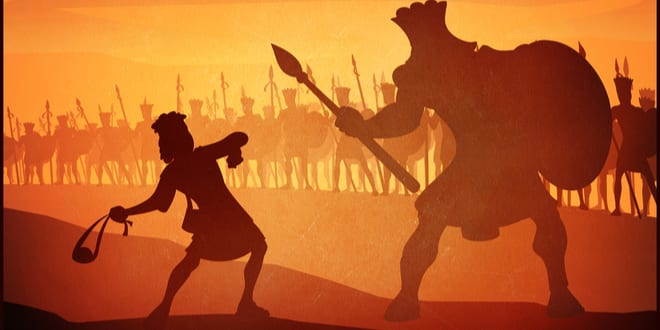
Most visitors to Israel walk the streets of Jerusalem, pray at its holy sites, and stand at the shore of the Sea of Galilee. Almost none of them have ever heard of Khirbet Qeiyafa. And yet this forgotten hilltop, rising above the valley where David killed Goliath, may be the most dramatic archaeological confirmation of the Bible’s historical truth unearthed in the modern era.
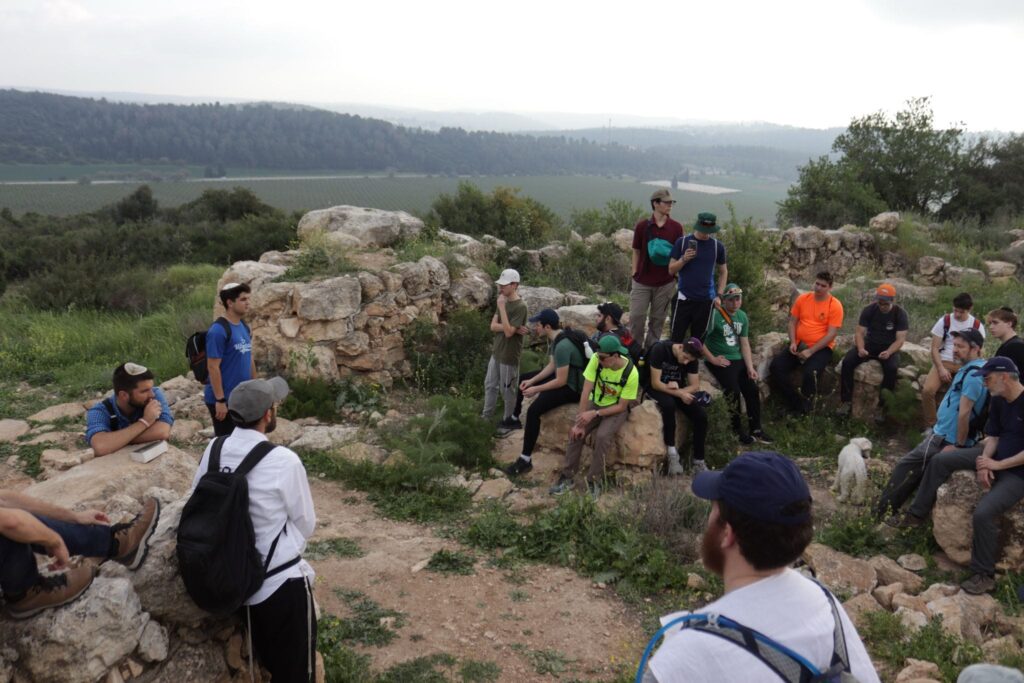
Photo courtesy
The Elah Valley sits about 20 miles southwest of Jerusalem. You have almost certainly read about it. “The Philistines stood on a mountain on one side, and Israel stood on a mountain on the other side, with the valley between them” (1 Samuel 17:3). That valley is here. Those mountains are still here. And on one of them — perched directly above the battlefield, looking down over the place where a young shepherd picked up five smooth stones and changed the course of history — the ruins of a 3,000-year-old Israelite city are still standing.
Israel’s leading archaeologists have studied this site for decades. Their findings, detailed in the book In the Footsteps of King David by Professor Yosef Garfinkel and his colleagues, make a compelling case: this was a Jewish city, occupied during the reign of King David, functioning as a fortified border outpost against the Philistines. The inhabitants of Khirbet Qeiyafa were not reading about David and Goliath. They were watching it happen in the valley below their walls.
What the archaeologists found matters. Tens of thousands of animal bones were recovered at the site — goats, sheep, cattle — but not a single pig bone. Philistine and Canaanite sites are full of pig bones. The Israelites who lived here kept the biblical dietary laws. The excavations also turned up no human or divine figurines of any kind, in stark contrast to the idol-saturated sites of the surrounding nations. Whoever lived here obeyed the commandment against graven images. And the city’s distinctive architecture — a casemate wall system, in which two parallel walls are divided into rooms forming part of the adjoining homes — matches precisely the pattern found at other confirmed sites of the Kingdom of Judah, including Beersheba and Beit Shemesh.
The city has two gates, each with four chambers. This is why some scholars identify it with the biblical city of Sha’arayim, a name that literally means “two gates” in Hebrew. The name appears in Joshua 15:36, listed among the cities of the tribe of Judah, and in 1 Samuel 17:52, where Scripture records that the Israelites pursued the fleeing Philistines “on the road to Sha’arayim.” If that identification is correct, the city described in your Bible is not a literary invention — its ruins are still there, sitting above the same valley, facing the same hills.
Those gate chambers were the center of civic life in the ancient world. The Bible describes the city gate as the seat of justice and leadership: “Appoint judges and officers in all your gates that the Lord your God gives you for your tribes, and they shall judge the people with righteous judgment” (Deuteronomy 16:18). Sitting inside those chambers today, surrounded by stones laid by Jewish hands three thousand years ago, it is impossible not to think about the people who lived here. They didn’t have a completed Bible. They were living inside the story that would eventually become one. Some of the men who sat in these rooms, deliberating the affairs of a young Israelite kingdom, were almost certainly prophets themselves. Jewish tradition records that more than a million prophets arose during the era of the First Temple. Most of them lived and died in towns like this one, never famous, never recorded by name. Khirbet Qeiyafa was one of their towns.
This is what makes the site so striking: not just its archaeological significance, but its sheer rawness. There are almost no signs, no visitor facilities, no fences. The stones sit where they fell. You are not looking at a reconstruction or a museum exhibit. You are standing inside an ancient Israelite city, largely as its last inhabitants left it, for reasons we will probably never know.
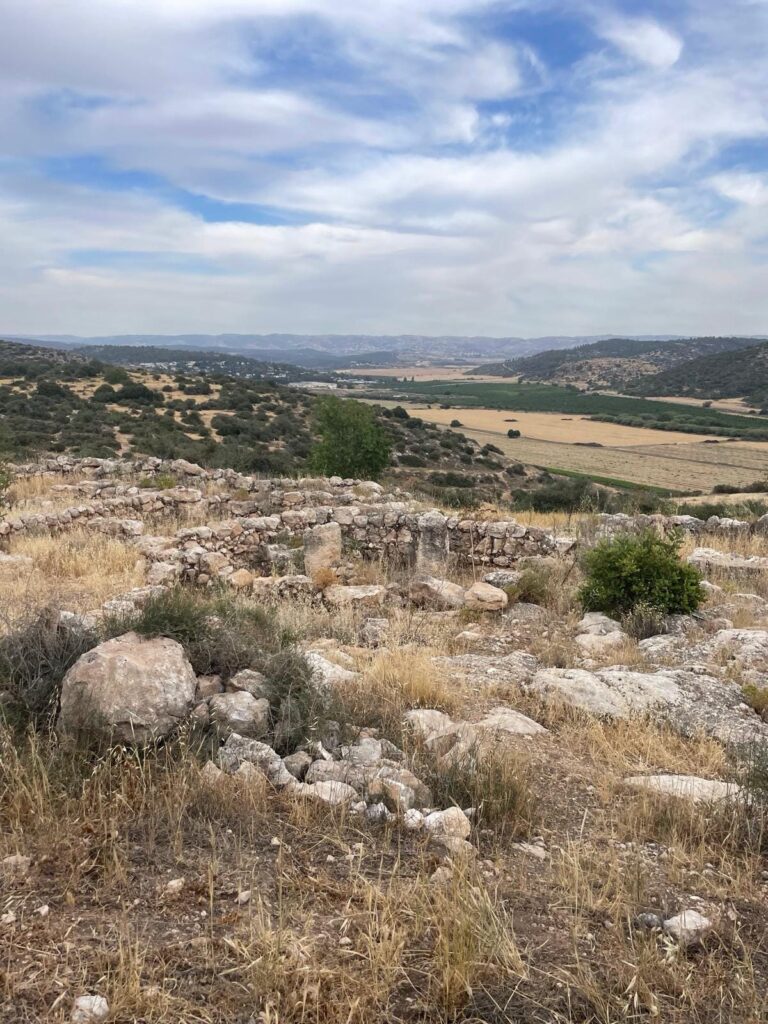
Photo courtesy
Skeptics have long argued that David is a legend, that the Israelite monarchy was a late literary invention, that the stories of Samuel are pious fiction. Khirbet Qeiyafa is not a theological argument against that claim. It is stones. Walls. Gates. A city built by people who did not eat pork, did not worship idols, and lived on the ridge directly above the valley where the most famous battle in biblical history took place.
The Bible is not mythology. It is the account of a real people in a real land, and the land still holds the evidence.
If you ever come to Israel and want to understand what David’s kingdom actually looked like — not through art or interpretation, but through archaeology — drive out past Beit Shemesh and find your way up to Khirbet Qeiyafa. Stand in the gate chambers. Look south over the Elah Valley. Pick up one of the smooth stones from the streambed below.
The story you have read your whole life is not a story. It is history. And the proof is sitting right there on the hill.
Rabbi Shmuel Chaim Naiman is a teacher, foraging guide, and certified health counselor in Ramat Beit Shemesh, Israel, right down the road from Khirbet Qeiyafa. He recently published a book, Land of Health: Israel’s War for Wellness, and writes a weekly newsletter, Healthy Jew. In September 2025, he enlisted in the IDF. Learn more at healthyjew.org.