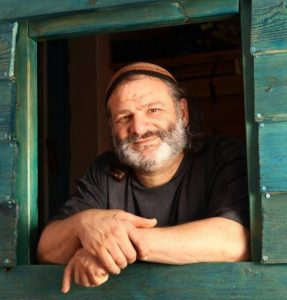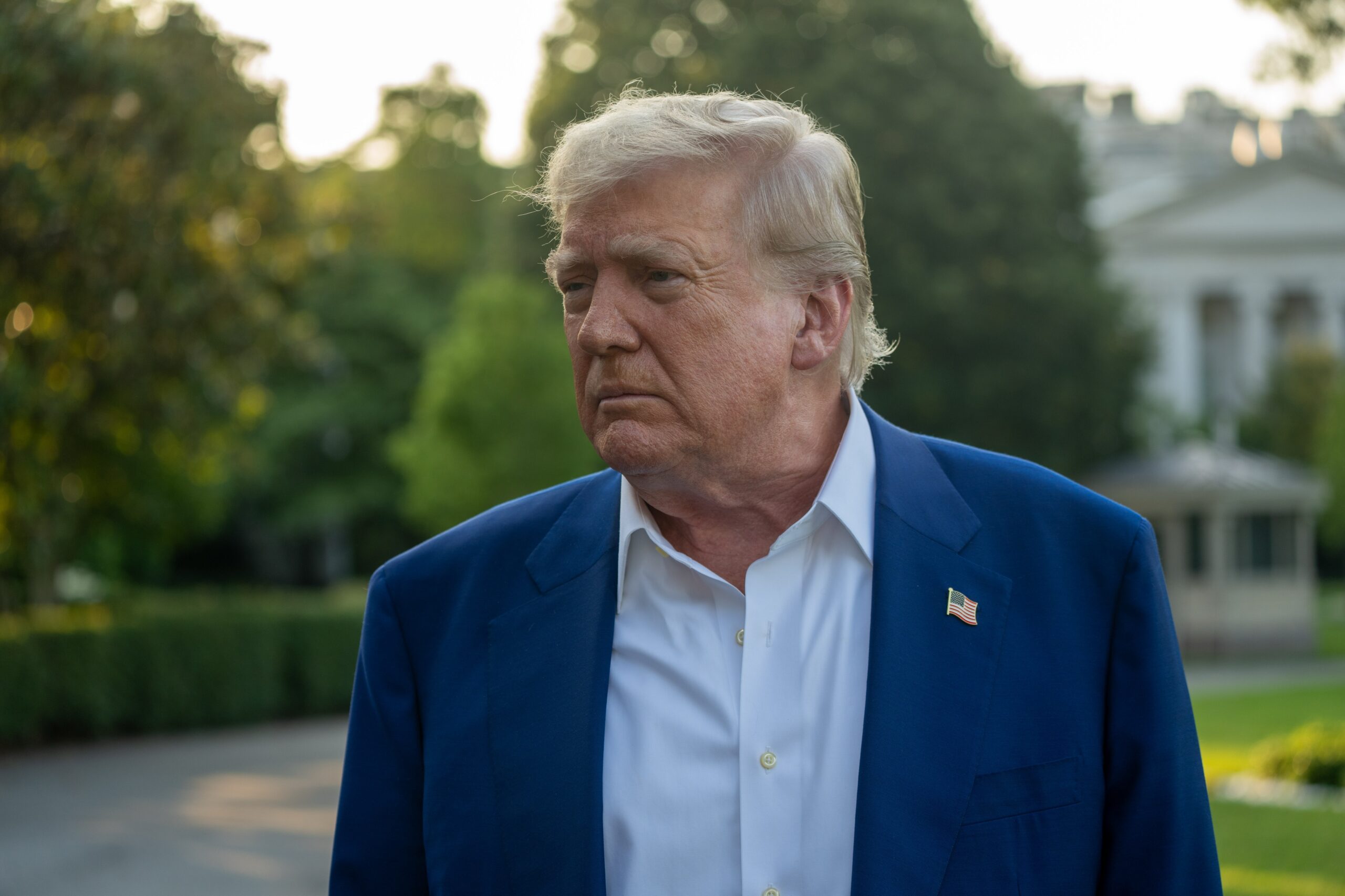
On February 28th, President Trump stood before the nation and told the Iranian people their hour of freedom was near. He told the IRGC they would face certain death if they didn’t lay down their weapons. He told the world he had their backs. That was a promise, and Rabbi Pesach Wolicki, appearing on the Erin Molan Show, argues that America is now in the process of breaking it.
The evidence is hard to dismiss. The Americans are negotiating with Ghalibaf, Aragchi, and the head of the IRGC itself — the men who run the prisons, order the executions, and have kept the Iranian people under their boot for 47 years. The Iranian regime, battered but intact, is still standing.
Wolicki’s conclusion? The deal on the table doesn’t end the Iranian threat. It rescues the regime.
The Speech Nobody Is Holding Trump To
On February 28th, Trump gave an 8-minute address to the nation that Wolicki keeps returning to, and for good reason. Trump announced four war aims — destroy Iran’s navy, eliminate its ballistic missiles, dismantle its terror proxy network, end its nuclear program — and then said something remarkable to the IRGC: lay down your weapons or face certain death. To the Iranian people, he said their hour of freedom was near. Trump didn’t just announce military objectives that day. He made a promise.
Now watch what Marco Rubio says. Asked repeatedly to describe American goals in this conflict, he talks about two things: ensuring Iran can’t build a nuclear weapon, and reopening the Strait of Hormuz — an objective that wasn’t even on the radar when the bombs started falling. The proxy network? Still intact. The IRGC? Still armed, still controlling the streets, conspicuously not facing certain death. The Houthis are still there. Hamas is still there. Hezbollah’s financial infrastructure in South America is still there. Three of the original four war aims have been quietly dropped, and Rubio speaks as though nothing changed.
The Promise Trump Made to the Iranian People
Trump’s February 28th speech, backed up publicly by Reza Pahlavi and amplified across every platform, sent a clear message to ordinary Iranians: wait, the moment is coming, we have your back. During the bombing, there was a logic to waiting — the IRGC was getting degraded, the conditions for a popular uprising hadn’t yet materialized. But the Americans are now sitting across the table from Ghalibaf, Aragchi, and the head of the IRGC itself, negotiating with the men who run the prisons, order the executions, and have kept the Iranian people under their boot for 47 years. “Why should the Iranian people think that President Trump has their back,” Wolicki asks Molan, “when he’s negotiating with the regime?” There is no easy answer to that question.
The Arabs Don’t Want Iran Free Either
What’s been missing from almost every analysis of this conflict is the regional calculation that Wolicki raises. The Gulf states — Saudi Arabia, the UAE, the others — despise the Islamic Republic. They’ve been bombed by Iranian proxies and destabilized by Iranian meddling, and they’ve said so publicly. But they’ve been calling Trump constantly throughout this conflict, and not to encourage him to finish the job. A democratic, free, economically open Iran would be a catastrophe for every authoritarian government in the region. Iran has an educated population, enormous natural resources, and deep historical roots. A free Iran would expose, by sheer contrast, exactly what the Gulf monarchies are. The Saudis don’t want the Iranian regime gone. They want it weakened, chastened, and permanently in place — because the alternative, a flourishing Iran that looks like a functioning open society, is the real threat to their own hold on power.
Two Elections, Opposite Incentives
Trump and Netanyahu are both heading toward elections — American midterms and Israeli national elections — on roughly the same timeline, but the political logic runs in opposite directions. As midterms approach, Trump’s incentive for military escalation drops; the American public has limited appetite for extended conflict, and the domestic risk of returning to kinetic action grows. Netanyahu faces the mirror situation. The Israeli public was promised victory over Hamas and Iran, hasn’t seen it, and military action polls strongly. The closer both countries get to their elections, the wider the gap becomes between what Trump needs politically and what Netanyahu needs. Their agendas, largely aligned since October 7th, are now pulling apart — and that divergence will shape every decision made between now and the fall.
None of this turns Wolicki into a Trump critic — he’s explicit about that. He remains grateful that Kamala Harris isn’t in the White House, and says he doesn’t want to think about what the Middle East would look like if she were. He credits Trump with genuine conviction, and the cement isn’t dry yet — Trump has said repeatedly that he won’t leave the Iran problem for his successor, and there’s still time to course correct.
But whatever Trump’s intentions, the facts on the ground are what they are: the regime is still standing, the IRGC didn’t lay down its weapons, and a deal that lets them keep their heads down until January 2029 leaves every piece of infrastructure intact — the revenue streams, the international networks, the Chinese and Russian backing — for the rebuild.
The Iranian regime went to war because they thought they could outlast it. Right now, it looks like they were right.