
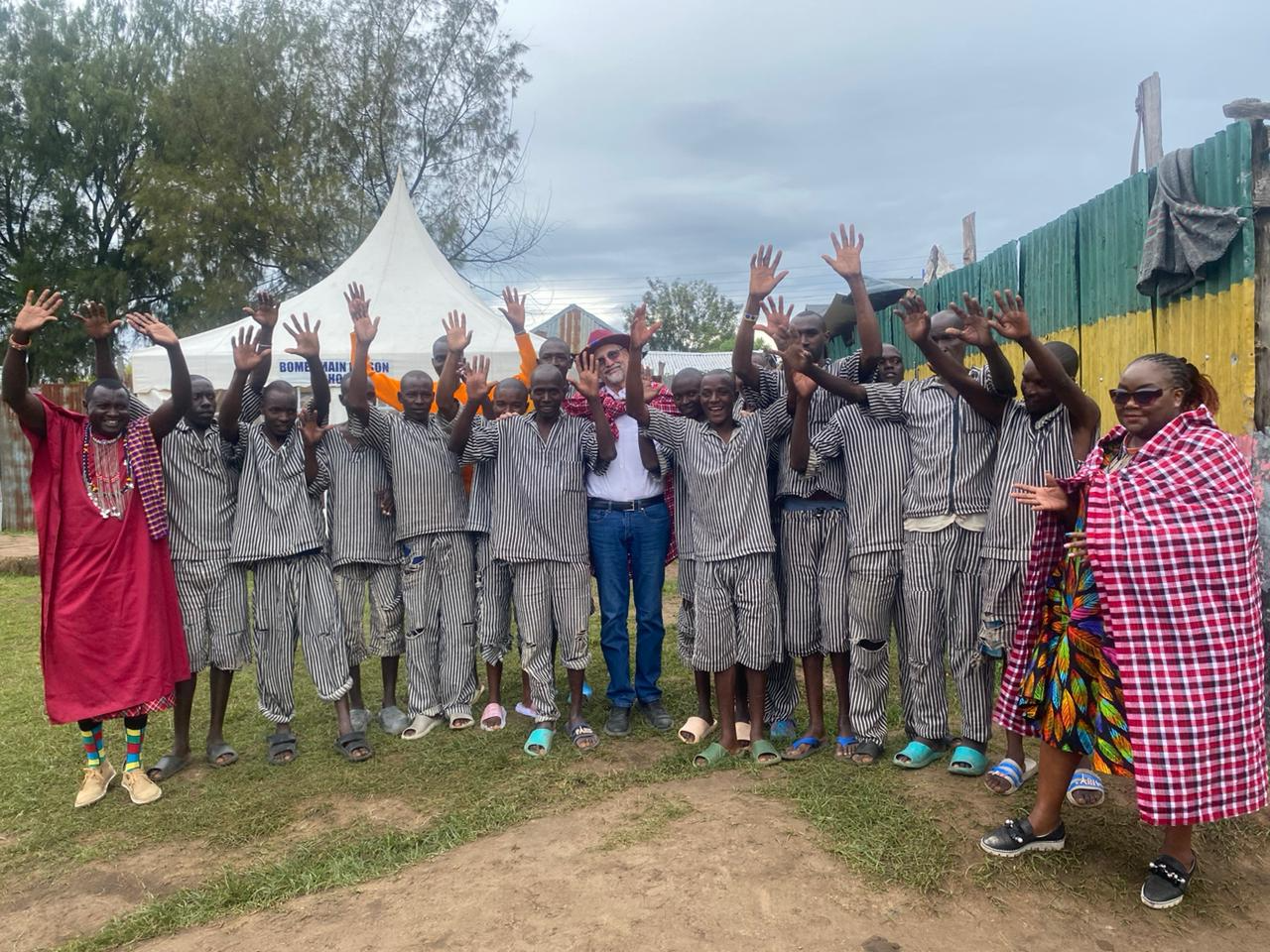
Ten months ago, I traveled to Kenya to install three water wells for communities in desperate need. One of those wells went into the Bomet Prison. I didn’t know then how significant that visit would turn out to be.
When I returned to Kenya to dedicate the completed wells, I discovered that Bomet Prison wasn’t just a criminal facility. It was also a debtors’ prison — holding men and women who had committed no crime other than owing money they couldn’t repay.
That’s when I heard about Mercy.
Mercy was an electrical engineer from Bomet County who had traveled to Nairobi looking for work. She found it — a job as an M-Pesa mobile money attendant. Three weeks into the job, on her way to load the float, she was attacked by a gang, violently assaulted, and robbed of everything. She survived the attack and immediately contacted her employer to report what had happened.
Her employer’s response was to have her arrested.
He didn’t want an explanation. He wanted his money. So Mercy — the victim — was charged, convicted, and sentenced to one year in prison. She served every day of it.
When I realized that Mercy had been sitting in that prison during my first visit — right there, behind those walls, when we installed the well — I knew the Lord had brought me back for a reason.
His word made it clear. The prophet Isaiah declared: “The Spirit of the Lord GOD is upon me; because the LORD has anointed me to bring good tidings unto the humble; He has sent me to bind up the broken-hearted, to proclaim liberty to the captives, and the opening of the eyes to them that are bound.” (Isaiah 61:1)
I went to work raising funds to release as many prisoners from the debtors’ section as possible. Our supporters responded with extraordinary generosity — we raised over $100,000. Working directly within the Kenyan prison system to identify those eligible for release, we were able to open the doors for approximately 150 men and women who had been incarcerated solely because of debt.

And while we were on the ground in Kenya coordinating those releases, the news broke: the Kenyan government had announced the abolition of the debtors’ prison system entirely. What we were doing one prisoner at a time, the government was now doing nationwide.
God’s timing is never accidental.
The Lord has always had a special heart for those crushed by poverty — the widow, the orphan, the debtor. That concern is woven throughout Scripture. In the Torah, God commanded Israel to observe the Shmitah — a Sabbath year, every seven years — during which all debts were cancelled and those enslaved by poverty were given a fresh start. The principle was simple: no one should be permanently trapped at the bottom. God built a floor under human dignity, and He built it into the law itself.
What I witnessed in Kenya was that same principle made real — not as ancient legislation gathering dust, but as something we could actually do, right now, for 150 people with names and faces and stories like Mercy’s.
Those 150 people are free today because of the generosity of believers around the world who took Isaiah 61 seriously — who understood that proclaiming liberty to the captives isn’t only a prophetic vision. It’s a calling.
Mercy is out. So are 149 others.
And we’re not finished. The wells that first brought us to Bomet are serving thousands — but more communities still need clean water, and we are going back. The same God who led us to Kenya, to those prison walls, to Mercy’s story, is not done writing this one yet.
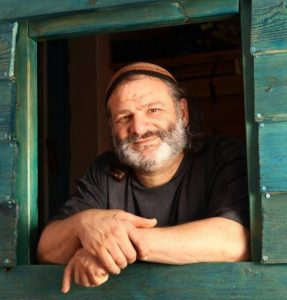
Pastor Mark Biltz is the founder of El Shaddai Ministries and the author of multiple books on biblical prophecy and the Hebrew roots of the Christian faith.