


Two coins that once circulated in the Land of Israel — one carrying an image of the Temple menorah that has not been seen on any other Jewish coin in history, the other so rare there is only one other like it in the world — were returned to the State of Israel this week in an official ceremony at the Manhattan District Attorney’s Office in New York City. They had been smuggled out of Israel, quietly placed on the auction block, and nearly sold to the highest bidder. They didn’t make it.
The operation was a joint effort by the Israel Antiquities Authority’s Theft Prevention Unit, the Antiquities Trafficking Unit at the Manhattan District Attorney’s Office, and Homeland Security officials. Intelligence passed by IAA inspectors to their American counterparts opened an investigation into both the auction houses and the sellers. The coins were confiscated and returned.
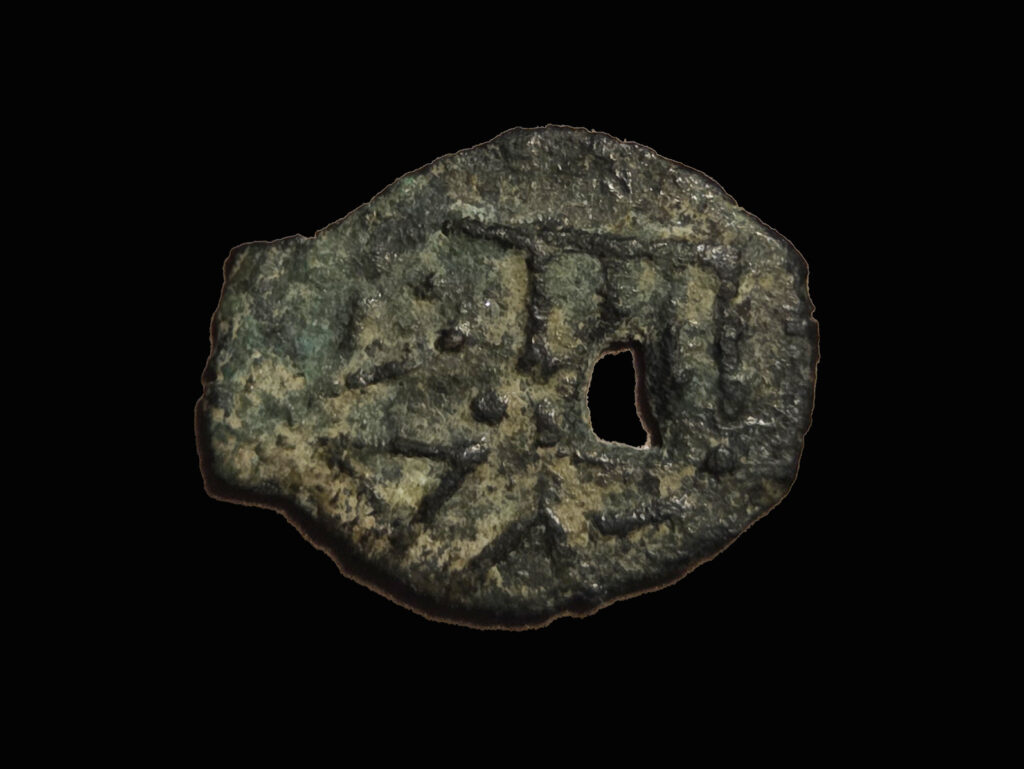
The first coin is a small bronze prutah — the smallest denomination in ancient Jewish currency — minted during the reign of the last Hasmonean king, Mattityahu Antigonus, who ruled in Jerusalem from 40 to 37 BCE. On one face of this coin is an image of the seven-branched menorah, the great golden candelabrum that stood in the Beit HaMikdash, the Temple in Jerusalem. It is the earliest known artistic depiction of the Temple menorah on any Jewish coin — and the only Jewish coin ever minted to carry this image. The reverse bears the shulchan ha-lechem ha-panim, the showbread table, another sacred vessel used in the Temple service.
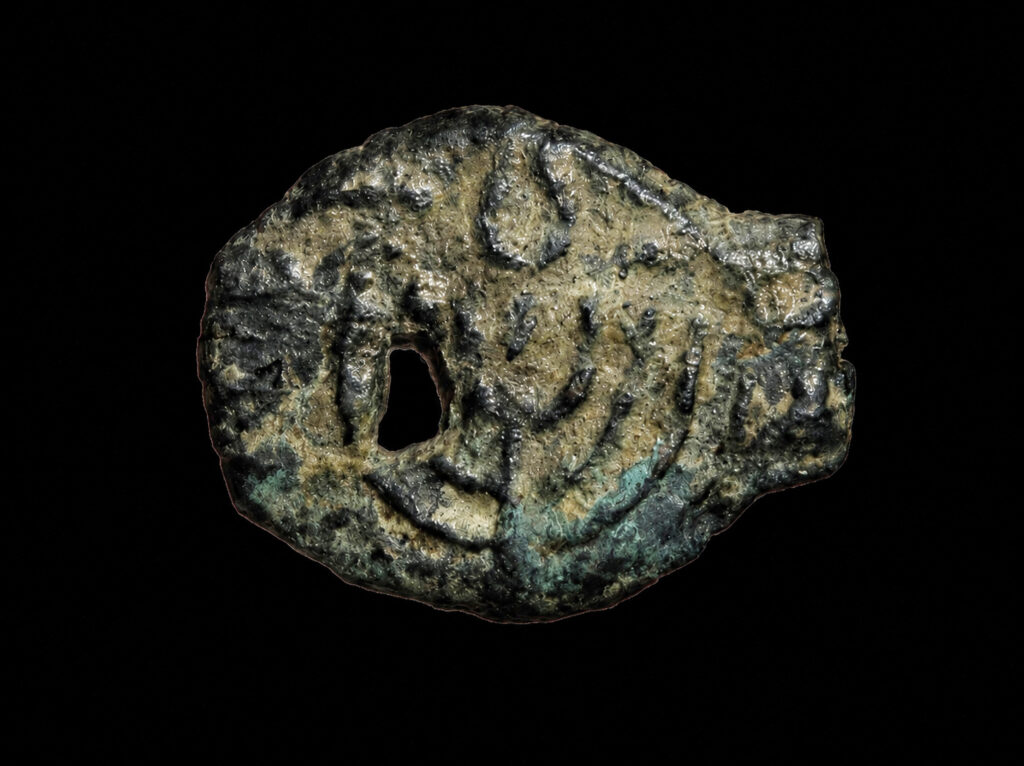
These were not decorative choices. Mattityahu Antigonus was fighting for his political life. His rival, Herod, had the full backing of Rome in both the military and the political spheres. Antigonus needed his people — the Jewish inhabitants of Jerusalem and Judea — to back him. By placing the menorah and the shulchan on his coins, he was broadcasting a message in the currency that passed through every hand in the kingdom: I am the legitimate heir. I am the defender of the Temple. I am the Jewish king.
The Sages teach that the menorah was among the most visible symbols of the divine presence resting within Israel. The Talmud in Tractate Shabbat (22b) records a debate about whether the western light of the menorah — the ner ma’aravi — served as testimony to all the world that the Shekhinah, the divine presence, dwelled in Israel. For Antigonus, putting the menorah on a coin was not merely political theater — it was a theological declaration. The Temple is ours. G-d is with us.
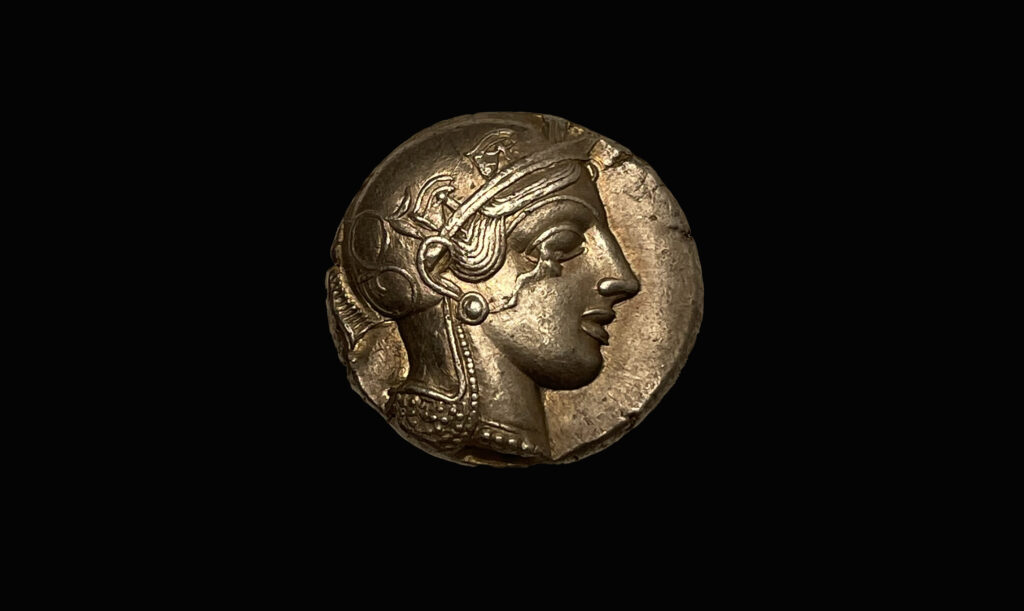
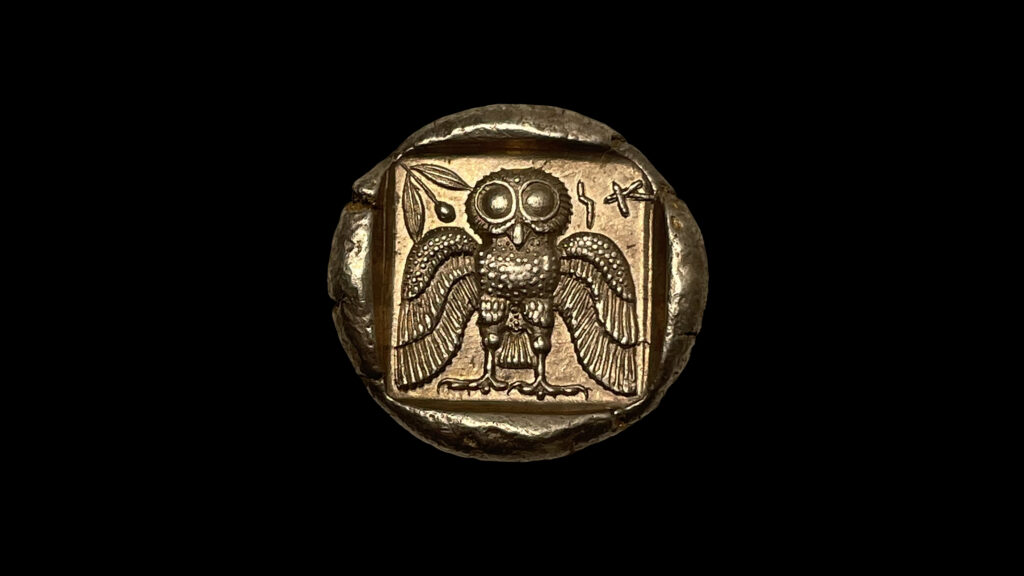
The second coin returned this week is a silver tetradrachm — a large denomination Greek-style coin — from the Persian period, minted in the ancient Mediterranean port city of Ascalon (Ashkelon) over 2,500 years ago. Its design mirrors the famous Athenian tetradrachm, the dominant currency of the Eastern Mediterranean in that era: the goddess Athena on one face and an owl with spread wings on the other. But in the upper right corner above the owl, in Phoenician script, appear two letters — Aleph and Nun — the first and last letters of Ascalon, the coin’s city of origin. This coin is so rare that the only other known specimen sits in the Israel Museum’s coin collection in Jerusalem.
Both coins are legally prohibited from export from the State of Israel due to their rarity and national significance. Someone exported them anyway.
Colonel Matthew Bogdanos, Chief of the Antiquities Trafficking Unit in Manhattan, said at the ceremony: “These extraordinary coins represent an important piece of history that is finally coming home. Furthermore, they represent an extraordinary partnership between the Antiquities Trafficking Unit in New York and the Israel Antiquities Authority.”
Israel’s Minister of Heritage, Rabbi Amihai Eliyahu, was direct: “The theft of antiquities is an attempt to erase this history of ours and cut us off from our roots. They will not succeed.”
The menorah on that battered bronze prutah from 37 BCE is the same menorah whose image Jews have carried for two millennia — through exile, persecution, and return. It is the menorah whose form G-d showed Moses on Mount Sinai, as it is written: “And see that you make them after their pattern, which was shown to you on the mountain” (Exodus 25:40). That image was not invented by a Hasmonean king under political pressure. It was handed down from Sinai, hammered in gold, lit in the Temple, and pressed into bronze on a coin that survived 2,000 years underground — only to be dug up by looters, smuggled across an ocean, and nearly auctioned off to a private collector who would have locked it away forever.
It is back in Israel now. Where it belongs.