
For the first time in American history, a sitting president has called on the entire nation to observe Shabbat. In a White House proclamation signed May 4, 2026, as part of Jewish American Heritage Month, President Donald Trump designated the period from sundown Friday, May 15, through nightfall Saturday, May 16, as a national Shabbat, dubbed “Shabbat 250”, in honor of the 250th anniversary of American independence. The move sent shockwaves through Jewish and Christian communities alike, and for those who know their Talmud, the implications stretch far beyond a single weekend.
Invoking President George Washington’s celebrated 1790 letter to the Hebrew Congregation in Newport, Rhode Island, in which Washington wrote that the United States “gives to bigotry no sanction, to persecution no assistance,” Trump tied the founding promise of America directly to its Jewish citizens.
“In special honor of 250 glorious years of American independence and on the weekend of Rededicate 250 — a national jubilee of prayer, praise, and thanksgiving — Jewish Americans are encouraged to observe a national Sabbath,” Trump wrote. “From sundown on May 15 to nightfall on May 16, friends, families, and communities of all backgrounds may come together in gratitude for our great Nation. This day will recognize the sacred Jewish tradition of setting aside time for rest, reflection, and gratitude to the Almighty.”
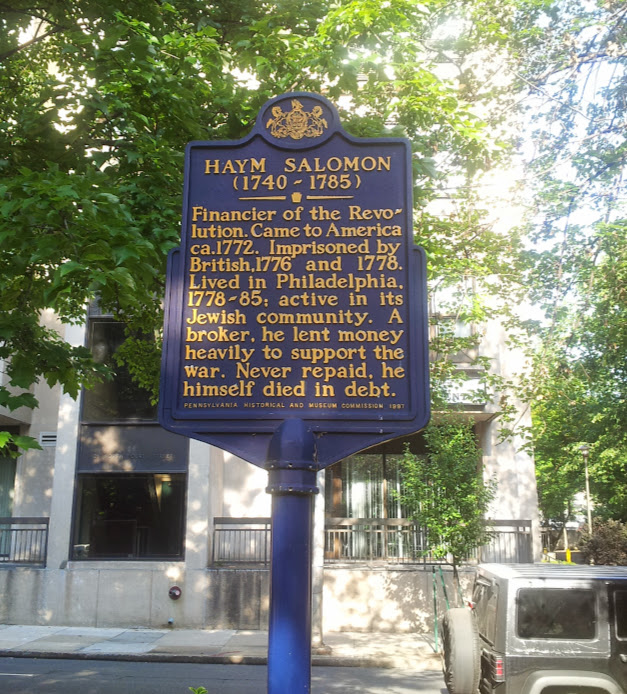
Trump also paid tribute to Haym Salomon, the Revolutionary War–era financier who rallied support for independence and, as the proclamation put it, “gave everything to the success of the American Revolution.” The proclamation declares: “Like so many Jewish Americans who follow in his footsteps, Salomon’s legacy stands as a testament to the unshakable belief in the American promise.”
In a direct rebuke of the rising tide of antisemitism on college campuses and beyond, Trump wrote: “Under my leadership, we are aggressively fighting the violence against Jewish Americans that increased under my predecessor, prosecuting hateful criminals to the fullest extent of the law, and working to end the scourge of anti-Semitism throughout our institutions.”
The proclamation closes with a direct call: “I further call on all Americans to celebrate their faith and freedom throughout this year, during this month, and especially on Shabbat to celebrate our 250th year. DONALD J. TRUMP.”
Israel365: Preparing the Way
For years, Israel365, headed by Rabbi Tuly Weisz, has been methodically building the bridge between authentic Jewish Shabbat practice and a Christian world increasingly hungry for biblical roots.
Rabbi Weisz called Trump’s proclamation a turning point:
“It’s incredibly significant for the President of the United States to be encouraging Americans to observe Shabbat, especially at this time of great global insecurity and instability,” Rabbi Weisz said. “He is absolutely and unprecedentedly calling for Americans to look up to the heavens and reach out to our Father in heaven, and to honor God in the original way. The Bible first establishes the creation of the world and calls for rest on Shabbat, to remember the God of creation and the God of history. At this time, when America and Israel, Jews and Christians, are fighting together against radical Islam, the enemy of civilization, there could be no more appropriate spiritual response. God spared President Trump’s life so that he could lead the White House at this critical moment in history, and it is entirely appropriate that he is now turning our heads and hearts to the heavens by calling on Americans to observe Shabbat. Israel365 is enthusiastically supporting his call by producing materials for Jews and Christians to honor the Shabbat, and we are in touch with our partners and communities around the world to encourage as many people as possible to follow President Trump’s directive — and more importantly, the divine directive — of honoring the Shabbat day and keeping it holy.”
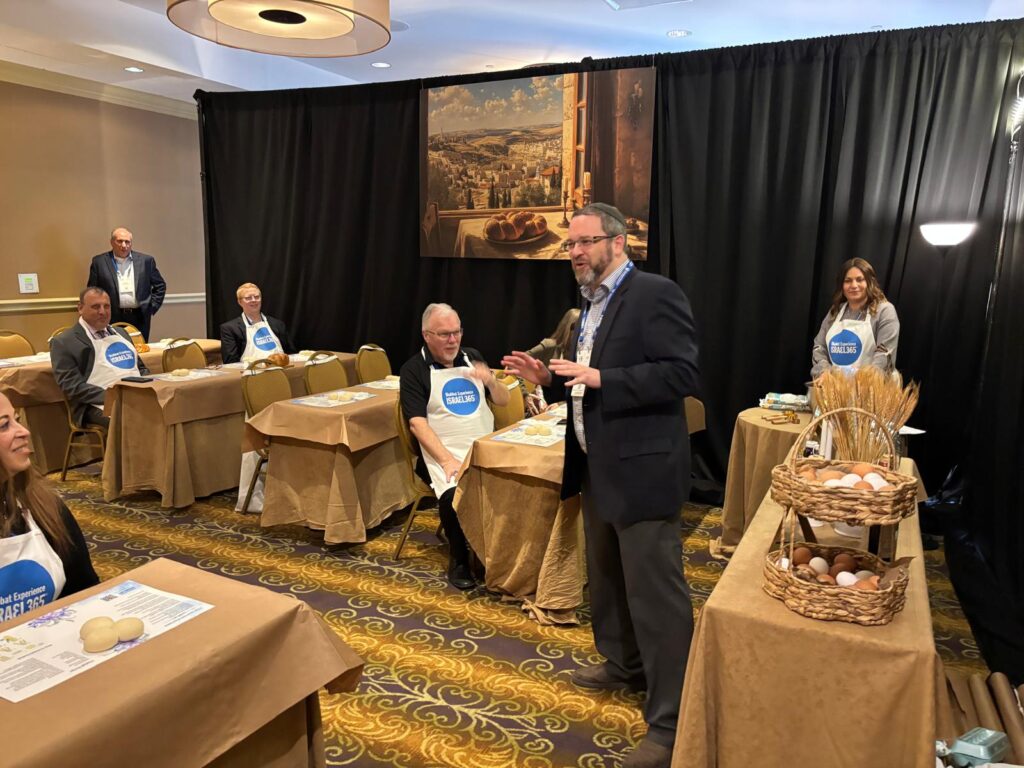
Israel365 has spent years making that directive actionable. Earlier this year, at the 2026 National Religious Broadcasters convention in Nashville, the largest Christian media event in the world, drawing more than 6,000 Christian communicators, Israel365 brought Shabbat to the convention floor. In a challah-baking workshop, NRB participants received a hands-on introduction to the traditional braided bread that has graced Jewish Shabbat tables since time immemorial. Rabbi Elie Mischel, Educational Director of Israel365, led the session.
Immediately following the convention, Israel365 hosted its Fourth Annual Jews and Christians United for Israel Shabbat at Congregation Sherith Israel, one of Nashville’s historic synagogues. For 25 hours, Jewish and Christian leaders entered Shabbat together, lighting candles, reciting kiddush, sharing meals, and concluding with Havdalah, the ceremony marking the separation between the sacred and the ordinary. More than 150 people attended last year. This year, the gathering drew wider attention, particularly in the shadow of the loss of Charlie Kirk, whose passion for Shabbat the event honored.
“Participants will light candles together. They will sing familiar prayers in unfamiliar company. They will break challah, pass dishes, and linger in conversation long after the meal ends,” organizers wrote. “For many Christian attendees, it will mark their first experience of Shabbat not as observers, but as welcomed guests.”
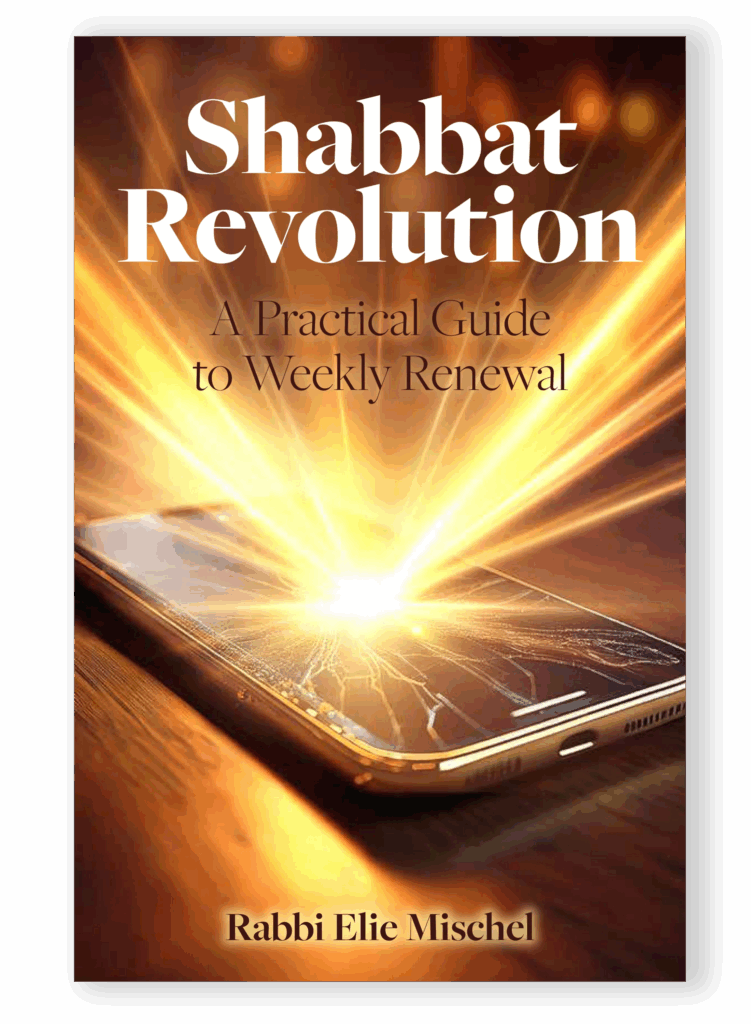
For those who want to go deeper, Israel365 published Shabbat Revolution: A Practical Guide to Weekly Renewal, written by Rabbi Mischel. The book offers a structured, accessible entry point into Shabbat observance for those who are new to it, whether Jewish or not.
Praise For the Initiative
The Chabad movement, which has championed Shabbat observance globally for generations, immediately welcomed the “Shabbat 250” initiative.
Rabbi Chaim Lazaroff, director of Chabad-Lubavitch of Houston, put it plainly: “Keeping Shabbat is always a beautiful and important thing. It is taught that if the Jewish people only kept two Shabbatot, Moshiach [the Messiah] would be here, and the time for that has already come. Shabbat 250, in honor of America’s 250th birthday, is a beautiful idea. It’s the perfect opportunity to unplug and connect with God, your family, and your community in a real and meaningful way.”
The Lubavitcher Rebbe, Rabbi Menachem M. Schneerson, taught that observing Shabbat draws God’s blessings into every day of the week that follows. “The holiness of Shabbat goes together with the blessing of Shabbat,” the Rebbe wrote, citing the verse, “And God blessed the Seventh Day and made it holy” — blessings that flow “not only in the day of Shabbat, but also in all the days of the week.”
The Israel Heritage Foundation (IHF) is an organization focused on supporting Israeli sovereignty (including in Judea and Samaria), strengthening security, promoting Aliyah, and combating antisemitism. Rabbi David Katz, the Executive Director, posted high praise for the president and Shabbat 250:
“On behalf of the Israel Heritage Foundation and Jews across America and around the world, I write to thank you from the depths of our hearts for your historic proclamation honoring America’s 250th anniversary and Jewish American Heritage Month.
“There was a generation not so long ago when being a proud Jew in America came with a price. Man or woman who left work early on Friday to light Shabbos candles, or would not come in on Saturday to honor the Sabbath, often paid dearly. They were not encouraged — they were dismissed. They were told to choose between their paycheck and their faith.
“How beautiful, how moving, how deeply healing it is to witness the opposite today. To see you the President of the United States not only defend religious freedom, but encourage the observance of Shabbos. To declare before the nation that faith matters, that Shabbos matters, that the values we live by are what make America great.
“Mr. President, Shabbos is a gift. It is the day that crowns the week behind us and breathes blessing into the week ahead. Our sages teach that Shabbos is the source of all blessing. When a person keeps Shabbos, blessing flows into their home. When a nation honors Shabbos, blessing flows into the world.
“In the merit of your respect for Shabbos, and in the merit of an America that cherishes faith, may the Almighty shower you and your family with abundant blessings — blessings of health, strength, wisdom, peace of mind, and boundless success.
“May you continue to lead this great nation with clarity, courage, and faith. May America be blessed through your leadership.
“The Jewish people have a tradition: we bless those who bless us. So we bless you, Mr. President. May the blessings of Shabbos — rest, joy, and holiness — rest upon you always.”
Rabbi A,D, Motzen, the National Director of Government Affairs for Agudath Israel of America, issued a statement in support of Trump’s “Shabbos 250” initiative:
“We encourage our constituents to use the occasion of Shabbat 250 to reflect on the historic role America has played over the years in serving as a haven of religious freedom. Indeed, the basic obligation of…recognizing and appreciating the incredible good of our host nation, is a fundamental principle worthy of public acknowledgment.”
“Shabbat 250 is an opportunity to celebrate the religious liberty we enjoy in this great country and to reflect on the gratitude owed to the United States by each and every one of us. We thank President Trump for recognizing the important role of the Jewish people and Shabbat in the history of the United States.”
Trump’s Personal Shabbat Connection
It is impossible to ignore the personal dimension behind the proclamation. Trump’s daughter Ivanka and son-in-law Jared Kushner are shomer Shabbat — fully Shabbat-observant Orthodox Jews — who have maintained that commitment without compromise through two White House terms, campaign trails, and the relentless pace of public life at the highest level. Every Friday before sundown, they disconnect entirely: no phones, no politics, no news cycle. For years, the president has watched two people he loves deeply demonstrate, week after week, that a full day of rest grounded in God is not a retreat from the world but a source of strength within it. It would be surprising if that example left no mark.
Two Shabbatot and the Road to Redemption
The Talmud in tractate Shabbat (118b) records the teaching of Rabbi Yochanan in the name of Rabbi Shimon ben Yochai: “Im yishmeru Yisrael shabbat achat k’hilchatah miyad nigalin” — “If only Israel would observe two Shabbatot in accordance with their laws, they would be immediately redeemed.”
Through his proclamation of Shabbat 250, President Trump has brought the world halfway to redemption.
The Talmudic passage from Shabbat 118b has long been understood as one of the most startling statements about the proximity of redemption. Rabbi Yochanan, transmitting the teaching of Rabbi Shimon ben Yochai, the very sage whose mystical teachings fill the Zohar, says that only two properly observed Shabbatot stand between Israel and the world, and the final redemption.
Charlie Kirk’s Last Stand
No story about Christians embracing Shabbat in 2026 can be told without Charlie Kirk. The founder of Turning Point USA, who was assassinated on a college campus in September 2025, completed his final book just weeks before his death: Stop, in the Name of God: Why Honoring the Sabbath Will Transform Your Life, published posthumously in December 2025. It sold out instantly on Amazon.
Kirk had begun keeping Shabbat in 2021, specifically the Saturday Shabbat, from Friday sunset to Saturday night, after a pastor friend challenged him to try it. The decision, he wrote, saved his life, preserved his family, and sustained his career. He credited Dennis Prager, whom he called one of the greatest Torah teachers of this generation, for introducing him to the discipline and joy of Shabbat observance.
“Every Friday night, I keep a Jewish Sabbath,” Kirk said at a Turning Point USA event. “I turn off my phone, Friday night to Saturday night. The world cannot reach me, and I get nothing from the world. It will bless you infinitely.”
Kirk drew heavily on the thought of Rabbi Abraham Joshua Heschel and Rabbi Jonathan Sacks in making his case. His chapter on the history of Shabbat, tracing its biblical, historical, and mystical roots, including how Shabbat sustained the Jewish people after the destruction of the Holy Temple, was described by reviewers as required reading. He quoted Sacks directly: “The Sabbath is the most radical thing in the Torah.”
Kirk’s death gave the Israel365 Shabbat Experience in Nashville this year an added dimension of tribute. “Charlie embraced Shabbat as a source of strength and clarity,” organizers wrote, “and he championed the sacred bond between our communities with courage, conviction, and love.”
Non-Jews Should Keep Shabbat
Until he passed away in 2022, Rabbi Yoel Schwartz was head of the Sanhedrin’s Beit Din (court) for Bnei Noach (the descendants of Noah, referring to all non-Jews) and of the Dvar Yerushalayim Yeshiva in Jerusalem. Rabbi Schwartz argued for years that the Talmudic teaching stating that the redemption will come after two Shabbatot are observed carries a meaning the Jewish world has overlooked. He taught that the two Shabbatot referred to are not two consecutive weeks of Jewish observance, but two distinct Shabbatot: one universal and one specifically Jewish.
Rabbi Schwartz explained that Shabbat, observed on its proper day and in the proper manner, is a weekly affirmation that God created the world. Despite a seven-day week being universally observed throughout all cultures, both Islam and Christianity changed the specific day of Shabbat.
“Everyone agrees that there was a beginning, hence the seven-day week. But science attributes it to a Big Bang, saying that God did not create the world. The Shabbat is not a random or man-made day,” the rabbi emphasized. “God Himself established it as part of the seven-day process of creation. Every seven days since the world was created has been the Shabbat. Changing it is to replace God, take him out of creation.”
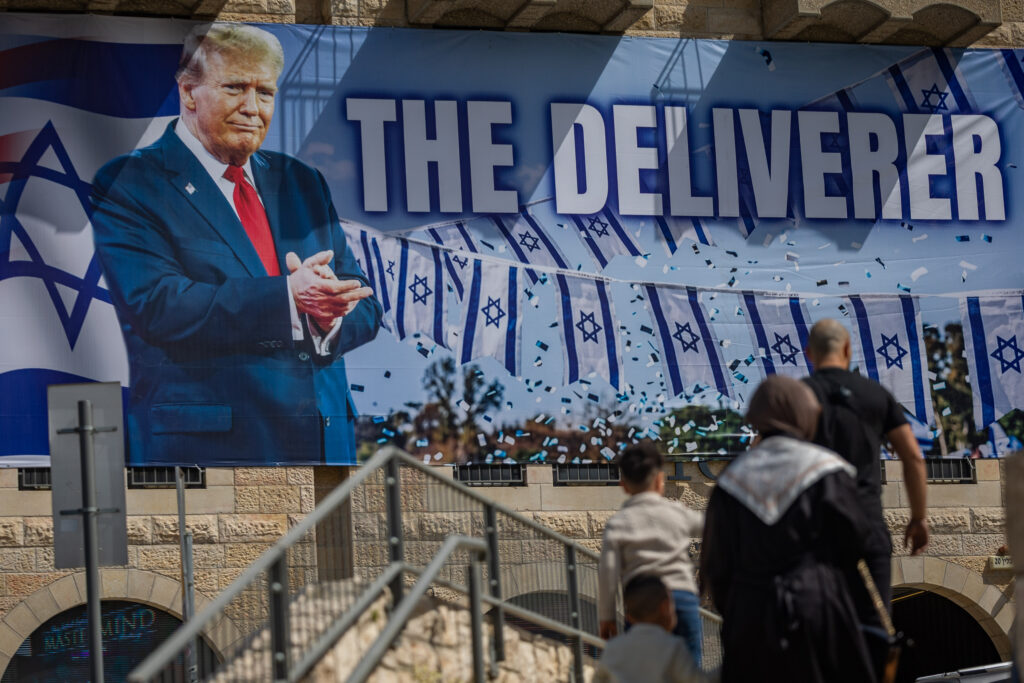
By issuing his proclamation, President Trump is bringing the world halfway to that redemption. He has called on all of AmericaJews and non-Jews alike, to “remember” the Shabbat.
Zachor and Shamor: Two Commandments, Two Peoples
The key to understanding Rabbi Schwartz’s argument lies in two Hebrew words that appear in the two separate formulations of the Shabbat commandment in the Ten Commandments.
In Sefer Shemot (Exodus), the command reads:
“Zachor et yom ha-Shabbat l’kadsho” — “Remember the Shabbat day and keep it holy.” (Exodus 20:8)
In Sefer Devarim (Deuteronomy), the same commandment appears differently:
“Shamor et yom ha-Shabbat l’kadsho ka’asher tzivcha Hashem Elohecha” — “Observe the Shabbat day and keep it holy, as the LORD your God has commanded you.” (Deuteronomy 5:12)
“The first set of tablets were written by God, and the commandment to remember the Shabbat was a universal commandment,” Rabbi Schwartz explained. “That is to ‘remember’ the Shabbat. Since it was universal, it was followed by a description of creation.”
Indeed, Exodus continues: “For in six days the LORD made heaven and earth and sea, and all that is in them, and He rested on the seventh day; therefore the LORD blessed the Shabbat day and hallowed it.” (Exodus 20:11)
“The commandment in Deuteronomy on the tablets written by Moses was a message specifically for the Jews to ‘observe’ the Shabbat,” Rabbi Schwartz explained, noting that it was followed by a description of the Exodus from Egypt: “Remember that you were a slave in the land of Egypt and the LORD your God freed you from there with a mighty hand and an outstretched arm; therefore the LORD your God has commanded you to observe the Shabbat day.” (Deuteronomy 5:15)
In Halacha (Jewish law), these two verbs carry distinct legal weight. Zachor, “to remember,” encompasses the positive commandments of Shabbat: the candles, the kiddush (sanctification of the day over wine), the challah (the traditional braided bread), and the festive meals. Shamor, “to observe,” encompasses the prohibitions: refraining from the 39 categories of melachah (creative labor) that are forbidden on Shabbat.
“By not instructing the nations in their requirement to ‘remember the Shabbat,’ by actually preventing them from taking part in the Shabbat, the Jews have prevented the full light of Moshiach (the Messiah) from being revealed in the world,” Rabbi Schwartz said.
Trump’s proclamation calls on all Americans to “remember,” to set aside one day to rest, reflect, and give thanks to the Almighty. That is the universal Shabbat, the zachor, the commandment given at Sinai to the entire world.
The Sanhedrin’s Call
In 2019, the nascent Sanhedrin’s Noahide court formally called on all nations to light two Shabbat candles and honor a “Universal Shabbat” as mandated in the Ten Commandments. Rabbi Schwartz, heading that court, stated plainly that one of the reasons Moshiach has yet to reveal himself is that the non-Jewish nations are not keeping Shabbat.
“It is time for a revolution in the world,” Rabbi Schwartz said at the time. “Even the secular people who don’t believe in God know the world is in danger, though they blame it on things like Global Warming. The Shabbat is a precious gift that God gave to the Jews and it demands respect. But it is time religious Jews showed the nations how they can relate to their Creator.”
Six years later, the President of the United States has done precisely what the Sanhedrin called for, inviting every American, of every background, to honor Shabbat.
Shabbat as National Policy
America is a nation at war against Hamas terrorists who massacred over 1,200 people on October 7, against the radical Islamist ideology that drives them, and against the rising tide of antisemitism on its own campuses. President Trump has signed executive orders, deployed legal tools, and made clear that he will not tolerate anti-Jewish hatred. But in “Shabbat 250,” he has done something different. He has called on America to look up.
“Zachor et yom ha-Shabbat l’kadsho” — “Remember the Shabbat day and keep it holy.” (Exodus 20:8)
That commandment was given, according to Rabbi Schwartz, at Sinai to the entire world. The nations forgot it. A president has now remembered it. The question is whether the rest of America, and the world, will follow.