
For millennia, the Ark of the Covenant has been the most sought-after relic in human history. Now, a biblical archaeologist from Tennessee believes the answer to its whereabouts may lie not in a distant land, but directly beneath the ancient stones of Jerusalem, and he has the technology to prove it.
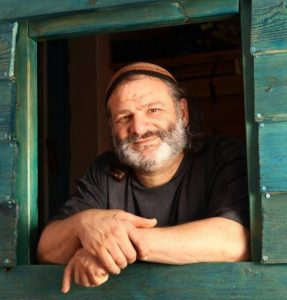
Dr. Chris McKinney, associate professor of biblical archaeology at Lipscomb University, has put forward a serious academic hypothesis: the Ark may be concealed in subterranean voids beneath the City of David, the archaeological site immediately south of the Temple Mount where the Jewish Temples once stood. McKinney has even identified a cutting-edge instrument to test his theory: a muon detector.
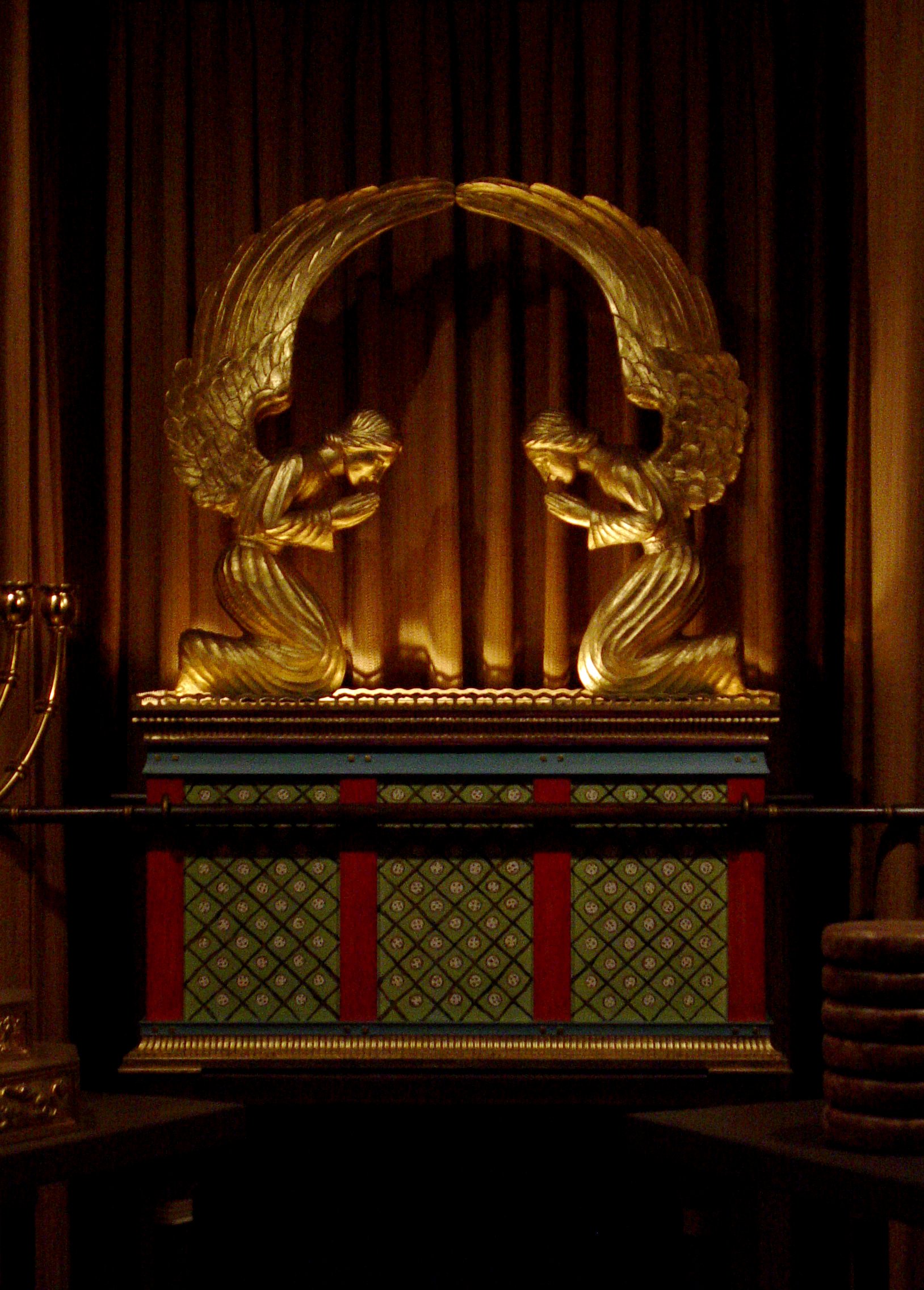
Muon detectors track subatomic particles produced when cosmic rays collide with Earth’s atmosphere. These particles penetrate deep into the ground, allowing scientists to map hidden structures and voids without disturbing a single stone. Early scans of the City of David have already revealed previously unknown subterranean openings beneath the site. And critically, because the Ark is described in the Bible as overlaid entirely with gold — inside and out — it would register unmistakably on such a scan.
McKinney has anchored his search in three ancient traditions about the Ark’s fate following the Babylonian destruction of Jerusalem in 586 BCE. Each places the prophet Jeremiah at the center of a desperate effort to conceal the Ark before the city fell. The first tradition, which McKinney calls the Mount Legend, holds that priests hid the Ark and other sacred objects in underground chambers or tunnels beneath the Temple Mount itself — the very ground upon which the Dome of the Rock now stands. This theory has driven centuries of speculation and is constrained by the fact that archaeological excavation beneath the Temple Mount remains largely forbidden due to its extraordinary religious and political significance. As McKinney described it, the area is “one of archaeology’s biggest blind spots” since traditional work with “the spade or the trowel” is not possible there due to Palestinian aggression.
The second tradition, the Rock Legend, describes Jeremiah hiding the Ark at a mysterious rocky location between two mountains near Jerusalem, though the precise site remains debated among scholars. The third and oldest account, drawn from the Book of 2 Maccabees places Jeremiah carrying the Ark to a cave on Mount Nebo, the mountain where Moses died. McKinney notes that despite their geographic differences, all three accounts share a consistent thread: the Ark was deliberately hidden, not destroyed or captured.
The Bible itself offers a striking parallel to this urgency. When King Josiah ordered the Levites to return the Ark to the Temple, he told them: “Put the holy ark in the house which Solomon the son of David, King of Israel, built; it shall not be a burden upon your shoulders” (2 Chronicles 35:3). The Ark’s keepers understood that their charge was not merely ceremonial — it was existential. The Aron was the physical throne of the Shekhinah, the divine presence. Allowing it to fall into Babylonian hands was simply not an option.
McKinney’s documentary, Legends of the Lost Ark, released on April 7, 2026, brings his research to a wider audience. He explores not just the three major traditions but also the technological frontier that may finally allow researchers to peer into spaces that have been sealed for 2,600 years. Beyond muon detectors, he points to ground-penetrating radar, seismic scanning, and electrical resistivity tomography as tools that could, in theory, map tunnels and chambers beneath the Temple Mount without a single unauthorized dig.
He is careful to frame this as a long-term possibility, not an imminent excavation. Religious sensitivities, political realities, and logistical barriers remain formidable. But McKinney told reporters he is “excited and hopeful for what will come from that.”
The Sages have long taught that the Ark was among the items hidden away before the destruction of the First Temple, preserved for a future redemption. The Talmud Yerushalmi and other rabbinic sources hold that Josiah himself hid the Ark in a subterranean chamber, anticipating the coming catastrophe. If McKinney’s technology eventually reaches beneath the Temple Mount and the scans return something extraordinary — a rectangular gold-plated object in a sealed chamber — it would be the archaeological find of the century, but, more importantly, it would be a moment the Jewish people have been waiting for since Nebuchadnezzar’s armies appeared on the horizon.