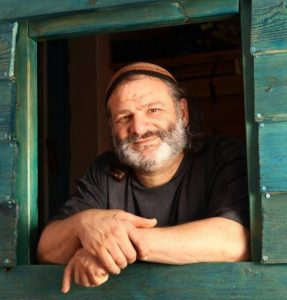
Serbia’s foreign minister stood in Jerusalem and chose to speak not in the polished neutrality of diplomatic English, but in the language of the Jewish people. In a joint appearance with Gideon Sa’ar at the Foreign Ministry, Marko Đurić delivered his remarks entirely in Hebrew, signaling a level of identification that went beyond protocol and into shared history.
“Dear friends,” Đurić said, addressing Israelis directly, “I want everyone to know that Israel has real friends in Serbia, and not only from yesterday. We understand what you are experiencing, and have experienced many terrible things of our own. We are strengthening our friendships, and hope to continue to do so in the future.”
When a European foreign minister stands in Jerusalem and speaks Hebrew, he is not merely offering courtesy. He is choosing proximity.
The meeting between Sa’ar and Đurić included a strategic dialogue with participation from security and intelligence officials on both sides, underscoring the practical dimension of the relationship. This was not symbolism alone. The ministers discussed regional challenges, cooperation frameworks, and future coordination.
Đurić emphasized that Serbia’s support for Israel is rooted in shared experience, not diplomatic convenience. “This is not only from 1948, it is much older,” he said. “We stand with you in this difficult time. We understand very well everything you are going through. We went through many terrible things in the 1990s and afterward.”
His remarks referenced Serbia’s own recent history of war and upheaval, drawing a parallel to Israel’s ongoing security reality. The statement was delivered without ambiguity, at a time when many countries have chosen to dilute their positions.
Turning to Sa’ar, Đurić added, “I want to say thank you… for what you have managed to do for the hostages. I truly feel at home here.” The use of the phrase ani margish kmo babayit (I feel at home) carried weight in Hebrew, particularly coming from a foreign minister speaking on Israeli soil.
Đurić’s Jewish roots added another dimension to the moment, connecting personal identity with statecraft. His decision to address Israelis directly in Hebrew reflected not only policy but familiarity.
For Israel, such clarity stands out. International statements frequently arrive wrapped in conditions, qualifications, or distance. Serbia’s message in Jerusalem was direct: friendship, shared understanding, and intent to deepen ties.
At a time when Israel measures its relationships not by declarations but by actions, the scene in the Foreign Ministry offered something unmistakable. A European leader stood beside Israel’s top diplomat and spoke in Hebrew, affirming that support for Israel is not theoretical. It is spoken plainly, in the language of the Jewish people, and backed by a commitment to stand alongside the Jewish state as it faces its challenges.