

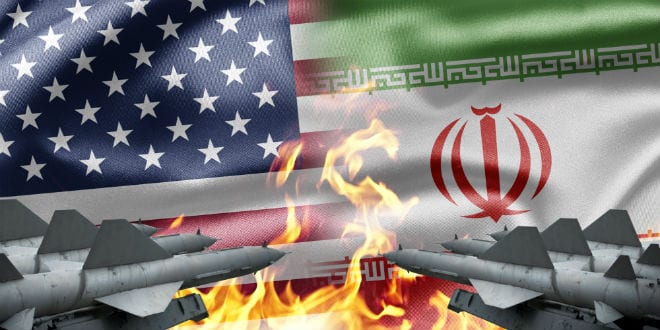
President Trump has abruptly halted a planned diplomatic push toward Iran, ordering senior U.S. envoys not to travel to Pakistan for backchannel negotiations and declaring that Tehran “can call us anytime they want.” The decision lands in the middle of a widening regional crisis, as sanctions intensify, maritime routes tighten under military pressure, and the Israel–Hezbollah front remains under a fragile, newly extended ceasefire.
Trump confirmed in a social media post that he cancelled the trip of U.S. representatives to Islamabad after telling Fox News he instructed negotiators Steve Witkoff and Jared Kushner to stand down. He wrote, “I just cancelled the trip of my representatives going to Islamabad,” adding that there was “too much time wasted on traveling, too much work.” He also stated that “nobody knows who is in charge” inside Iran, reflecting a hardening U.S. position toward the Islamic Republic’s leadership structure. Two Pakistani officials told the Associated Press that Iranian Foreign Minister Abbas Araghchi had already left Pakistan without meeting U.S. officials.
The diplomatic rupture comes as the Trump administration escalates economic pressure on Iran’s energy lifelines. On Friday, Washington imposed sanctions on a major China-based oil refinery alongside roughly 40 shipping companies and tankers involved in transporting Iranian crude. The measures expand secondary sanctions targeting entities that continue doing business with Tehran, aimed directly at constraining Iran’s primary revenue stream.
At the same time, the Middle East conflict environment has widened. Airlines across multiple countries have begun cancelling flights due to disrupted jet fuel supplies and rising prices tied to instability across regional shipping lanes. The Strait of Hormuz, a critical artery for global oil transport, has become a flashpoint in an intensifying maritime confrontation. U.S. military operations have included boarding vessels linked to Iranian oil smuggling, while Iranian-linked forces have seized commercial ships and attacked others in the region. Reports from the theater indicate that mine-laying activity and naval harassment have effectively constrained commercial movement through the waterway.
Trump has also tied diplomatic developments to military de-escalation efforts elsewhere. He announced that Israel and Lebanon agreed to extend their ceasefire involving Hezbollah by three weeks following White House discussions, marking the second high-level negotiation between the two countries within a week. The initial 10-day ceasefire had been set to expire Monday but was extended after renewed rocket fire and interception operations in northern Israel.
Against this backdrop of diplomacy and coercion, the United States and Iran remain locked in a long-running confrontation that has evolved across decades. Since the 1980s, U.S. personnel have been targeted by Iran-backed groups, beginning with proxy warfare in Lebanon and continuing through Iraq, Syria, and the Gulf. Thirteen U.S. service members have been killed in the current cycle of regional escalation linked to Iranian-aligned forces, with additional noncombat fatalities also reported in the broader theater. Western intelligence assessments have long attributed attacks on U.S. forces in Iraq, including those by Kataib Hezbollah and similar militias, to the Islamic Revolutionary Guard Corps (IRGC) Quds Force network.
Iran’s regional military posture has expanded through missile development, drone warfare, and proxy forces across multiple countries. Iranian-aligned groups have launched repeated missile and drone attacks toward Israel in recent escalatory cycles, while the IRGC’s broader network has been implicated in large-scale strikes, including coordinated barrages involving hundreds of projectiles in recent regional confrontations. In maritime domains, Iranian-linked forces have been tied to ship seizures, sabotage operations, and disruption of commercial traffic through the Strait of Hormuz, a chokepoint through which a significant portion of global oil supply flows.
Iranian officials and international monitors have cited thousands of deaths across Iran, Lebanon, Israel, and neighboring Gulf states since the most recent escalation cycle began, including reported civilian casualties and combat fatalities across multiple theaters. The scale of destruction has intensified political pressure on all parties as energy markets, aviation routes, and shipping lanes absorb the shock.
The United States–Iran confrontation has remained defined by sanctions, proxy warfare, and intermittent diplomatic openings since the 1979 Islamic Revolution. Episodes such as the 1983 Beirut barracks bombing, the Iraq War insurgency period, and repeated sanctions regimes have shaped a pattern of pressure without a formal peace framework. Trump’s current posture reflects a continuation of maximum pressure strategy combined with selective disengagement from diplomatic intermediaries.
At the center of this moment is a tightening of strategic options: diplomacy is being slowed, sanctions expanded, and maritime security increasingly enforced through direct military action.