IDF says more than 1,800 Hezbollah operatives killed during “Operation Roaring Lion”
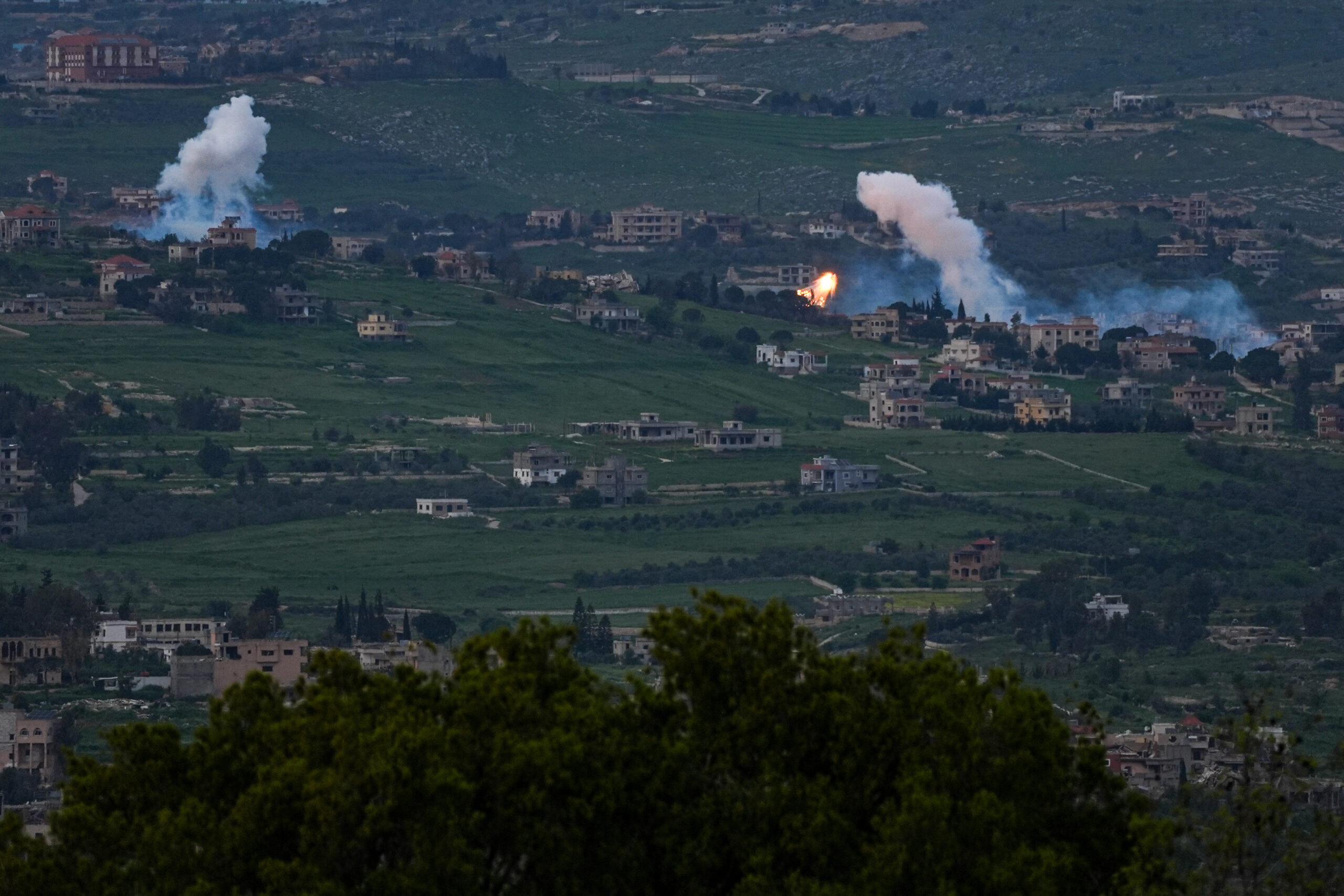
The Israel Defense Forces reported that over 1,800 Hezbollah operatives were killed during “Operation Roaring Lion,” a campaign that began on Feb. 28 with coordinated U.S.-Israeli strikes on Iran and concluded with a 14-day ceasefire between Washington and Tehran on April 7.
Hezbollah, based in Lebanon, entered the conflict on March 2 in support of Iran, breaking a U.S.-brokered ceasefire from November 2024 that had ended more than a year of fighting. That earlier conflict began when the Iranian-backed group launched attacks on Israel following the Hamas-led assault on Oct. 7, 2023.
Separately, U.S. President Donald Trump announced a 10-day ceasefire between Israel and Lebanon on Thursday.
According to the IDF, in the 24 hours leading up to the ceasefire, Israeli forces targeted more than 150 Hezbollah operatives and struck roughly 300 sites tied to the group’s military infrastructure. These included rocket launchers, command centers and weapons storage facilities in multiple areas across Lebanon.
Among those killed was Ali Rida Abbas, the Hezbollah commander responsible for the Bint Jbeil sector. The IDF said Abbas had directed numerous attacks against Israeli troops and civilians over the years, including during the current operation.
He is the fourth commander of that sector killed by Israeli forces since the launch of “Operation Northern Arrows” in September 2024.
The military stated it will continue acting against any threats to Israeli civilians and soldiers.
Spain moves to push EU toward ending agreement with Israel
Spain’s foreign minister plans to urge European Union counterparts to terminate the E.U.-Israel Association Agreement during a meeting scheduled for Tuesday in Luxembourg, Prime Minister Pedro Sánchez said on Sunday.
The agreement provides Israel with tax-related benefits estimated at around $1 billion annually.
Sánchez made the announcement during a political rally in Huelva, reiterating his government’s critical stance toward Israel. His administration has taken some of the strongest anti-Israel positions among major E.U. economies.
The upcoming meeting of E.U. foreign ministers will be the first since Hungary’s recent election, which resulted in the departure of Prime Minister Viktor Orbán. His government had previously blocked efforts to impose sanctions on Israel, which require unanimous approval. His successor, Péter Magyar, has expressed interest in closer alignment with broader E.U. policies.
Spain has already implemented a weapons embargo on Israel and joined South Africa’s case at the International Court of Justice, accusing Israel of genocide in Gaza.
In a post on X, Sánchez wrote that the European Union should end its agreement with Israel, stating that while Spain holds no issue with Israeli citizens, it cannot support a government that, in his view, violates international law and E.U. principles.
Israeli Foreign Minister Gideon Sa’ar responded sharply, rejecting Sánchez’s criticism and accusing his government of maintaining ties with regimes that violate human rights, including Turkey under President Recep Tayyip Erdoğan and Venezuela under Nicolás Maduro. Sa’ar also accused the Spanish government of promoting double standards and contributing to antisemitism, while emphasizing that Israel has no issue with the Spanish people.
Separately, the legal advocacy group Shurat HaDin—Israel Law Center announced that it had filed a complaint against Sánchez with the International Criminal Court. The filing alleges that Spain enabled the transfer of dual-use components to Iran valued at approximately €1.3 million.
According to the group, these materials could be used in explosive systems, and supplying them under such circumstances may constitute complicity in war crimes under international law. The organization noted that Iran continues to support groups such as Hezbollah, Hamas and the Houthis, which target civilian populations.
Shurat HaDin also pointed to reports that Iranian missiles bore stickers thanking Sánchez, arguing that responsibility extends beyond those who carry out attacks to those who provide the means.
New York Jewish community dedicates “Hostages Bench” in Central Park
Members of New York City’s Jewish community gathered in Central Park on Sunday to unveil a memorial bench honoring those taken hostage during the Oct. 7, 2023, Hamas attacks in southern Israel.
The installation, known as the “Hostages Bench,” also commemorates those who worked toward securing the hostages’ release, individuals who were killed during the Hamas-led assault and the war that followed, the families affected, and those who survived captivity, according to a statement from the U.S. chapter of the Hostages and Missing Families Forum.
The bench is located near 106th Street and Central Park West.
Family members of hostages were present at the ceremony, including Moshe Lavi, whose relative Omri Miran survived captivity; Shelly Shem Tov, mother of Omer Shem Tov, who also survived; and Morris Schneider, uncle of Shiri Bibas, who was killed.
Approximately 1,000 people attended the event.
During the ceremony, participants read aloud the names of 46 hostages who were taken alive and later killed while in captivity.
Since the start of the war, all 251 hostages have been returned to Israel, either alive or for burial.