


There is a moment in the Hebrew Bible that has never lost its force. In Second Samuel, the prophet Nathan walks into the throne room of the most powerful king in Israel’s history. David has sinned gravely. He’s abused his power, taken another man’s wife, and arranged that man’s death. And Nathan, knowing all of this, opens his mouth anyway. “You are the man.”
Three words. That’s all it took.
I thought of Nathan recently while watching a video posted by a Christian Pastor from Lakeland, Florida.
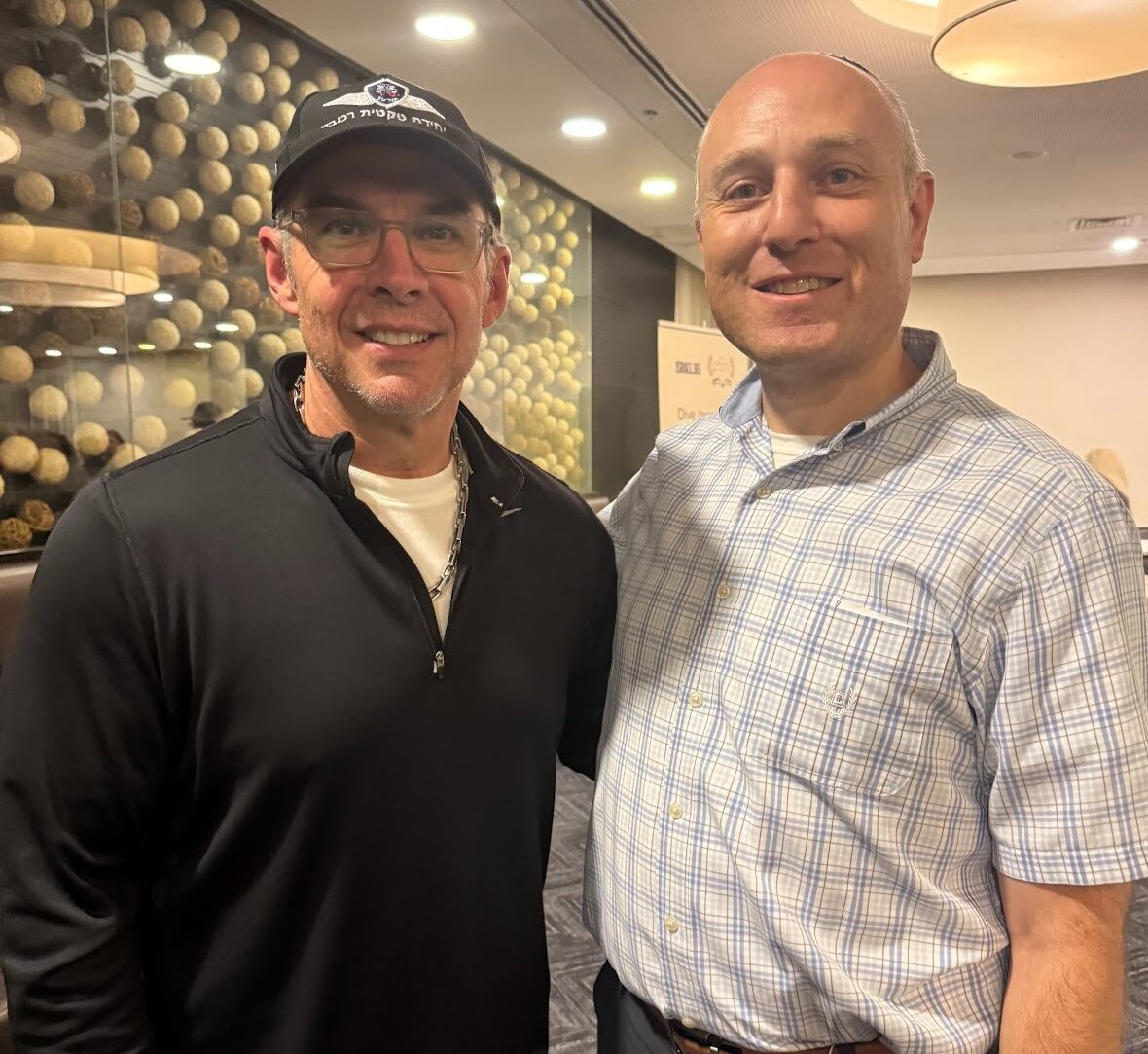
I lead the Israel365 Alliance, the relational outreach arm of Israel365, an Israeli organization building partnerships between the Jewish world and Christian communities globally. Pastor Scott Thomas of Free Life Chapel is one of the Christian leaders I’ve worked with most closely. We have studied Scripture together. His congregants joined us in Jerusalem. He is not merely a professional contact. He is a friend.
Which is why his recent video landed the way it did.
When President Trump shared an image portraying himself in the likeness of the Messiah, most people either defended it or attacked it along predictable partisan lines. Pastor Scott did neither. He stated his position plainly: “I don’t care what political side you find yourself on. If it had been President Obama, it would have been wrong. President Biden, it would have been wrong. With President Trump, it is wrong.”
That framing is important. This was not opposition research dressed up as theology. It was a straightforward declaration that some lines exist independent of party affiliation.
I’ll say directly what many in my community believe: President Trump has been among the strongest friends Israel has had in recent memory. The recognition of Jerusalem as Israel’s capital, the Abraham Accords, his support during moments of genuine danger — these are historical achievements, not talking points. Our appreciation is real.
That’s precisely what gives Pastor Scott’s statement its weight. He wasn’t attacking a president. He was defending a conviction. There is a considerable difference.
In Jewish tradition, the phrase kiddush Hashem, the sanctification of God’s name, describes any act that brings honor to the values God demands of us. It applies across religious boundaries. When a person of faith puts principle above convenience, particularly at some personal cost, that is kiddush Hashem by any name.
What struck me most in Pastor Scott’s video was this passage: “I’m so glad that in 2 Samuel 12, Nathan stood up and talked to King David and said, ‘Excuse me, sir, you are out of order.'”
A Christian pastor in 2026, reaching for the Hebrew prophets to frame a contemporary moral failure — that means something. It is evidence that shared text can still produce shared conscience.
Nathan was not David’s enemy. He was one of David’s most loyal servants. And it was that loyalty, not to the king’s comfort, but to the king’s integrity, that compelled him to speak. The Hebrew prophets were not revolutionaries. They were people who loved their leaders enough to tell them the truth.
Pastor Scott, by everything I have observed, holds genuine respect for President Trump’s record. He acted anyway. That ordering of priorities, faith over politics, principle over access, is worth acknowledging publicly.
At Israel365 Alliance, we work to build relationships between Jewish and Christian communities grounded in shared conviction, not flattery. Pastor Scott Thomas exemplifies the kind of partner that work depends on.
Nathan had the courage to walk into the throne room.
So does Pastor Scott Thomas.
Rabbi Mark Fishman leads Israel365 Alliance, the relational outreach division of Israel365, which builds partnerships between Israeli Jews and Christian communities worldwide.


