



The Islamic Republic of Iran, a regime that enforces compulsory hijab, imprisons women who refuse to comply, and executes its own citizens at a staggering pace, has been nominated to help shape United Nations policy on women’s rights, human rights, disarmament, and terrorism prevention.
On Wednesday, the United Nations Economic and Social Council (ECOSOC), a 54-member body responsible for coordinating much of the UN’s work, nominated the Islamic Republic of Iran to the Committee for Programme and Coordination. The decision, made by consensus inside a key UN body, has triggered outrage from watchdog groups and exposed deep fractures among Western democracies, most of which allowed the nomination to pass without objection.
The nomination seems to ignore that the Islamic Republic of Iran is run by a regime that enforces compulsory hijab, imprisons women who refuse to comply, and executes its own citizens at a staggering pace.
The committee plays a central role in shaping UN priorities and policies, including those related to gender equality, women’s empowerment, human rights, disarmament, and counterterrorism. The nomination is widely expected to be approved by the General Assembly without a vote, in line with the UN’s standard practice of rubber-stamping ECOSOC recommendations.
The nomination passed by “acclamation,” a procedure that allows decisions to be adopted without a recorded vote, effectively shielding member states from public accountability. According to diplomats and watchdog groups, Western democracies, including Canada, France, the United Kingdom, Australia, the Netherlands, Norway, Finland, Switzerland, Austria, and Spain, did not break consensus. The United States was the only country to formally object.
In remarks delivered on April 8, U.S. Ambassador Dan Negrea said the United States “disassociates from consensus,” calling Iran, Cuba, and Nicaragua “unfit” to serve. He cited Iran’s long record of repression and destabilizing activity, stating that the regime “has, for decades, infringed on the Iranian people’s ability to exercise their basic human rights.”
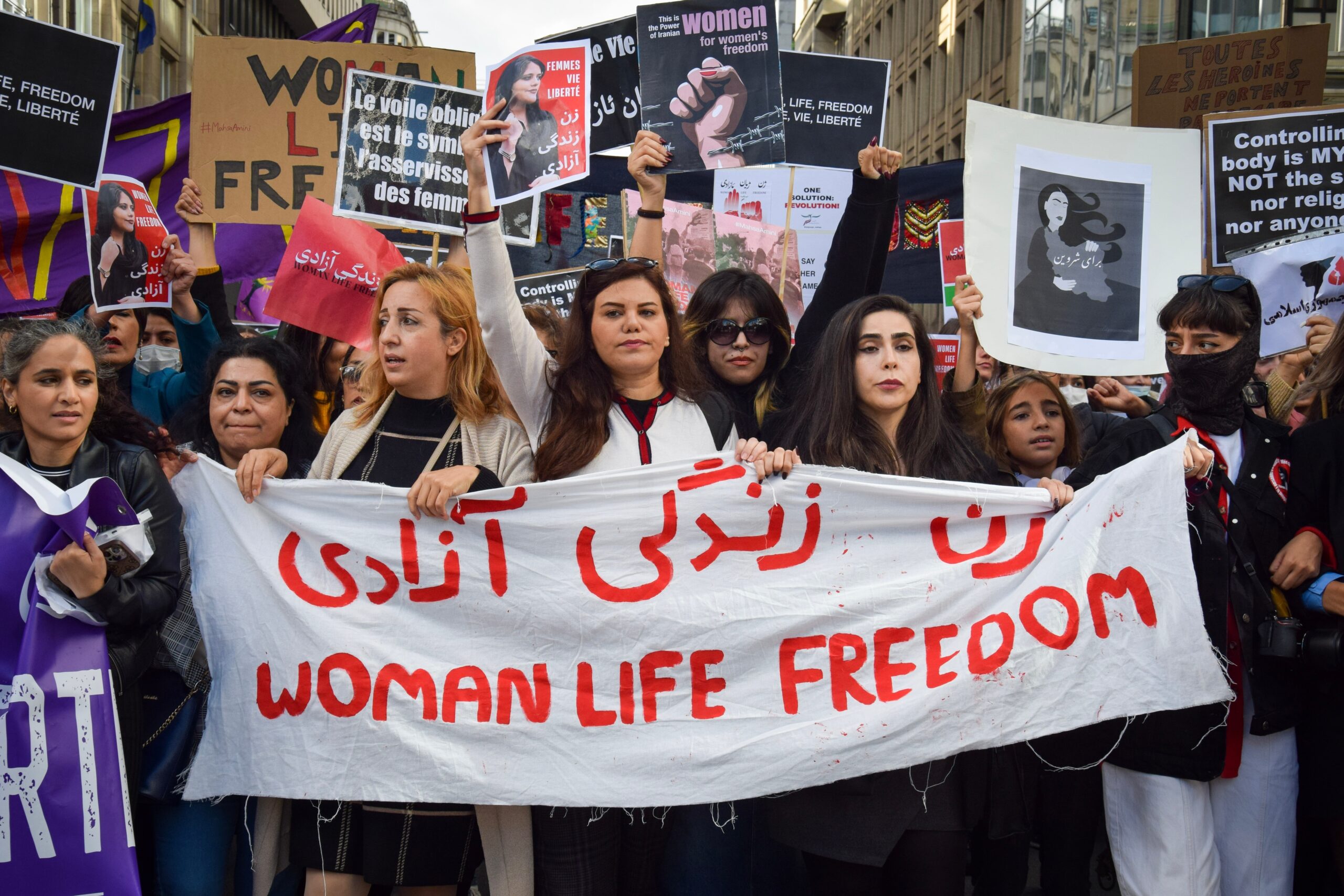
The outrage surrounding Iran’s nomination is rooted in the regime’s codified system of discrimination against women. Iranian law mandates hijab, requiring women to cover their hair in public. Enforcement is carried out by morality police and security forces, with penalties ranging from fines to imprisonment. In recent years, enforcement has intensified, particularly following nationwide protests sparked by the death of Mahsa Amini in 2022 while in custody for alleged hijab violations.
Under Iranian law, women require permission from a male guardian, typically a father or husband, for certain forms of travel and for marriage. Inheritance laws grant daughters significantly smaller shares than sons, codifying inequality into the legal system. The legal age of marriage for girls is set at 13, but younger marriages are permitted with judicial and paternal approval, a provision that has drawn sustained criticism from human rights groups.
Amnesty International has documented what it describes as “systemic discrimination and violence” against women and girls in Iran. The organization reported that authorities have intensified crackdowns on women who defy compulsory veiling laws, as well as on ethnic and religious minorities, including the Baha’i community. Thousands of individuals have been arbitrarily detained, interrogated, harassed, or prosecuted for exercising basic rights such as freedom of expression and assembly.
The regime’s use of capital punishment further underscores the controversy. According to a joint report by the Norway-based Iran Human Rights organization and the Paris-based Together Against the Death Penalty, Iran executed at least 1,639 people in 2025, the highest number recorded in nearly four decades. That figure represents an average of more than four executions per day. The report warned that the number could rise even further as the regime responds to ongoing internal unrest.
“The death penalty was used arbitrarily,” Amnesty International stated in a separate report, highlighting cases involving political prisoners, protesters, and members of minority communities.
At the same ECOSOC session, additional decisions compounded the backlash. China, Cuba, Nicaragua, Saudi Arabia, and Sudan were elected to the Committee on Non-Governmental Organizations, a powerful body that determines which civil society groups receive accreditation and access to the United Nations. Critics warn that this effectively places authoritarian regimes in control of which human rights organizations are allowed to operate within the UN system.
UN Watch, a Geneva-based organization that monitors the United Nations, issued a sharp condemnation. Executive Director Hillel Neuer said the decisions represent a fundamental breakdown in the institution’s moral credibility.
“Appointing China, Cuba, and Saudi Arabia to oversee the work of human rights activists is like putting Al Capone in charge of fighting organized crime,” Neuer said. “It’s truly indefensible, and puts lives at risk.”
Neuer warned that the composition of the NGO committee will allow dictatorships to dominate the accreditation process. “This means dictatorships will have a majority on the committee in order to deny United Nations accreditation to independent organizations that call out their human rights violations, and to accredit more fake front groups created by the regimes,” he said.
He added that the consequences will be immediate and severe for dissidents seeking an international platform. “It harms the ability of pro-democracy dissidents to protect the most vulnerable victims and to advocate for human rights inside the United Nations.”
UN Watch also directed criticism at Western democracies that failed to oppose the nominations. “By their cynical actions at the UN, major Western states have betrayed their own human rights principles, severely undermining the rules-based international order that they claim to support,” Neuer said. He noted that similar efforts had been made in recent years to block Russia from obtaining comparable positions, making the current inaction all the more striking.
Ahead of the vote, approximately 70 civil society organizations issued warnings that countries with poor human rights records were likely to secure seats on key UN bodies. The International Service for Human Rights reportedly gave failing grades to several of the countries ultimately elected. Those warnings were ignored.
Israel’s ambassador to the United Nations, Danny Danon, pointed to the broader political context, noting that Iran attempted to use the same forum to challenge Israel’s candidacy. “Those who oppress women and trample on human rights in their own country will not teach us what women’s rights are,” Danon said.
Iran’s elevation to a body shaping global human rights policy grants the regime influence over agendas, language, and priorities that affect millions. It also sends a message to victims of repression that the international system charged with defending their rights is willing to place their oppressors in positions of power.

