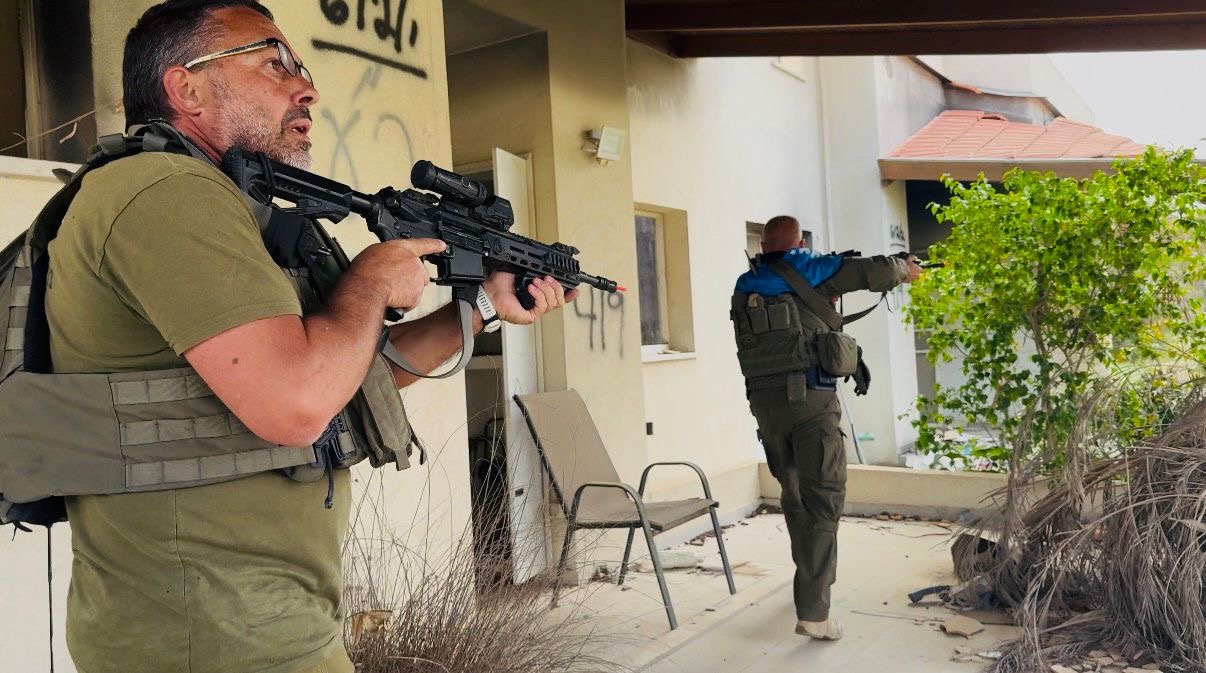
Be’eri, Israel – April 12, 2026 — Days before Passover, with missiles still falling from Iran, Lebanon, and Yemen, heads of local security teams from across southern Israel gathered in Be’eri—one of the communities most devastated on October 7, 2023—for an advanced training session with Magen 48. They moved through burnt homes. They conducted live scenario-based drills in neighborhoods that still bear the physical scars of the massacre. And many of them were survivors who had stared down Hamas terrorists on the worst day in Israel’s modern history.
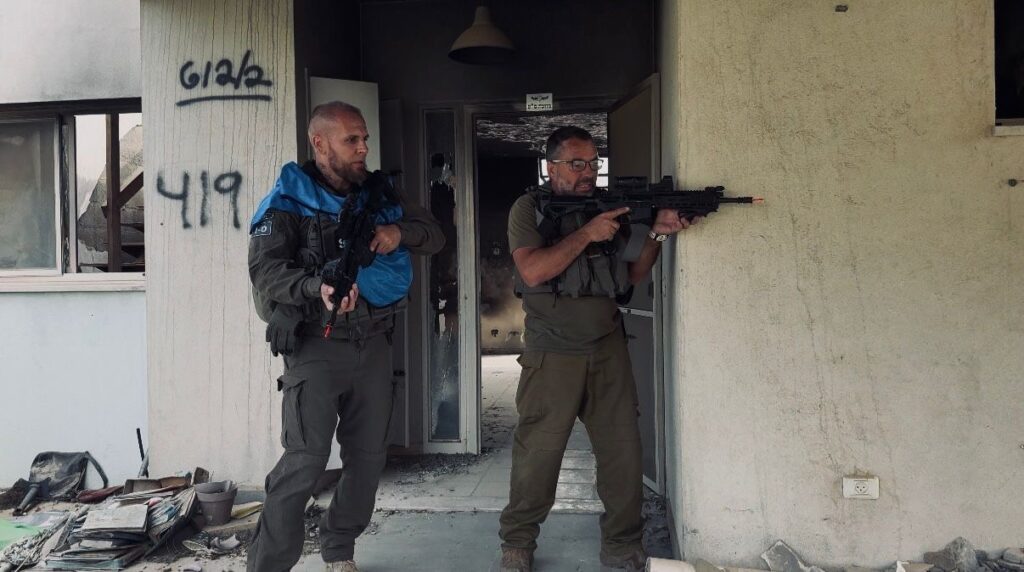
Magen 48 Trains Local Security Teams for the Next October 7th Within the Burnt Ruins of Be’eri Photo Credit: Magen 48
What happened in Be’eri on October 7 was a systematic slaughter. Hundreds of Hamas terrorists swarmed the unsuspecting Gaza-border kibbutz, moving from home to home, kidnapping, brutalizing and massacring civilians well into the afternoon. In all, 101 civilians and 31 security personnel were killed in Be’eri on that dreadful day, and 32 residents were taken hostage. The 31 security personnel who fell were fighting 340 terrorists who overran the kibbutz—outnumbered more than 13 to one. It took approximately seven hours for significant numbers of Israeli forces to arrive. Be’eri was the hardest-hit single community of the entire October 7 onslaught.
The question that haunts Israel since that day is not whether Hamas will try again. And if we will be ready? The army was in chaos. The men and women who stood between the terrorists and their families were the local security teams—and where those teams existed and were trained, lives were saved.
The evidence is now documented in multiple IDF investigations. At Kibbutz Erez, the civil defense squad, reinforced by the security team from neighboring Or Ha’Ner, repelled an attempted Hamas invasion. Between 15 and 20 terrorists attempted to infiltrate, and at least two were killed at the edge of the kibbutz during fighting led by local security officers. The IDF probe concluded: “Their brave fighting in the kibbutz prevented a massacre.” At Kibbutz Magen, quick and courageous action by security coordinator Baruch Cohen, his deputy, the security team, and volunteers disrupted Hamas’s plans, preventing kidnappings and a far greater tragedy. Unlike many other communities—some of which had as few as five defenders—Magen’s standby squad numbered 26 members and was considered better prepared and organized. Investigators said this larger, trained force was a key factor in the kibbutz’s survival.
The pattern is unambiguous: trained local responders save lives. Untrained communities were overrun.
Magen 48 was built on exactly that lesson. On October 7, Ehud Dribben—who has spent three decades training special forces, law enforcement, and security personnel—did not wait to be called up. He got into his car with fellow fighters and drove south into the line of fire. In the days that followed, he spent over 100 days fighting Hamas and Islamic Jihad terrorists. What he witnessed became the foundation of Magen 48.
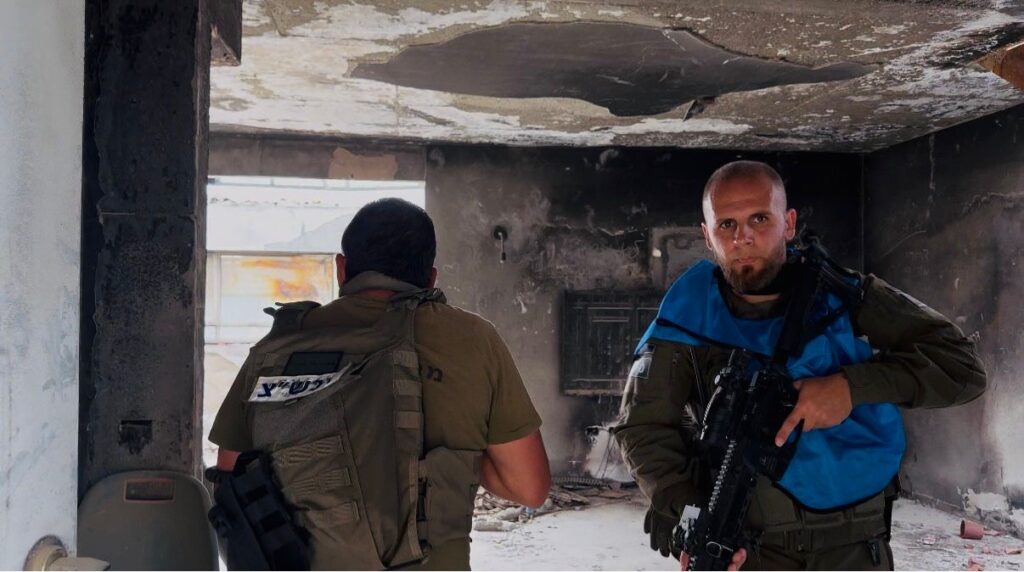
Magen 48 Trains Local Security Teams for the Next October 7th Within the Burnt Ruins of Be’eri Photo Credit: Magen 48
“Magen 48 was established to stop the next October 7th,” Dribben said. “I saw with my own eyes that communities with trained and prepared security teams survived. Those without them were overrun. My mission is to ensure that every town, city, and village in Israel is ready—so that next time, we will be prepared.”
Since its founding, Magen 48 has conducted near-weekly training sessions across the country, reaching 67 communities and training over 1,500 civilian first responders. The training at Be’eri marked the first time such exercises were conducted betoch—inside—the devastated neighborhoods themselves. Burnt walls and bullet-riddled homes served as the backdrop for drills that could, one day, be the difference between a massacre and a repelled attack.
Ari Briggs, who co-founded Magen 48 alongside Dribben, put it plainly: “On October 7th, we learned that it’s not enough to wait for help to arrive. Communities must be able to hold the line until it does.”
Magen 48 has argued that this kind of preparation does more than improve tactical response—it also helps restore enough confidence for evacuated families to return home. That message carried particular weight in Be’eri, where thousands of residents were displaced after the massacre, and the process of return has been slow and painful.
Briggs did not soften the stakes: “Over 600 communities across Israel still lack this level of preparedness. Without the ability to scale rapidly, they remain exposed.” With donor support from around the world, Magen 48 is now working to establish a national, high-tech training center to expand its reach at speed.
“While the IDF has achieved extraordinary successes, we can never again afford complacency,” Briggs said. “Every Israeli community must have both a defense plan and the capability to execute it—until help arrives. History has taught us that we must always be ready for the worst-case scenario.”
In Be’eri today, in the shadow of burnt homes, Israelis are rebuilding while preparing to fight. Because when the next attack comes, the only question that will matter is whether they were ready.