

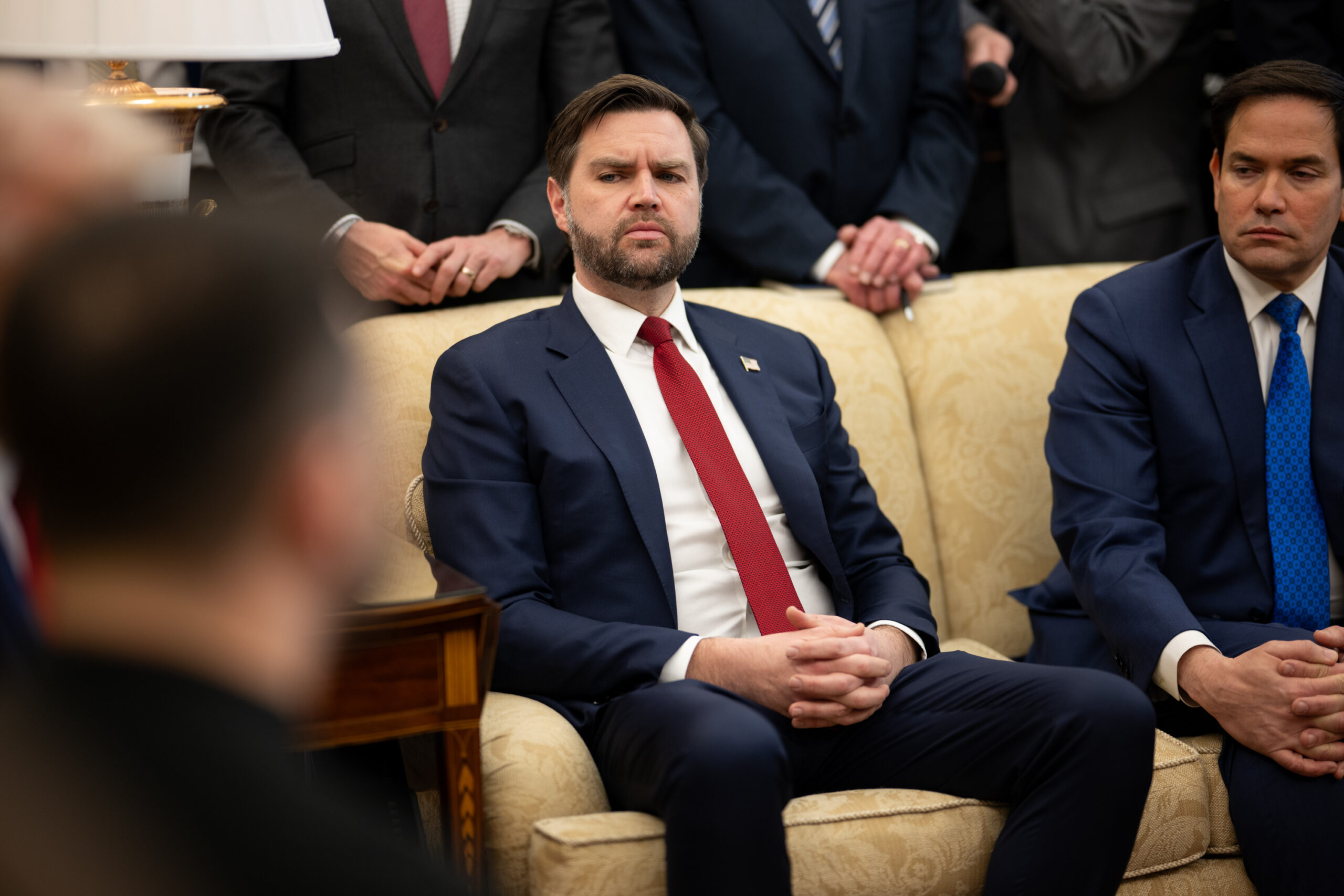
Twenty-one hours of high-stakes negotiations in Islamabad, Pakistan, ended Sunday morning without an agreement, leaving the fragile two-week ceasefire between the United States and Iran in serious jeopardy. Vice President JD Vance, flanked by Trump administration envoys Steve Witkoff and Jared Kushner, met with senior Iranian officials — including Parliament Speaker Mohammad Bagher Ghalibaf and Foreign Minister Abbas Araghchi — in what were among the most senior direct U.S.-Iranian talks in decades. When it was over, Vance walked out of the Serena Hotel in Islamabad and told reporters plainly: “The bad news is that we have not reached an agreement. And I think that’s bad news for Iran, much more than it’s bad news for the United States of America. They have chosen not to accept our terms.”
The collapse came down to a single, non-negotiable American demand: Iran must commit to abandoning its nuclear weapons program. Vance was categorical. “We need to see an affirmative commitment that they will not seek a nuclear weapon, and they will not seek the tools that would enable them to quickly achieve a nuclear weapon.” Tehran, for its part, insists on its right to enrich uranium and blames Washington’s “excessive demands” for the breakdown. Iranian Foreign Ministry spokesman Esmaeil Baghaei acknowledged “a gap between our opinions over two or three important issues” but refused to directly address the nuclear question on camera. Neither side has indicated what happens when the April 22 ceasefire deadline expires.
The negotiations brought together the world’s most powerful military alliance — the United States and Israel, armed with the most advanced weapons on earth but the failure here is not military — it is strategic clarity, and whether the West possesses the will to finish what it started.
The War: Six Weeks of Fire
Operation Epic Fury began on February 28, when the United States and Israel launched coordinated airstrikes on Iran, targeting military infrastructure, government sites, and key leadership — killing Supreme Leader Ali Khamenei in the opening hours. The opening salvo numbered nearly 900 strikes in just the first 12 hours.
Iran hit back hard and wide. In the first two days alone, launching roughly 420 missiles across nine countries and ships at sea — 162 missiles at Israel, 167 at the United Arab Emirates, and 46 at Qatar. Iranian strikes targeted U.S. embassies and military installations in the UAE, Saudi Arabia, Qatar, Kuwait, Bahrain, Iraq, Oman, and Jordan. At the height of the initial barrage, roughly 80 missiles were fired on the first day, followed by about 60 the next day, and 30 on the third.
Five weeks into the operation, after striking more than 13,000 Iranian targets, U.S. intelligence assessed that the U.S. and Israel had degraded only about half of Iran’s arsenal of missiles and drones. Iran adapted quickly. U.S. officials assess that Iran deliberately kept its launch rate low to preserve its inventory, and had success in moving its mobile platforms — making launchers difficult to track, a problem the U.S. faced in a similar fashion against Houthi forces in Yemen and Iraqi Scuds in 1991.
The human cost has been devastating. At least 3,000 people have been killed in Iran, 2,020 in Lebanon, 23 in Israel, and more than a dozen in Gulf Arab states. At least 13 U.S. service members have been confirmed killed by Iranian attacks across the region. More than 26,500 people have been wounded in Iran, including at least 4,000 women and 1,621 children.
The Price Tag
By its twelfth day, Operation Epic Fury had already cost an estimated $16.5 billion, with costs running at roughly $500 million a day. By day 36, direct U.S. military spending alone had surpassed $35–38 billion, including over $15 billion in munitions — among them 800-plus Patriot interceptors — and $8–10 billion in air and naval operations. The Penn Wharton Budget Model projects that if the campaign continues through the end of April, total costs could reach as high as $47 billion. The full economic impact to the United States — including oil price shocks and supply chain disruption — could reach $210 billion, according to the Penn Wharton Budget Model’s Kent Smetters.
Iran’s closure of the Strait of Hormuz — through which 20 percent of the world’s oil passes — quickly led to fuel shortages and rationing in parts of Asia and a sharp increase in global oil prices. Brent crude surged from $72 to over $112 per barrel, briefly hitting $120 after the Strait of Hormuz disruptions — adding an estimated $4–6 billion in higher fuel costs for American families and businesses alone.
Iran’s 10-Point Demand List
The Iranian delegation arrived in Islamabad not with compromise but with a maximalist wish list. Their 10-point proposal called for: guaranteed cessation of all hostilities, control over the Strait of Hormuz including the right to charge tolls on shipping, lifting of both primary and secondary U.S. sanctions, American recognition of Iran’s right to enrich uranium, and — critically — a halt to Israeli operations against Hezbollah in Lebanon. Both President Trump and Vice President Vance denied that Israel’s operations in Lebanon were ever part of any ceasefire agreement, and Prime Minister Netanyahu stated publicly that the IDF would not halt operations in Lebanon under any circumstances.
Iran’s state outlet Press TV framed the sticking points as “maritime access” and “nuclear rights.” The Tasnim News Agency blamed Washington’s “excessive demands” for the breakdown. The reality is simpler: Iran wants the international community to ratify its role as a regional hegemon with nuclear capability, a stranglehold on global energy markets, and an active terror proxy in Lebanon. That is not a negotiating position. That is a ransom note.
Where Are the Allies?
The American-Israeli alliance contrasts sharply with the marked absence of the USA’s European allies. France, Germany, and the United Kingdom issued a joint statement on February 28 making clear that none of their countries participated in the strikes, though they “remained in close contact” with the U.S. and Israel. The statement neither supported nor condemned the operation — the kind of diplomatic non-answer that is, functionally, an abandonment. The United States launched a major military operation with little to no consultation with its transatlantic allies, and European leaders’ responses showed they remain deeply divided over military intervention and the use of force.
When President Trump called on allies to send warships to help secure the Strait of Hormuz, Australia, Germany, Greece, Italy, Japan, and the United Kingdom all declined. France deployed the Charles de Gaulle carrier to the Mediterranean, but with a mandate limited to defensive operations. France’s Macron warned that military action outside international law risks undermining global stability and called for UN emergency discussions. The same global shipping lanes that European economies depend on — through which their oil and gas flows — and they will not lift a finger to defend them.
Canada and Ukraine stood apart. Canadian Prime Minister Mark Carney stated that Canada “supports the U.S. acting to prevent Iran from obtaining a nuclear weapon,” calling the Islamic Republic “the principal source of instability and terror throughout the Middle East.” Ukraine’s President Zelensky endorsed the strikes, noting that Iran had supplied Russia with Shahed drones used against Ukrainian cities more than 57,000 times.
What Comes Next
Pakistan’s Foreign Minister Ishaq Dar urged all parties to maintain the ceasefire beyond April 22 and pledged to facilitate a new round of dialogue. But the gap between the two sides remains unbridgeable without one party fundamentally changing its position. The U.S. military has already begun the process of mine-clearing in the Strait of Hormuz — a clear signal that Washington is not waiting for Tehran’s permission to reopen global shipping. Trump was blunt: “We’re sweeping the strait. Whether we make a deal or not makes no difference to me.”
Separate negotiations between Israel and Lebanon are expected to begin Tuesday in Washington — a remarkable development given the lack of formal diplomatic relations between the two countries. Israel’s demand is clear: Lebanon’s government must take responsibility for disarming Hezbollah. The terrorists’ months-long rocket barrage into northern Israel, which opened a second front when Operation Epic Fury began, has made that demand non-negotiable.