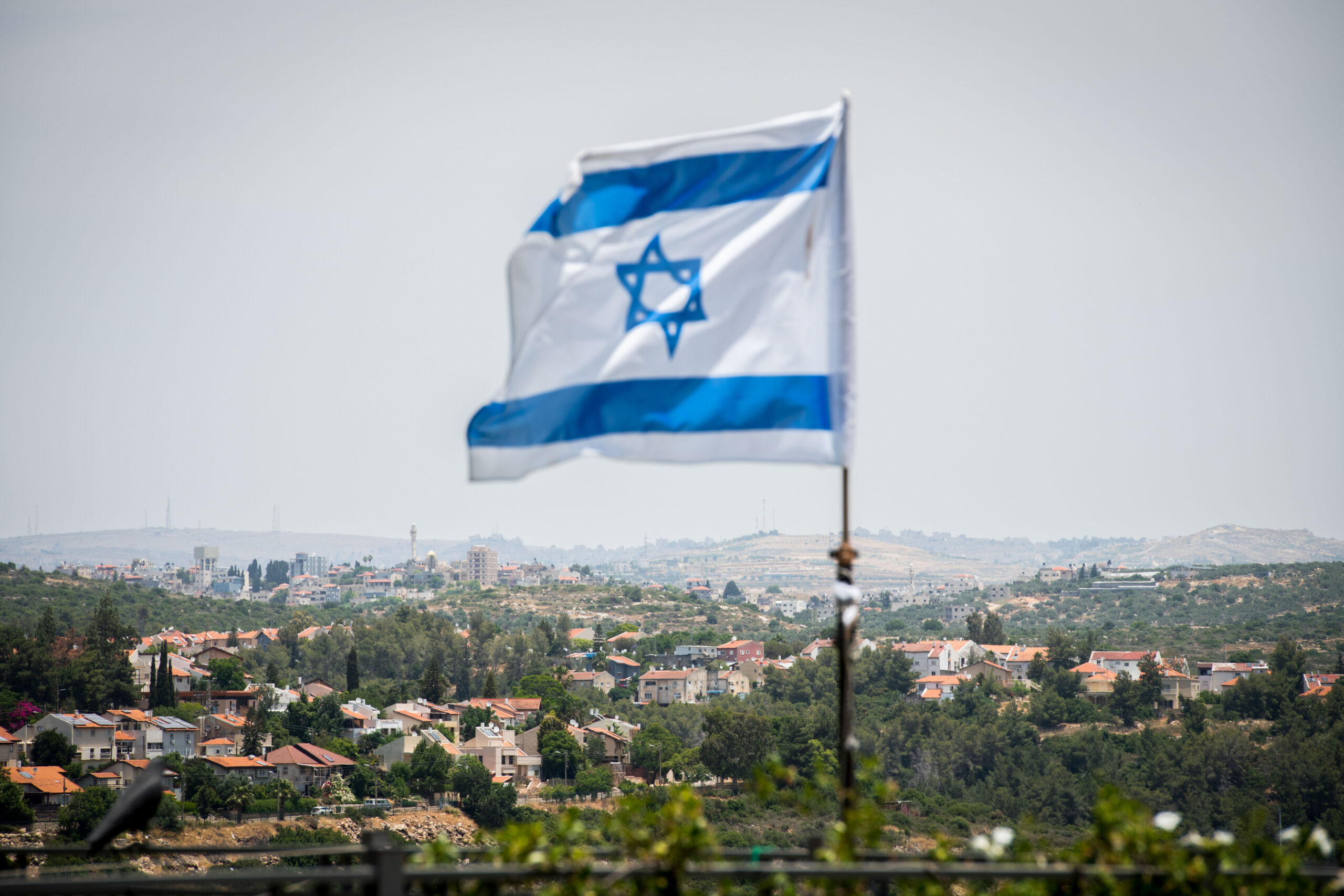
Israel’s security cabinet quietly approved the establishment of 34 new Israeli communities in Judea and Samaria, marking the largest single authorization of new communities in one decision and bringing the total number approved by the current government since 2022 to 103. The move represents a dramatic acceleration in Israeli building policy, nearly doubling the number of newly authorized communities and signaling a strategic expansion of the Jewish presence throughout the biblical heartland of Israel.
According to reports first published by i24 and later confirmed by The Times of Israel, several of the newly approved communities are located in remote areas deep inside northern Palestinian Arab enclaves, including rugged terrain where the Israel Defense Forces currently maintain little permanent presence. The sites are spread across Judea and Samaria, with some positioned near Jenin and others in isolated strategic corridors throughout Area C, the portion of Judea and Samaria under full Israeli civil and security control under the Oslo framework.
Unlike previous governments that approved communities incrementally, often one at a time, the current government approved all 34 in a single cabinet decision.
The cabinet’s decision remains officially classified, as security cabinet deliberations are not publicly released, but reports indicate that the approval includes both entirely new communities and the retroactive legalization of previously unauthorized Jewish communities.
The move comes alongside parallel efforts to establish water and electricity infrastructure for communities previously approved in earlier rounds. Energy Minister Eli Cohen and Samaria Regional Council head Yossi Dagan recently announced the creation of a professional working group tasked with rapidly connecting those communities to national utility grids.
“This is an historic decision. We will ensure that the new homes built have lights and running water. We are applying sovereignty in law and in practice,” Cohen said.
Dagan framed the expansion as part of his long-term “Plan for a Million,” an initiative to bring 1 million Israeli residents to Samaria by 2050.
“Based on this plan, we will fill the area together with roads, electricity, water, and sewage infrastructure, in order to bring the masses here, millions of citizens of the State of Israel, to the heart of the land, to Samaria,” Dagan said.
Critics have charged that the approvals will increase tensions and place further burdens on IDF manpower, with reports indicating that IDF Chief of Staff Lt. Gen. Eyal Zamir voiced concerns during cabinet deliberations over the military resources required to secure the new communities.
Supporters of the move argue that the establishment of Jewish communities in Judea and Samaria violates neither international law nor any previously signed agreement. Under the 1922 League of Nations Mandate for Palestine, the Jewish people were recognized as having the right to “close settlement” on the land west of the Jordan River, a provision never superseded by binding international law. In addition, the Oslo Accords explicitly left the final status of settlements to future negotiations and did not prohibit Israel from authorizing additional communities in Area C.
Critics claim allowing Jews to reside in Judea and Samaria prevents the creation of a Palestinian state under a “Two-state solution.” For decades, Israeli governments imposed a discriminatory policy that restricted Jewish population growth and land development in Judea and Samaria while allowing massive unauthorized Arab construction. That policy flowed directly from Israel’s long-running experiment with the disastrous “land for peace” doctrine, first formalized in the Oslo Accords of the 1990s. Its advocates, overwhelmingly left-wing and secular, sold Oslo as a diplomatic breakthrough that would end the conflict by trading land for promises.
The goal is a Two-State Solution that would create an unprecedented militarized Arab state inside Israel’s borders, ethnically cleansed of Jews, with its capital in an exclusively Muslim Jerusalem. This would require a return to the ceasefire lines drawn up after the defensive 1967 Six-Day War that are considered to be indefensible against an Arab threat.
The results are not theoretical. The Oslo process produced waves of terror, including three intifadas. It divided the heart of the Land of Israel into zones that rewarded violence with political leverage. The ethnic cleansing of Jews from Gaza in 2005, carried out under the same logic, directly paved the way for Hamas, a terrorist organization, to seize power and turn Gaza into a launchpad for mass murder. The October 7 massacre was not a failure of the land-for-peace idea. It was its logical outcome.
For many religious Zionists, the expansion carries biblical significance as well as strategic value. The Bible describes God’s command to settle the Land of Israel in unequivocal terms:
“And I will give unto thee, and to thy seed after thee, the land of thy sojournings, all the land of Canaan, for an everlasting possession; and I will be their God.” (Genesis 17:8)
As Israel strengthens its hold on Judea and Samaria, the approval of these 34 new communities marks more than a bureaucratic planning decision. It is a declaration that the Jewish state is deepening its roots in the land of the Bible and shaping facts on the ground that will define Israel’s future for generations.