

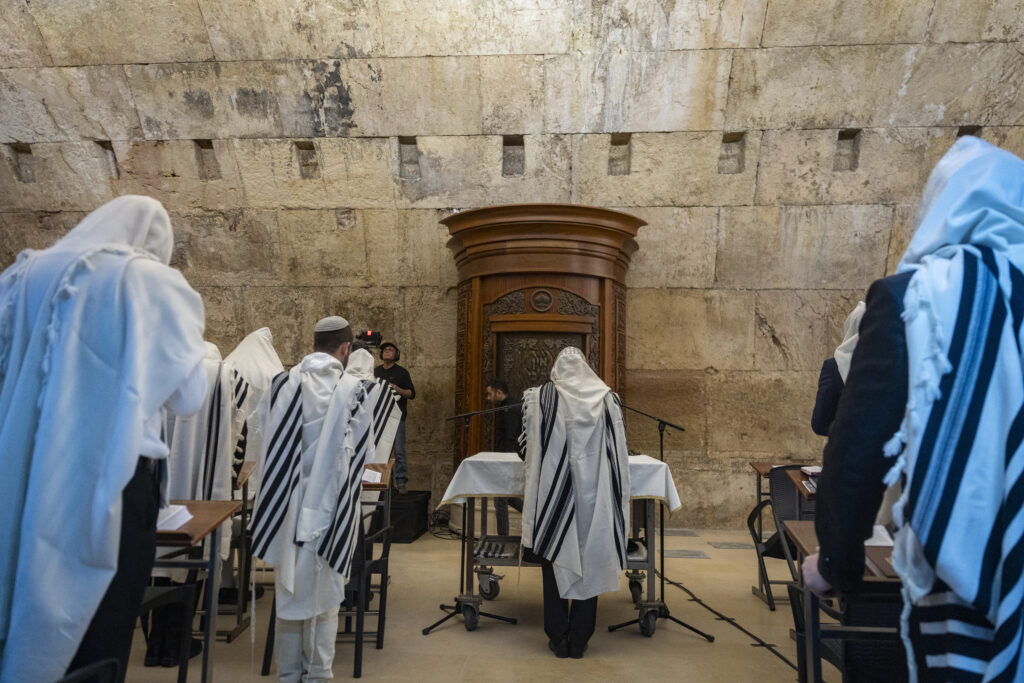
Every Passover, tens of thousands of Jews gather together in the Western Wall plaza, recreating a scene reminiscent of the Holy Temple, as hundreds of Kohanim ascend the steps, spread their prayer shawls over their faces, and raise their hands in the Priestly Blessing. But due to wartime restrictions, this did not happen.
The Western Wall Heritage Foundation announced that due to the ongoing war with Iran and Home Front Command security directives, the Birkat Kohanim ceremony this Sunday would be restricted to just 50 men. The general public was prohibited from attending. The announcement cited the narrow access routes to the Old City, the inability to safely evacuate large crowds in the event of a missile alert, and the proximity of Iranian missile impacts, two of which have already struck within several hundred meters of the Temple Mount. The ceremony was broadcast online.
While this restriction of Jewish religious practice seems reasonable, this restriction was lifted to allow left-wing protests to take place. Hours before left-wing anti-war protests were scheduled on Saturday night, the High Court issued an interim order overriding Home Front Command regulations and instructing police to permit gatherings of up to 600 people at Habima Square in Tel Aviv, and up to 150 in Jerusalem, Haifa, and Kfar Saba. The ruling was made on Shabbat, making it highly irregular. The military had objected, arguing the gatherings posed a genuine danger from the very same Iranian missile threat that was used to bar Jews from the Western Wall. The judges overruled them.
Israel’s Sephardic Chief Rabbi David Yosef did not mince words. He called the High Court “the enemy of Judaism” and focused his condemnation specifically on the fact that the court issued its ruling “during Shabbat to force the government to allow them to demonstrate.”
Rabbi Shmuel Rabinowitz, the Rabbi of the Western Wall, addressed a letter directly to Home Front Command Chief Major General Shay Kalper. “I find it difficult to understand why the right to protest is perceived as more important or more urgent than the right to pray,” he wrote. “The Western Wall is the beating heart of the Jewish people. Especially now, as our soldiers are fighting with great courage and under grave danger, the public needs access to the holiest place that has remained to us since the destruction of the Temple.” He asked bluntly: “If the security reality permits hundreds of people to gather in public squares for demonstrations, all the more so it should allow Jews to assemble at the Western Wall Plaza.”
Americans who lived through COVID lockdowns will recognize the pattern. In 2020, houses of worship across the United States were shuttered by government mandate, with clergy threatened with fines and arrest for holding services. Churches and synagogues that attempted to hold outdoor gatherings were broken up by police. At the same time, mass protests, often drawing tens of thousands, were explicitly exempted from the same public health orders by the very officials who imposed them. The message sent in both cases is identical: political activism is an essential activity. Prayer is not.
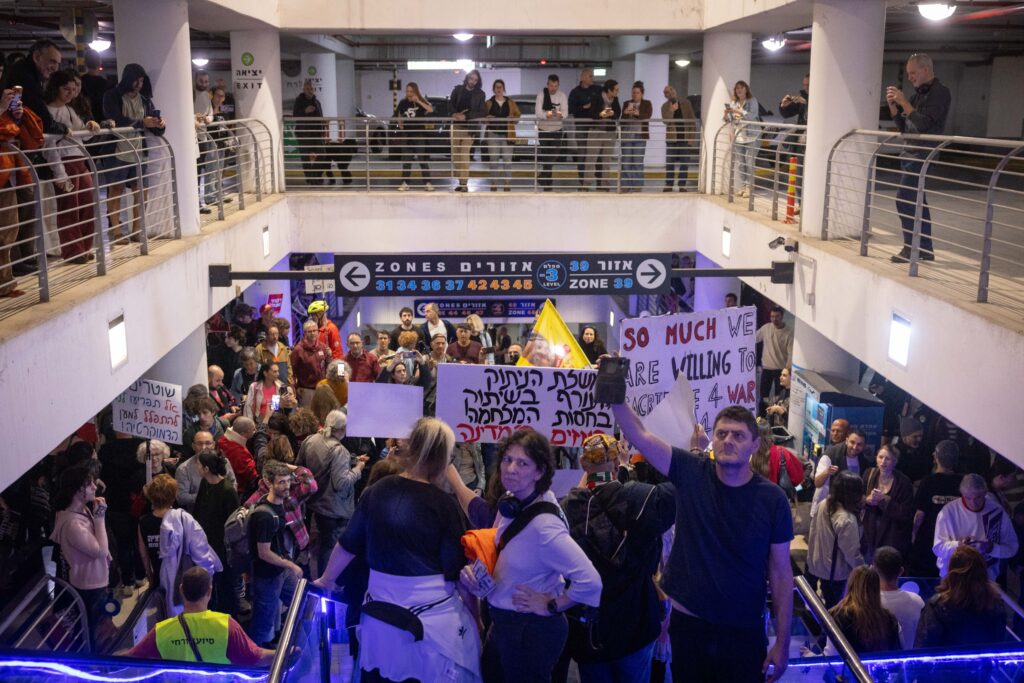
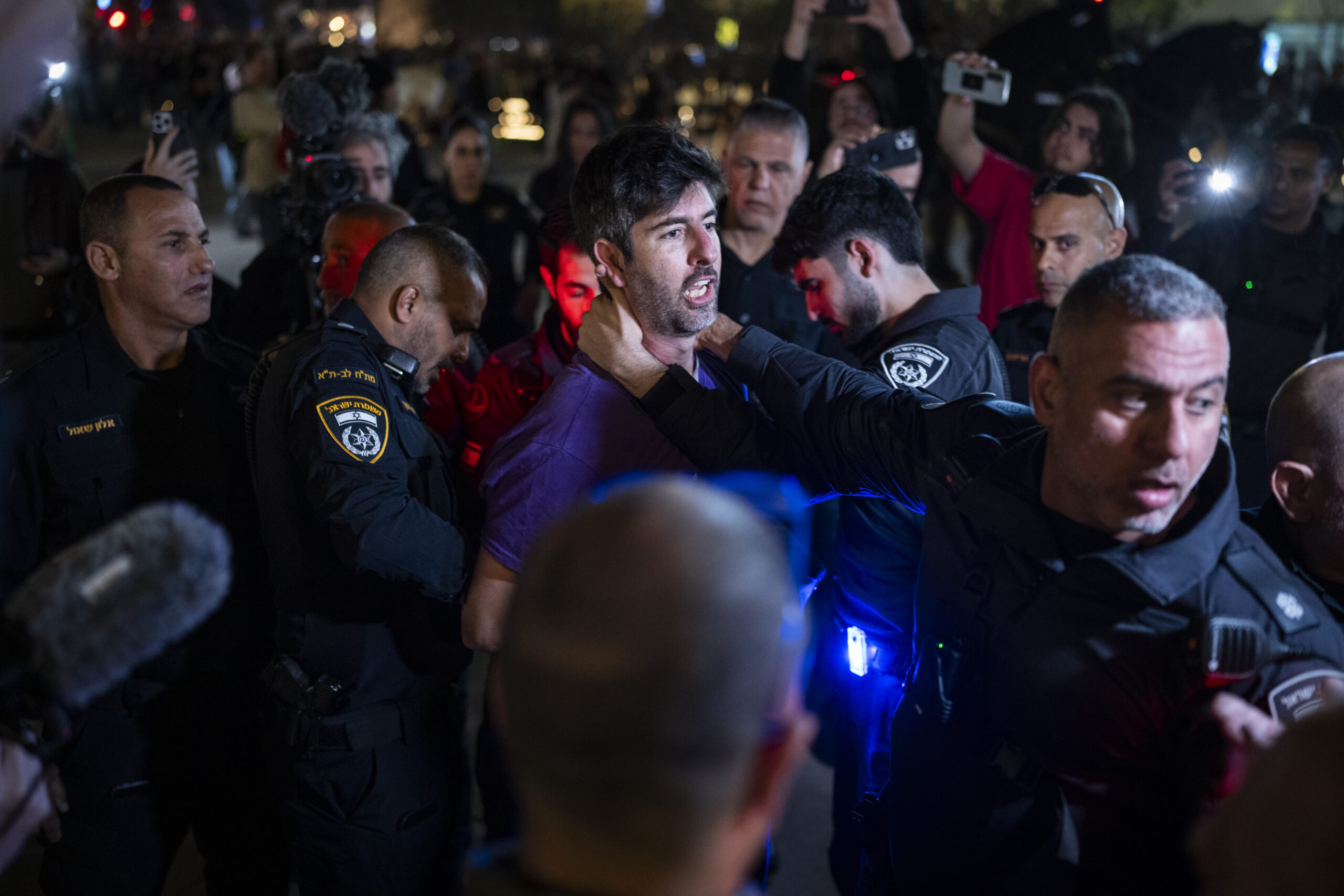
The protests themselves, when they finally took place Saturday night in Tel Aviv, turned chaotic. The demonstration at Habima Square exceeded the court’s permitted 600-person limit, and police declared it unlawful, violently dispersing the crowd and arresting 17 people on suspicion of disorderly conduct. Shortly after, Houthi missile sirens sounded across the country, the precise scenario the military said it feared when it opposed allowing the gathering in the first place.
The protesters carried signs calling for an end to the war with Iran, denouncing Prime Minister Netanyahu, Finance Minister Smotrich, and National Security Minister Ben Gvir, and accusing the government of exploiting the war for political survival. “Enough with the forever war,” organizer Alon Lee Green shouted before his arrest.
While sharply curtailed, 50 Kohanim stood at the Western Wall this morning, raising their hands in silence before God, and reciting the blessing their ancestors have recited since Aaron first spoke it in the wilderness of Sinai. The people who would have filled that plaza, the hundreds of thousands whose prayers are represented by the notes stuffed into every crack of that ancient stone, which this year include messages from Iran, Yemen, Iraq, and Qatar, will be watching on a screen.
The blessing is performed by kohanim, male Jews with priestly heritage who have a clear patrilineal tradition leading back to Aaron the high priest, brother of Moses. In Israel, the Priestly Blessing is recited twice on every Sabbath and holiday, while in Jerusalem, it is recited daily. Before saying the blessing, men from the tribe of Levi wash the hands of the kohanim. The ritual may only be performed by a kohen and only in the presence of a quorum of ten Jews. A kohen who is under the influence of alcohol or in mourning may not perform the blessing.
The blessing is performed by the priests holding their hands up with the fingers spread in the manner made famous by Leonard Nimoy (a kohen), when he played Spock on the television series Star Trek. The fingers of both hands are separated so as to make five spaces between them; spaces are between the ring finger and middle finger of each hand, between the index finger and thumb of each hand, and the two thumbs touch each other at the knuckle. During the prayer, kohanim must cover their heads with their prayer shawls and hold up their hands towards the congregation of Israelites to make the blessing upon them.
The priests then recite Numbers 6:23-27:
May the LORD bless you and guard you,
May the LORD make His face shed light upon you and be gracious unto you,
May the LORD lift up His face unto you and give you peace.The bi-annual priestly blessing is an impressive reminder of the glory of the Jewish people coming together as a nation to serve God, something that was entirely lacking until the Jews returned to Jerusalem 52 years ago.
